• Authors Registration
  • Login
  • ABB Book Store

AuthorBookBeat

Promoting, Marketing and Advertising your title

authorbookbeat
Be Like these authors and promote your own book signing Events
  • Home
  • About ABB
  • How ABB Works
  • FAQ
  • Services
  • Publishing
  • Literary Agents
  • Sell Books
  • Authors Index
  • Post Breaking News
  • Book Trailer
  • Interviews
  • Events
  • Short Stories
  • Press Release
  • Articles
  • Email Distribution
  • Book Reviews
  • Promote
  • Poetry
You are here: Home / Blog

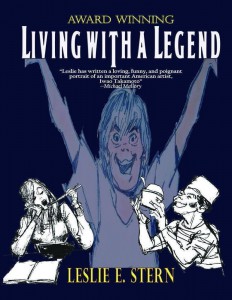
Non-fiction “Living With A Legend” is an homage to Iwao Takamoto by daughter Leslie E. Stern about Disney and Hanna-Barbera animator and creator of Scooby-Doo

ATLANTA – Multi-Award-Winning non-fiction book LIVING WITH A LEGEND by Leslie E. Stern offers touching personal stories about her acclaimed stepfather, Iwao Takamoto, who designed such animation masterpieces as Scooby-Doo, Astro, Mutley, and Dino. He directed Charlotte’s Web and had worked on classic films such as Lady and the Tramp and Cinderella.

Leslie’s musings of growing up in a multi-ethnic home amidst cartoon genius tells the story of her stepfather’s influence on her, stories of her youth, and Iwao’s influence on others. This full-color coffee table book includes never-before-seen personal drawings done by Iwao for Leslie and for her mother, drawings done by other famous animators for Iwao, as well as rarely-seen photographs and drawings. These are a delight to behold for anyone who is a fan of Scooby-Doo, The Pink Panther, The Flintstones, and The Jetsons. A must read for any cartoon lover and a pleasure to read for anyone with a heart.
Iwao Takamoto is considered a legend in the animation industry. He would ultimately design cartoon icons like Scooby-Doo, Astro, Mutley, The Great Gazoo, and Penelope Pitstop for Hanna Barbera. He began his career at Disney Studios when he was a young man, fresh out of the Manzanar concentration camp. In fact, he was the first inmate to be released because he had been recruited by Walt Disney. He worked as an animator on classics films such as Lady and the Tramp (he helped design Lady), Cinderella (he designed the loveable mice), Sleeping Beauty, and 101 Dalmatians. When he was asked to join the start-up company Bill Hanna and Joe Barbera were creating, he leapt at the chance.

 

Non-fiction “Living With A Legend” is an homage to Iwao Takamoto by daughter Leslie E. Stern about Disney and Hanna-Barbera animator and creator of Scooby-Doo

ATLANTA – Multi-Award-Winning non-fiction book LIVING WITH A LEGEND by Leslie E. Stern offers touching personal stories about her acclaimed stepfather, Iwao Takamoto, who designed such animation masterpieces as Scooby-Doo, Astro, Mutley, and Dino. He directed Charlotte’s Web and had worked on classic films such as Lady and the Tramp and Cinderella.

Leslie’s musings of growing up in a multi-ethnic home amidst cartoon genius tells the story of her stepfather’s influence on her, stories of her youth, and Iwao’s influence on others. This full-color coffee table book includes never-before-seen personal drawings done by Iwao for Leslie and for her mother, drawings done by other famous animators for Iwao, as well as rarely-seen photographs and drawings. These are a delight to behold for anyone who is a fan of Scooby-Doo, The Pink Panther, The Flintstones, and The Jetsons. A must read for any cartoon lover and a pleasure to read for anyone with a heart.
Iwao Takamoto is considered a legend in the animation industry. He would ultimately design cartoon icons like Scooby-Doo, Astro, Mutley, The Great Gazoo, and Penelope Pitstop for Hanna Barbera. He began his career at Disney Studios when he was a young man, fresh out of the Manzanar concentration camp. In fact, he was the first inmate to be released because he had been recruited by Walt Disney. He worked as an animator on classics films such as Lady and the Tramp (he helped design Lady), Cinderella (he designed the loveable mice), Sleeping Beauty, and 101 Dalmatians. When he was asked to join the start-up company Bill Hanna and Joe Barbera were creating, he leapt at the chance.
 

Richard Baran tells a Touching Story of a Dysfunctional, Multi-cultural Family and One Man’s Belief in Santa Clause in his Book, “The Jacket.”

Tidge Mackiewicz, new patriarch of his splintered, multi-cultural family, received a trinity of orders from his dying father, Kid Scream. One order stated for Tidge to quit believing in Santa Claus and stop acting like every day was Christmas. Tidge should also abandon his belief that the Luftwaffe shot down Santa Claus on Christmas Eve in 1944 and Santa survived. Tidge’s father tried to hammer home his belief in family to his son, a last dying breath exhaling his command. “This screwed up family is yours now. Unscrew them.”

Approaching fifty, Tidge still wears a scuffed and stained Army Air Corps flight jacket given to him as a young boy by his late uncle, Brew a Navy aviator and Korean War hero who claimed it belonged to Santa Claus. Uncle Brew also believed that the jacket possessed a special magic. Several years later, his father’s orders remain unfulfilled. Tidge’s multi-cultural family his father dubbed “The Natives” is still screwed up. Everyday is still Christmas for Tidge and his belief in Santa has never wavered.

Tidge and his second wife, Wilhelmina, who he calls, Willy moved from Chicago to an elegant log home on Lake Namakagon in Wisconsin’s Nothwoods. To honor their second Christmas, Tidge suggests inviting their respective families for a holiday weekend in hopes of bringing peace to The Natives. Eighteen adults and children embrace the invitation. Tidge and Willy have planned for every contingency except a record blizzard and a surprise guest.

Tidge plans to play Santa Claus wearing an antique Santa Claus suit given to him by his Uncle Brew. As he removes the costume from a dilapidated box, he discovers four yellow, dog eared letters to Santa Claus, two faded dramatic snap shots from World War II and a poignant quotation from Immanuel Kant. It is the contents of the box along with The Jacket and the spirit of Christmas that has Tidge believing he finally has his special gift to carry out his father’s orders. He discovers he needs more.


Allison Piper Creates a Spiritual Guide Book, “Lessons I Learned From God,” to Take Others on Their Spiritual Journey

“Lessons I Learned From God” by Allison Piper is a spiritual guidebook designed to help others on their spiritual journey. Piper takes readers with her on her own spiritual journey through a collection of uplifting and inspirational short stories, her talks with God, and the lessons she learned to help the reader learn their own lessons and to grow spiritually. It is through the evaluation of the lessons learned from these stories that she opens people’s eyes to God’s miracles, presence, and love; and in addition shows not only that there is life after death, but there is so much more to the lives on Earth than what was thought before. The author has intentionally made this book simple and easy to read with less than 100 pages and includes a recap of all the lessons learned. This book provides many thought provoking questions and enlightening answers to life with reassurance to all.

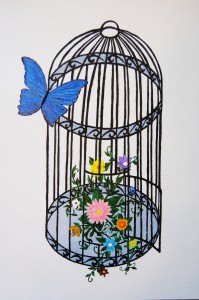
On the cover of the book there is a birdcage with flowers coming out of it and a blue butterfly on the outside of the cage. It is all symbolic of everyone’s lives. The different color flowers represent all the individual people, all God’s children. The birdcage stands for the enclosure built around people from making the wrong choices and living in fear. And the butterfly symbolizes the transformation of the soul on its spiritual journey after coming out of the self made prison. And last, the butterfly is the color blue because the blue means happiness. “This is a great book for people of all ages. It helps readers become more reassured about life, gives guidance and will help many get through troubled times. The author makes you feel like she’s talking directly to you. I enjoyed this book tremendously. I believe you will too and will want to tell others about it.” — C.P.


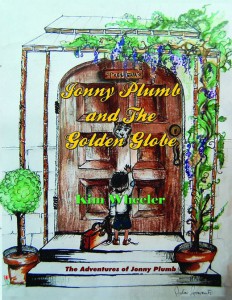
Kim Wheeler Awes Young Children with Debut of His Books “The Adventures of Jonny Plumb” and His Fantastical Journeys

“The Adventures of Jonny Plumb” is the fantastical and funny story of a young orphan boy suddenly endowed with very special powers. Jonny’s life changes dramatically when he’s taken into foster care by the wealthy and extremely beautiful Lady Kathleen Hunter — and comes under the vigilant eye of Nanny Noo.

Jonny’s adventures begin when he finds the mysterious Golden Globe that shifts shapes and holds many secrets. This magical orb takes Jonny on all kinds of amazing and jaw-dropping adventures, high into the furthest regions of space and deep into an underwater world full of rowdy Sea Life — who bubble up from Jonny’s bathtub drain to join in silly songs. These include Wall Eyed Wally and his three baby octopuses Stench, Carcass, and Harpoon; five young dolphins, Oink, Jube, Faraway, Blue Sky One Eye, and Sloppy Botty; Porka the Orca, Legs the Crab, and many more.

Jonny and his friends travel across the universe in the Silver Flying Arrow Space Ship, which can travel at twice the speed of light. Jonny Plumb’s adventures take him around the world to save Lady Hunter’s husband Sir Ranulf Hunter and his best friend Sir Harry Pinner, who have been taken hostage by the Mad Mullah Mud Monkeys of Drak Gob.


While a Minnesota Teen Deals with Death Threats for a Coming Out Video, Mina Mauerstein Bail Teaches Children How to Be Tolerant in Her Book “Max and Voltaire”

Every day children across the nation are bullied for being who they are, especially Ryan Eichenauer who came out on Facebook. Mina Mauerstein Bail explores such themes as making new friends, adapting to change, fostering tolerance, lending a helping hand and getting along with others, through the eyes of Max, Voltaire, and a supporting cast of furry pals and bipeds in her book “Max and Voltaire: Getting to Know You.”

In Part One we find Max living in a French bakery. Madame and Monsieur Cupcake realize that Max is not happy and look for someone to adopt him (again). One of Madame Cupcake’s customer’s, Madame Rosemarie, agrees to give Max a home. When Max arrives at Madame Rosemarie’s house, he discovers three other kittens – Zoa, Tish and Say What. Max is thrilled about the idea of having some cat pals, but soon learns that making new friends takes time and effort. With finesse and patience Max not only wins over Zoa, Tish and Say What but, as time goes by, becomes a trusted friend and someone they all look up to.

In Part Two Voltaire enters the picture; a dog in a cat dominated household. Max’s cat pals don’t like the idea of a dog coming to live with them, but Max remembers how he felt when he first arrived at Madame Rosemarie’s house and decides to welcome Voltaire. Tish, who drools, and Say What, who likes to hunt mice, soon come to accept Voltaire. Zoa, the only female cat in the group, keeps her distance and makes it clear to Voltaire that she does not like dogs. While Voltaire adjusts to his new surroundings, Madame Rosemarie adjusts to taking care of a dog. Then one day, while Madame Rosemarie is out shopping, Zoa, who has been out strolling in the neighborhood, finds Say What on the side of the road, bleeding. His cat pals and Voltaire come to his rescue. His cat pals help Say What onto Voltaire’s back. Say What’s claws rip into Voltaire’s back but he remains quiet and carries Say What all the way home on his back. Zoa is impressed. When Madame Rosemarie returns home and sees that Voltaire and Say What have been hurt, she immediately takes them to the vet. At Christmas later that year, Max and Voltaire and their furry pals sit around the fireplace and count their blessings.


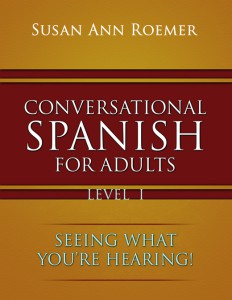
As Spanish Becomes more Prominent in the United States Susan Ann Roemer Finds a New Way to Teach It

Spanish has become the second language in the United States. More children take it as their second language in high school and more adults are looking for new and effective ways to learn Spanish. Susan Ann Roemer has developed a method called “mapping of sounds” which allows the student to learn Spanish more efficiently. People learn their languages by hearing words and then understanding what they mean. A child learns words, strings them together in phrases, and is later corrected by his or her parents. Imagine if a 4-year-old in saying a sentence were forced to say the complete conjugation of the verb before going on to the next phrase! Yet many people think that to learn a new language they need to learn all the conjugations before they continue.

This method is in essence a “mapping of sounds”. The students are taught a phrase, what it means in English, and what the sounds look like through a phonetic transcription that is unique to this method. Spanish language learners may practice the sounds without the need of an instructor being present. The advantage is clear: it is one thing to hear the sounds and repeat the words; it is quite another thing to have a visual image of what the sounds look like. Recent research confirms what many have long suspected — most people are a combination of visual and auditory learners. It only makes sense that a teaching approach should be directed at both modalities in addition to some kinesthetic activities to reinforce the learning. The students will be able to take what was spoken in the classroom and easily reinforce it at home through additional practice.

In music some people can produce music “by ear” while others need to read the music. The printed page also describes the cadence and scales, whole or half notes, etc. In some ways this approach can be compared to sheet music rather than to music produced by ear. It is helpful to have written instructions to complement the initial practice regardless of whether one is trying to communicate the same sound in music or in language learning. This gives more detail and allows the producer to repeat the message more accurately.

The four modalities of learning any language are reading, writing, speaking, and listening. Research has shown that a person can master any concept in any language after being exposed to it a total of ten times. It can be a language concept, a scientific theory, or a mathematical theorem, but the important point is the need for repetition. The goal of this approach is to make learning the Spanish language repetitive without being boring! Simple phrases are repeated in multiple contexts. Students are able to reproduce the phrases outside the classroom setting in situations where they feel comfortable. Since it is usually impossible to transport students to a Spanish-speaking environment, the method by definition needs to be vicarious. Of course the more they use the phrases taught in class and reproduced outside the classroom, the faster they learn the language. With repetition in and out of class their speed and pronunciation will improve; their words and sounds will all flow together.

In this method the three steps of each concept are (1) the structure; (2) an example; and (3) a given practice task for the student with a partner. In the military the same steps are implemented to teach a task — structure, example, and practice. It only stands to reason that the more opportunities the student has to practice a given task, the more efficient the learning will be in the student’s memory bank. As the old adage goes, “Practice makes perfect.”


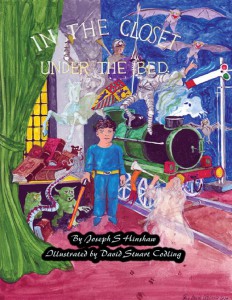
Joe Hinshaw’s “In The Closet, Under The Bed” Helps Provide Tools For Children To Cope With Nighttime Fears

The sounds of an old house as it settles or the wind blowing against the window can make some very scary noises. In reality they are nothing but as a child with a pure and fertile imagination they can mean many things. Children curl up on their bed and surround themselves head to foot with their stuffed animal collection to protect them from their own monsters. The stuffed animals become children’s best friends and stand their watch successfully for many years. “In the Closet and Under the Bed” explores the time in life where a boy comes to terms with his own monsters. He is very creative in his solutions and will probably someday be very successful in business. “I hope you can spend that time curled on the bed with your own children and in the end they can make their own peace with their own monsters.” — Joseph Hinshaw.


Controversy continues between the races and Karen Ford offers her down home thoughts in “Thoughts of a Fried Chicken Watermelon Woman”

This book is one Black woman’s thoughts on issues of the day. Black men in academia like Dr. Cornel West or activists like Rev. Al Sharpton and Rev. Jesse Jackson, Jr. are often asked about the Black community and how the Black community views issues like the Stand Your Ground laws. None of those gentlemen speaks for her or others she knows in her community. So she wrote this book to offer a more realistic view on issues like Stand Your Ground laws, the prison industrial complex and others. Some of these are controversial. Some are reflective and still others are personal. They are written to spur conversation, inspire thought and hopefully lead to action.


Dr. Herbert L. Fred’s “On Medicine Today: The Good, the Bad and the Ugly” Brings to Light the Problems with Health Care Today

Using crisp and powerful prose, peppered with his trademark wit, Dr. Fred laments the condition of medicine today:

* Myriad constraints from insurance companies;
* Incessant pressures from federally mandated regulations;
* Devastating limits on work hours for all training programs;
* Increasing dishonesty throughout the profession;
* An endless array of required paperwork;
* Lawsuits lurking around every corner;
* Over reliance on technology for diagnosis and treatment;
* Atrophy of clinical skills;
* Sagging of professionalism; and
* Impersonal and fragmented delivery of patient care.

Dr. Fred urges doctors to think for themselves. He implores them to preserve and promote the human element in medicine. He reminds them that medicine is a calling, not a business. And he assigns them this charge – the patient comes first, always.


  • « Previous Page
  • 1
  • …
  • 50
  • 51
  • 52
  • 53
  • 54
  • Next Page »

Copyright © 2025 · www.AuthorBookBeat.com | Privacy Policy | Terms of Service