
• Login To Your Author Book Beat Account
  • ABB Book Store

AuthorBookBeat

Promoting, Marketing and Advertising your title

authorbookbeat
Be Like these authors and promote your own book signing Events
  • Home
  • About ABB
  • How ABB Works
  • FAQ
  • Services
  • Publishing
  • Authors Index
  • Post Breaking News
  • Book Trailer
  • Interviews
  • Events
  • Short Stories
  • Press Release
  • Articles
  • Email Distribution
  • Book Reviews
  • Promote
  • Poetry
You are here: Home / Blog

Saved

Rain

Saved Poetry:

Weeks of calm temper suddenly ended,
paranoia, speed, because a broken promise
passed from lying lips.
It struck me silent for a deathly moment
a foolish frozen smile, sideways eyes
stuck on hate. Stomach bile bubbling.
That was the time to halt, turn around,
breathe deep, sit down, lie down, sleep,
envision deceit as cotton candy
dissolving on a child’s tongue.
It was not easy turning lies to mush
and I struggled with conscience and revenge.
If not for the knowledge of higher reciprocal things
there might be a sticky pool of dizzying self-indulgence
and a mind exiled from its mental country.

(If you would like to read more poetry like Saved by Alice Shapiro and her book “Life” check out www.totalrecallpress.com or amazon.com.)

 

The Stone Mountain Deer

I’ve never seen anything like it before or since. It’s a sight to look at.

Now, as amazin’ as that mountain was, there was somethin’ just as amazin’ that lived on it. A big buck deer with the biggest rack on his head that anybody had ever seen. Those that had seen it said it was as big as a rockin’ chair.

I asked some of the local folks why nobody hadn’t shot that buck and put that trophy on their wall. They said that many had tried, but none had been successful. They said they had decided that it was impossible to shoot that buck because he was too fast. He had a trail about halfway up that mountain that he ran round on. When somebody came to hunt him, he would start runnin’ around the mountain so fast that it took two people to see him. One had to say, “Here he comes.” And the other had to say, “There he goes.” They had tried every way in the world to shoot him, but none worked. If you tried to shoot straight at the mountain, he’d be gone before you could pull the trigger. Some had thought they could line up with the trail and shoot at him as he ran by. They tried that, but he would outrun the bullet and go on around the mountain while the bullet went straight on out into space. There just wasn’t any way to kill that deer.

Well, y’all know how I love to hunt deer, and I’ve killed my share. I just knew there had to be some way to get that buck. So I had them take me out there so I could see for myself. Everything they said was true. That deer was so fast that when he started runmn’ around that mountain, you couldn’t even see him the first few times around. You knew he was comin’ by ’cause you could hear the clippity clop of his hooves on that granite. After a few trips, you could see somethin’ go by, but you couldn’t make out that it was a deer. It was just sort of a brown flash as he went by.

I walked around and studied the situation for a while, and decided that the only chance you’d have of hittin’ that buck would be to get the bullet to follow the same trajectory as the deer. Since the mountain was completely round, I measured the degree of its curve. Then, I took my rifle to a gunsmith and had him bend the barrel that many degrees to the left, since that buck always ran in a counterclockwise direction.

It took me a coupla days to get this done. By this time a whole bunch of people had heard about what I was doin’, so they all came out to see how my plan would work. I got my gun all set up. I wedged the barrel in a tree fork and scotched it steady once I got it in line with the curve of the mountain. I was ready. Before long, that buck came by. As one hollered, “Here he comes,” I started to pull the trigger. The gun fired just as the other fellow yelled, “There he goes.” And in an instant, both deer and bullet were gone around the mountain.
In a few minutes we heard the deer come by again, but we didn’t hear just the sound of his hooves on the granite. What we heard was: “Clippity clop, Zing.”

The “Zing” was the bullet following the deer. This went on for several trips.

“Clippity clop, Zing.”
“Chppity clop, Zing.”
“Clippity clop, Zing.”

Before long, he began to slow down so we could see the flash as he went by. We could still hear the “Zing,” so we knew the bullet was still after him.

After a little while, he’d slowed down so that you could barely make him out and the “Zing” was still there.

Finally, he slowed down so that you could really see him. He was a fine specimen of a deer. He was stretched out with his head back and that big rack sort of layin’ on his shoulders. And then, I saw the bullet. It was about ten feet behind him and it was workin’ so hard to keep up, until drops of sweat as big as the end of your finger were fallin’ off it.


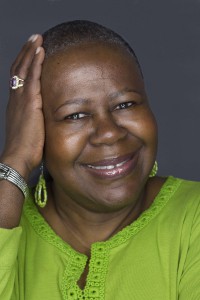
Karen Ford

Karen Ford has been a freelance journalist over 20 years and written for a number of local, national and international publications including the Chicago Tribune, Chicago Parent magazine, the Citizen Newspapers, Screen Magazine and Lutheran Woman Today. Her corporate clients have included the University of Illinois, the Chicago Labor Education Project, the Illinois Business Development Authority and the Women in Business Yellow Pages. She has written political ad copy for several local and county candidates and co-authored the book “Get That Cutie in Commercials.” She lives in Chicago with her husband.


Contact

Contact

She hardly knows me
yet she sleeps.

Years ago your hand hovered
a heart’s space from mine—
you hardly knew me . . .

The cat sleeps while
I trace years, patterns:
swinging wrecker balls
bridges touching islands
as memory of your hand
hovers
against my skin.

(For more poetry by Carlene Tejada’s “Blue Pearls” go to www.totalrecallpress.com or amazon.com.)

 

It’s Over Tonight

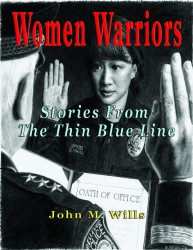
The holidays were winding to a close in 2002. It was December 29th, Christmas was over, and the New Year loomed close. Of course, it was cold. I had been to a movie with Becky, a fellow officer and friend. We were doing some last minute shopping when I received a page. My pager was the type where a third party could type in only their number and/or a numerical code of some sort. Checking the display, I saw my sister’s phone number followed by the numbers 9-1-1. Thinking my niece or nephew might be sick, I immediately made the call, only to hear the desperate voice of my sister. “He’s got a gun!” She was being held at gunpoint by her husband, my brother-in-law.

I have no recall of what I said after learning of her desperate plight. I do remember immediately calling our dispatch center and providing as much information as quickly as possible for responding officers. Becky and I ran to the car, which was fortunately a marked police vehicle, and raced to my sister’s house. The whole time we were enroute, I continued to talk with the dispatcher and repeatedly asked her to make sure everything was being recorded.

Screeching to a stop at my sister’s house, we ran to the door. We were unable to see into the downstairs area, which was where my sister and brother-in-law were located. I recall having a discussion with Becky about the children’s safety and then grabbing each of them individually and handing them off to Becky. I grabbed Becky’s gun while she ran to cover with my niece and nephew, secreting them behind the front wheel well of our car.
I managed to keep my phone flipped open, thus transmitting what was occurring. As I crept downstairs and entered the room, I tried to move tactically while maintaining a good eye on what was in front of me. My sister was sitting in a chair in the middle of the room, my brother-in-law off to one side. I was at the apex of the triangle.

Although I cannot remember in what order some things occurred, I recall trying to conjure up as much of my negotiator training as I could. I remember talking to him, trying to minimize what had already occurred, and pleading for him to not make things worse. At this point, I learned he had already taken a shot at my sister, the round striking the floor by her feet and not physically harming her.

“Hang up your phone!” he shouted.

Rather than doing so, I merely put my phone down and maintained the connection so the dispatch center could monitor what was occurring.

My sister was still sitting in the middle of the room between the two of us. During my exchange of words with my brother-in-law, she was able to dart to the safety of a bathroom located in the basement. Then, in a surreal scene, one that defied comprehension, it was just my brother-in-law and me facing each other with guns drawn. All negotiations had ended.

I heard other officers arriving on the scene, and both my brother-in-law and I began yelling to them.
“Stay out!” I yelled.
“No, I want you in here,” shouted my brother-in-law.

My concern was obviously for the welfare of my sister, but I was also afraid that if any officers entered the room, the chances for a peaceful resolution would diminish greatly. My personal and professional knowledge of the “suicide by cop” phenomenon, wherein individuals goad the police into shooting them, was weighing heavy on my mind. I didn’t want to see him lose his life.

Then, the most critical moment in this situation occurred. My brother-in-law and I began yelling at one another.

“Please, drop your weapon, everything will be okay.”
“You’re a negotiator, Dawn,” he cried. “Negotiate!”
“This is my sister!” I screamed at him.

His reply was lost in a haze of frightening moments, but I’ll never forget what happened next. He brought the weapon up to his head. “It’s over tonight,” he said.

The words resonated in my mind. Then he made a slight movement with his wrist, barely perceptible, but in conjunction with his statement, it seared into my mind. I was certain he was about to pull the trigger and shoot himself.

Screaming at him, I shot him once in the center mass of his body, striking him in the stomach. In response, a barrage of bullets came my way. Instantly, I felt my left hand and arm burning, and I was no longer able to hold my weapon. I fell to the ground while hearing my sister screaming for me. As quickly as it began, the shooting stopped. I later learned he had emptied his gun.

I was down but not out. I heard the officers in the foyer and recall yelling to them. “The gun’s on the floor—it’s empty—lying next to the shooter in the middle of the room.” I tried to provide them with as much tactical information as possible.

I picked up the phone that I had previously set down. The line was still open. “Send an ambulance; there’s been a shooting.” There was some confusion as to which one of us was shot, and I am sure that my racing adrenaline caused me to be less clear than normal.
Once the EMTs arrived and things were secured, my brother-in-law and I were transported to the same hospital. I had been shot at nine times and hit with four rounds. One bullet went through my upper left arm, nicking a nerve, thus causing the burning in my arm and hand. That round is also what caused me to drop my gun. Two shots went through my left knee, though neither of them hit any bones. There was another round that went through my left calf, through the meaty part, and didn’t hit anything vital.

My brother-in-law suffered a wound to his abdomen.

Ironically, I remember being worried about him. Although others have questioned why I did not “shoot to kill,” the truth is I never wanted him to die. In fact, when I began to think clearly once again, I kept hoping maybe something good could come from this situation. I was hopeful for an epiphany on his part, and I worried about my sister, niece and nephew. What would happen now?

Ultimately, a plea agreement was reached and my brother-in-law went to prison. To my knowledge, he fully recovered from his wounds. He has since been released and has visitation rights with my niece and nephew. Needless to say, I still worry about their safety.

I have permanent nerve damage in my left arm, which affects my hand. Half of my left hand is numb but I can still function, and I’m able to continue to work as a police officer. My left knee is problematic and arthritic, which is to be expected from that type of trauma. I also fell on the ice while recovering from the gunshots and sustained a tibial plateau fracture. As one would expect, this injury exacerbated the already tenuous state of my knee. I have had no further issues with the bullet wound through my calf.

It is exceptionally difficult for me to write about something so dynamic and explosive. I am not sure I am capable of completely articulating the events of that day; nevertheless, that experience was life altering in many ways. And while I play the events over and over again in my mind, I am certain I would do things the same way. Those of us in law enforcement willingly accept danger and have no qualms about risking our lives in order to protect others, most of whom are strangers. To have been given the opportunity to protect my own family is something I consider a gift.

(For more stories compiled by John Wills in “Women Warriors: Stories from the Thin Blue Line” go to www.totalrecallpress.com or amazon .com.)


Amaranta

Amaranta…

You chased me through the spring meadows of my childhood
In the warm bird song summer sun
With you I never had a day of sorrow
As I look back at what we had done
I call you Amaranta
A flower that never fades
You were my rays of happiness
The Battle Scarred Journey 149
Through a thousand silent plays
How many words are there to express the way this feels
Even after separation from you I still cried alone in my dreams
So sad I was unable to show you how I felt
Guess it’s just the way life was
The cards that we were dealt
I call you Amaranta
My flower that never fades
You were my rays of sunshine
Through a thousand silent prayers
So now as we get older, separation looms again
I just wanted to say to you that you have always been my friend
But I think, no, I know you’re so much more than that
A hidden unused word, I think it’s just called love
So thank you Amaranta
My flower that never fades
You were my rays of sunshine
Through all my breathing days
I will always love you Amaranta
Until my life force fades away
You are my Amaranta
The flower that never fades.


Rain

Rain

Rain

In a reach for ways out,
he hunches over a yellowed book,
nicked pages symbols of over-use
and reads with silent lips.
Still as sleep, he barely breathes,
attentive for a whisper in the air
to guide, caress him with an answer.
It comes, first faint like raindrops
then pulsing like an aching pain.
Dust scatters at his feet, disturbed by movement
as he scoops the gun from its rusty rack.
Anointed by an ill wind that lied
into his searching ears, and warped
by a will too strong, the voices screeched
relentlessly until a shot was heard.
Rain drizzles over a huddled mass.

(For more by Alice Shapiro’s “Life” go to www.totalrecallpress.com or amazon.com.)
 

Cultural Tea-Sip But Closet Aggie

Our neighbors across the street in Kern Place were the Stahmanns, who had farms down the Rio Grande Valley and up the valley in New Mexico. Mr. Stahmann was an enterprising farmer, eminently successful growing cantaloupes and pioneering pecans. Another role model was a cotton farmer in Anthony whose son Allen Rhodes was a kid buddy of mine. As pre-teens, Allen and I made spending money picking cotton along with Mexican laborers who were probably illegal immigrants, since they were referred to as “wetbacks.”
“Horrors, child labor!” someone will say who reads this.

“What’s wrong with hard work for pre-teens?” I ask. Allen and I learned how long it took to fill a ten-foot long cotton picker’s sack in a hot summer sun (100º F plus). I doubt that Allen and I ever filled one sack between us, since we worked at a leisurely pace earning a dime per pound and learning the basics of personal economics, what I grew to call Economics 101. A fistful of pennies and dimes definitely beats always being empty-handed. More important, Allen and I were prompted to follow other callings in life, besides picking cotton, since we had a baseline with which to compare job opportunities.

Also as a pre-teen, I embarked on my second agricultural misadventure when I decided to grow a “victory garden” during World War II, primarily because it was the patriotic thing to do. With so many farm boys in the service overseas, how on the home front were we to have enough food to feed our families and neighbors? Good question.

Answer: Grow a “victory garden.”
With care and attention, I bought several packages of vegetable seeds at Tidwell Feed Company, things I’d never even heard of before, like… (I spell phonetically) – “root-a-begger,” “turn-ups,” “call-eee-flowerp,” “par-snips,” and that dreadfully slimy one that sounded like someone in the early stages of “throwing up” and needing to vomit … “uh,uh, uh,… oak-rah”.

Please understand that in West Texas in the late 1940s, one’s diet was pretty much centered on corn, beans, chili and cheese, always potatoes, and sometimes peas and carrots. For breakfast there was always oat-meal (easy and cheap to feed three boys).
Thankfully, we always did have plenty to eat.

Now if you want to say we suffered from cultural deprivation, that’s another matter. Today my wife will confirm that there are few vegetables I eat without screwing up my face. In Hammond, Louisiana where she grew up, her daddy taught agriculture at Southeast Louisiana College. Talk about cultural shock. I remember the first time she took me to a shrimp boil at Nack-a-tish (I spell phonetically).

Imagine gracious, civilized people pulling apart what we at El Paso had learned in High School Biology were “crustaceans” (translate, shrimp). They threw these crustaceans into pots of scalding water and boiled them alive! Was this a sadistic rite of some sort? Later I learned that Louisiana people with equal fervor eat even smaller crustaceans affectionately dubbed “mud bugs” that are trapped as they climb out of their small mud pyramids. Some smiling, charming Louisiana lady would wander by to inquire, “Care for some more Romma-lod sauce?”

During that summer of 1960 this West Texan almost blew my budding friendship with Charis Jeanne Wedgeworth when we graduated to the mud bugs. I tried to keep a straight face by thinking to myself that if I were in China I might have to eat “delicacies” like fish heads and rice to keep from starving.

This brings up other things from El Paso days for this cultural tea-sip who came close to being an Aggie during the Second World War when I tried growing vegetables in a 1/8 acre Victory Garden, because it was the patriotic thing to do. The caliche soil produced all of two radishes one summer. I might have done better to have planted my Victory Garden in Draino.

Then I decided to try growing chickens, something quite Aggie-like prompted by two older boys in Kern Place who were in the FFA. Translate: high school Future Farmers of America.
My grandparents raised chickens in town for home consumption, and Granddad Heermans had shown me how to gather eggs and build a chicken coop. With enough saved allowance to invest in 50 chicks, I bought ten each of such grand-sounding chicks as Buff Orphingtons, Rhode Island Reds, Yellow Minorcas, and Plymouth Rocks.
I was in the chicken business!

But during the second night of chicken farming, two or three chicks began to droop and by the next morning had died. The same thing happened the next night, and again the night after that. It seemed they got “the Pip,” which for me was an explanation that did not explain. Finally, I raised 18 out of the 50 to full size, whereupon I bargained with my mother to transport the grown chickens to Ayoub Poultry Company for contract slaughter.
Try to imagine my mother driving our Studebaker full of chickens with me facing backward, trying to keep the squawking chickens out of the front seat?
We made it to Ayoub Poultry okay, but the financial bottom line of my chicken venture was a loss, though I did get a few bucks positive on my invested allowance.
My next Aggie misadventure happened years later after I’d moved to Houston from San Antonio and had been married a year or so.

One day I noticed a classified ad in the Houston Post that brought my Aggie tendencies to the forefront with a vengeance. The ad ran about like this:

SMALL FARM FOR SALE
Nearby in Liberty County. Grow produce,
with fruit trees, bearing pecan trees,
14 acres with creek along the back side,
Nice frame house. See owner only
Clarence McCutcheon, etc. etc etc.

“We need to check this out,” I told Charis. “Besides, we now have a nest egg we can put into it. This could be the opportunity of a lifetime.”
It was love at first sight. Mr. McCutcheon was at work in his fields, every inch an authentic farmer, even to soil under his finger nails. And, he scratched his bottom with aplomb.
Though the house was at the front of the property, there were two parallel rows of huge mature pecan trees extending toward Caroline Creek.

“Just look, Charis,” I rhapsodized. “Someday we can build our dream house at the end of that double row of pecan trees.”

I was sure of my intention to build a house at the end of the two rows of pecan trees, and was equally sure in my resolution then and there to start growing more pecans, although I was conscious of the fact that Charis was not as enthusiastic about “Aggie-culture” as her liberated husband was.

Within a week, I was on the phone to Billy Stahmann, friend and neighbor from El Paso days then living in Las Cruces, New Mexico. Like I had good sense and had already converted to being a farming Aggie, I got down to business. “Billy, this is Davo. I’ve just bought a farm near Houston and I’m going to plant our fields in pecans. How soon could you ship me a hundred seedlings or whatever the heck you call baby pecan trees?” Billy heard me out and then shipped me a hundred trees.

Within days I had parked my fragile chemical business to plant fledgling pecan trees, assisted by a Mr. Roundtree in Dayton, an old man who operated a tiny tractor having a “three-point hitch.” Now a “three-point hitch,” in case you’re not an Aggie, is something any authentic farm boy, Aggie or not, knows to be as basic as a hoe (or today, a chain saw).
As an aspiring farmer/Aggie I had bought (not rented), a heavy 30 inch diameter soil bit from an agricultural supply company. I was sure that I would soon be planting pecan trees by the hundreds or even thousands, and have a tractor and three-point hitch of my own to tie on to my huge Auger.

The day came to start planting.
D-Day! Up men, and to your posts! The noise of Mr. Roundtree’s backfiring engine was wonderful, like that of men going into battle. The contrast between Mr. Roundtree’s tractor and my heavy treehole drill was grand as the bit chewed into tough gumbo topsoil readily.

As I listened to all the tractor noise as he engaged the clutch, I thought for a second that Mr. Roundtree and his tractor would be going up and around for a spin, if the big drill bit should hit a big rock.

Oh, me of little faith! Some three days later, with the holes all dug and the one hundred plus pecan saplings planted, Charis and I might have planned to live happily ever after.
Not quite.

I had sense enough to water my new trees regularly, but within 60 days I noticed some dry ones when I scratched the bark to check for life. I had lost more than a few, indeed half or more during the second year that passed. But again with Mr. Roundtree’s help, I ran the play once again with pretty much the same results planting saplings from the Stahmanns’ farm. The third year was a repeat performance of years one and two.

“When you need your teeth fixed, go find a dentist,” my former roommate and best friend Arnold once told me. So, I made contact with Texas Pecan Growers Association, where I figured I could “find the dentist,” so to speak, to address my problem in need of fixing. Aggie pecan growers accepted me as a dues-paying member, no questions asked, for their Pecan Growers Short Course in the fall. I also had to swallow some of my Texas pride, for clearly I was throwing darts at a board in a dark room when it came to growing pecans. I had a problem and I knew enough to acknowledge it, which is the first step.
I arrived mid-morning during the coffee break for the opening session of the Short Course held at Texas A&M College Station. Everyone was wearing a name tag. I decided to list Dayton, Texas instead of Houston as my home town on my name badge. I reasoned it might make things easier, being so obviously a non-authentic Aggie.

A laconic country boy in coveralls ambled up to me and stared at my name badge.
“Dayton, Texas?” he intoned slowly and disbelievingly.

Then with a slow troubled look he inquired, “You can’t grow any pecans in Dayton… can you?
There was embarrassed silence.
“Not as far as I’m concerned,” I responded. “That’s why I’ve come to this meeting. I need to learn why with three years planting over 100 pecan trees each year just like you’re supposed to do, I lose a third of my trees each year.”

There was another embarrassed silence.
“Oh,” was my new friend’s sole response as he walked away.
Soon the articulate instructor reconvened the class and jumped right into his subject, which dealt with promising new “eastern varieties of pecans in Texas…” By the end of the hour, the scales had dropped from my eyes when I was given to understand something as obvious and fundamental to Aggies as water not running uphill. The short version is East is East, West is West, and never the twain shall meet when it comes to growing pecans in Texas.

I had been trying to grow western pecan trees from the dry desert area near El Paso in the heaviest rainfall part of the state, east of Houston!

Dumb me. Perhaps I should cut myself some slack and charge this mistake off to th
e fact that I’m a slow learner.

It was time for an agonizing reappraisal, especially since my third time trying to grow pecan trees was assuredly not the charm. Racing back and forth from Dayton to Houston pushing my emerging chemical business was tough enough. Allowing my latent Aggie instincts open expression was proving even harder.

One day during a visit with my ex-college roommate and…UT Fiji friend, Les Moor, he took on the role of Dutch uncle and said, “Dave, if you’re going to live in Dayton, live in Dayton. If you’re going to live in Houston, live in Houston. But decide!” I walked around Les’s wisdom a time or two or three. Socially we weren’t fitting in at Dayton, perhaps because I wasn’t a rice farmer.
(For the rest of this story and more by David Smith’s “Texas Spirit” go to www.totalrecallpress.com or amazon.com.)

 

Daddy’s Stories

He had a way of making an observation or turning a phrase that would catch your attention and make it easy to remember. I recall one such phase at one of our Fourth of July fish fries.

Our little country community where I spent my junior high and high school years got together every year for a big fish fry on July 4. There weren’t any public parks close enough to go to. Someone would scout around and find a place on the bank of the river or the shore of a nearby lake. Some would come early in the morning, eight or nine o’clock, bringing pickup loads of rough lumber. They would set to building a long serving table and benches all out among the trees. The fire pit would be dug and firewood gathered. A support for the big black wash pot in which catfish and hush puppies would be fried would be constructed. Later in the morning others would come bringing all sorts of vegetable dishes, salads, and desserts to round out the meal.

We were usually the only ones around, but this particular year we had selected the shore of a horseshoe lake near the Tallahatchie River, and another group had come in about fifty yards up the shoreline. Only they were not having a fish fry. The first thing they set up was a very large, black pot. I’d never seen one so big. It must have been five feet across and was so heavy it took several men to get it into position. They filled it about half full of water and started a big fire under it. Then, they began to put all manner of things in the pot. It seemed like everybody added something different. There were whole onions, potatoes, tomatoes, okra, and a number of vegetables we could not identify. The meats were equally varied. We could agree that there were pieces of pork and beef, whole squirrels, rabbits, and quail, and several other things we couldn’t name. I had been sitting around with a group of the men who were watching this operation and making comments about this communal stew being created before our very eyes. A late arrival joined our group and observed the activity for a few minutes before asking, “What in the world have they got in that pot?” My daddy replied, “Well, D. J., the best I can figure out, they’ve got everything in there from bull nuts to cooter.”

(Cooter was a local term for a turtle.)

Since these are my daddy’s stories, I’m going to try to write ’em like he told ’em.

(For more stories from “Coon Dogs and Outhouses V. 1” by Luke Boyd, go to amazon.com or totalrecallpress.com.)


Only an Hour Ago

Contact

Only an Hour Ago

Soon the purple break faded to the bleak
comfort of a lilac bruise—

I wonder what else is being healed
as I gaze across ripples . . .
to watch this evening’s trio of small gray birds
flutter, dip and dive.

At the water’s edge the dog pounces
on silver streaks and the sun,
following the sky’s pink and lavender curve,
slides with candid calm
down, down into the pine forest.


  • « Previous Page
  • 1
  • …
  • 39
  • 40
  • 41
  • 42
  • 43
  • …
  • 59
  • Next Page »

Copyright © 2026 · www.AuthorBookBeat.com | Privacy Policy | Terms of Service