

• Authors Registration
  • Login
  • ABB Book Store

AuthorBookBeat

Promoting, Marketing and Advertising your title

authorbookbeat
Be Like these authors and promote your own book signing Events
  • Home
  • About ABB
  • How ABB Works
  • FAQ
  • Services
  • Publishing
  • Literary Agents
  • Sell Books
  • Authors Index
  • Post Breaking News
  • Book Trailer
  • Interviews
  • Events
  • Short Stories
  • Press Release
  • Articles
  • Email Distribution
  • Book Reviews
  • Promote
  • Poetry
You are here: Home / Blog

Over the River and Through the Woods

knots in her memory but they
are gray as this holiday’s fog.
How did she come to be a passenger?
her silver-haired daughter driving
to this dinner at her son’s house
those other Thanksgivings
she wasn’t the oldest one at the table
each year’s dinner blends into last year’s
candle spilling down the wine bottle
they emptied how many years ago?
all those golden-crust pumpkin pies
turkeys stuffed and basted
squash and potatoes mashed and buttered
drip together over the edges
of her mind like the wax of 90 candles
flowing until the wine bottle disappears
under the weight of melted memories.

(For more by Carlene Tejada and “Blue Pearls,” go to www.totalrecallpress.com or www.amazon.com.)

 

Bless our Fraternity

I was pretty well pumped up by family, my brothers especially, to expect something great, even awesome. Just what that was to be, was unclear, though more than once my dad had expressed regret that he did not accept an offer from our Great Aunt Lizzie in Jefferson to lend him money to go to The University of Texas. At that time there was one and only one University of Texas, or if you prefer, The University of Texas, although soon about every town with a population of 50,000 or large enough to have a Burger King has a branch of The University and/or now the parallel system out of Texas A&M.

Once or twice I had ridden with my folks the long six hundred miles by car from El Paso to Austin to check on my older brothers, Forrest Jr. (Buddy) and Paul (aka Bim). We would eat Sunday dinner at their fraternity house. The boys wore ties. I called them “sir.” Two or three times they’d sing fraternity songs in three-part harmony that sounded hymn-like during the lunch hour. I was properly impressed.

My blood brother Buddy, who was five years older than me, joined Phi Gamma Delta on his return from the Navy, a fraternity of one of Dad’s golfing buddies. Buddy was drawn to the ritual, the Greek letters, the secrets, and the special symbols, passwords, handshakes, all laced with Greek words and other inane nonsense. He was so into fraternity that the Army expression “Gung Ho” comes to mind from Infantry days. Buddy was a UT pre-med senior when he pioneered the new Phi Gamma Delta chapter at LSU in Baton Rouge. Forrest Jr. (Buddy) at that time was referred to by a Greek word, which I’ve forgotten, for “missionary” from Texas, I suppose, to the less civilized brethren at LSU across the Neches River in Louisiana.

The fall of 1949 when I entered UT, my older brother Paul (Bim) was president of the UT chapter. I was to enter “rush,” a curious process by which fraternities add members, which was then in full swing. It seemed to me as phony as a seven dollar bill, but looking back, I guess fraternity members assumed that since I was Frosty and Paul’s little brother I would join their fraternity. Without invitation or complaint, and referred to as a “legacy,” technically a double legacy. I pretty much went along with the program and soon found myself a “pledge” to an unknown something my brothers somehow thought worthwhile.
Shortly I came to realize that all those fraternity boys were not like my own big brothers. In fact, quite a few of them were closer to the opposite, fine songs and ties at Sunday dinner notwithstanding. One of the members was sadistic to the fraternity dog, throwing him off the second story porch into the bushes to hear him howl. Late one Saturday night a taxi driver pulled up to the fraternity house and essentially dumped a member on the entry floor, dead drunk. One older member who had been in WWII, and who was referred to as our “trainer”, had a constant snide outlook. By objective standards he was just plain mean. (I supposed that meant we pledges were to be treated like horses or dogs.)

I began to wonder who these men were that I was associating with. Sure, there were some fine fellows among them, but what was all this secret stuff and jibber-jabber they were making us learn? Some members’ relatives were authentic Texas Germans; i.e., pre-World War I and II, had parked their ethnic prejudice/hatred, especially with another war an object to reset their ethnic hatred on.

My roommate Joe Hammond from El Paso and I were at least moderately committed to good school work. Living as we did at Brackenridge Hall near the fraternity house, both of us were pledges and went to the weekly indoctrination sessions. Some of the stuff was fun or funny, like ganging up on a member on his birthday to throw him into Littlefield Fountain or having to stand on your chair and sing your high school “hymn” or fight song. I could handle all that.

Our older ethnic German, quite possible by his constant sneer and hatred vented on us pledges might well have been a U boat commander in another war and time zone.
By snide remarks and other statements we pledges were given to understand that not every pledge would “make it.” There were references to previous unknown pledges who did not make it for various reasons, such as poor grades (flunking out), but primarily it was for not having the macho stuff to endure “hell week,” which was three days of semi-sadistic tests contrived by the less intelligent members for the perverse amusement of certain members. We pledges were made to walk like ducks while the members would pour catsup and drop eggs on us from the fraternity house second story porch at 300 West 27th Street, next door to Austin Presbyterian Theological Seminary.

The climax to “rush” came late one night when some 30 odd members of the “pledge class” were blindfolded, “kidnapped,” then dumped at a remote place out in Travis Country. We pledges were left walking around blindfolded in a large circle, singing a ridiculous though not obscene song, while the members sneaked off.

It was at the end of the second day of this asinine nonsense that I decided fraternity was not for me. I hunted up my actual brother Paul and in anger plus disgust expressed my view about as follows; “Bim, I’ve had enough of this stuff and I’m checking out. I’ve made a few friends in the pledge class, but if this is brotherhood, then I want none of it.” I ranted on even in tears.

Paul (Bim) urged me not to quit, especially since I was only a week from formal initiation and the hazing was nearly over. He reminded me that I would be allowed to enter the third floor chapter hall (translate holy of holies) and would learn the mysteries of full fellowship in my brothers’ fraternity. An issue that remained unspoken between us was that both Bim as past president and Buddy, a Gung-Ho “Fiji,” would be disappointed and embarrassed were I to quit. With reluctance, I agreed to continue through “hell week.”
Did I make a mistake in not carrying out my intended resolve to quit which I expressed to Bim? Possibly so.

(Come to think of it a little more, I’ll change my position to “probably so.”) As a matter of fact, this may come as something of a surprise, because Bim and I never revisited the issue in the years since I expressed intent not to join the Fijis. For all I know, I may be deemed a traitor or at least a heretic by those who may look at me sideways should I attend the annual Fiji reunion at a beer joint in downtown San Antonio. At my advanced middle age I hate to give offense to brothers or shirt tail relatives or my dad’s side of the family.

The fact is, or was, I had an identity problem in the fraternity. It was assumed that I, as Frosty Smith’s little brother, was likewise enthusiastic about the useless drivel taught to pledges: the mystery, the history, the candles, the Greek names, and the men whose duty it was to ensure that the door to the chapter hall was well guarded. These and other important “secrets” were contained in a book called the Purple Pilgrim, which some called the fraternity’s “Bible.”

Can you imagine yourself in a position of having to teach something you knew to be false or even just inane? During my sophomore year at the University of Texas, located in Austin, Texas, I found myself having to teach that perverse stuff of the Purple Pilgrim to new pledges, as though it were substantive.

For the record, in Christian candor I’ll tell you, actual fathers and brothers in the bond, shirt tail relatives, the whole business of Greek letter college fraternities is flawed.

It just popped into my head that there was one time in my life when something from the Purple Pilgrim found its way into a conversation in an interesting way. Years after college and fraternity days, a neat Louisiana school teacher, today my wife, and I were growing interested in one another. Though she was still working on her Masters degree at LSU (where Buddy had gone for a year), she had never heard of the Fijis, but she dazzled me with lots of profoundly useless information such as the latitude and annual rainfall necessary to grow sugar cane on plantations in South Louisiana.

She had invited me to meet her folks in the college town of Hammond, LA. As we were crossing the Mississippi River by ferry into St. Francisville, I took the opportunity to astonish her with some of my fraternity knowledge. It went something like this:
“Hmmm, St. Francisville; that’s where the immortal Daniel Webster Crofts is buried,” I observed casually.

“Who?”
“Daniel Webster Crofts. You know, one of the Immortal Six.”
“Immortal Six? Who, might I ask, are the Immortal Six?” she continued.
“Were,” I corrected.
“OK, who were they?”
“The founders of the Fijis,” I responded as though that were a fact any sixth grade school teacher like Charis Jeanne should know.

She looked at me as if to say, “What have we here?”

We weren’t connecting. Charis later told me that she was going down the trail to the Fiji Islands, when what I meant by Fijis were members of the fraternity of Phi Gamma Delta.
I had one more arrow in my quiver to fire and I fired it. But it still wasn’t the right one.
“You’ll have to read about them in the Purple Pilgrim, but much of it is secret,” I told her.
Her look of passing curiosity changed to one of anxious concern, especially as we passed by the state mental hospital at Denham Springs, Louisiana. But we still weren’t connecting.

What if she had said thank you, but she would go on to Hammond by herself?

Perish the thought!

Fraternity well might be viewed as a stage in life, part of growing up, perhaps like the terrible “twosies” but for nearly grown college boys. There were and are some fine things that came out of the Fijis for me, especially two chemical engineers who joined me in CXI/Texmark several years later as limited partners. But that’s a different venue and another story. Unspoken aspects of fraternity life give me a problem. At the risk of being black-balled at the next Fiji Reunion, I’ll speak my minority opinion.

To all nephews, great nephews and others interested, for the sake of your own initiative, independence, and freedom of adventure, I would recommend that you not join a fraternity; i.e., a Greek letter, college, solely social fraternity.

From possibly so to probably not, let’s move this thing still down another notch to probably not. Fraternity was not for me as an average, friendly, West Texas boy, not an offspring from a family of psychological cripples. Who might a single teenage boy from the back of the room at CHAPTER Hall think he is/was when he points his thumb downward and shouts “BALL!”

Friends can be found lots of ways, most of which are far better than rush week, hell week, with or without any of the ritual nonsense that goes with fraternity and/or Purple Pilgrim equivalent. Consider the unnecessary embarrass-ment and hurt caused many a young man not accepted in a fraternity for trifling reasons. Isn’t there something artificial about joining an outfit, paying costly dues, playing at ritual with attendant jibber-jabber just to have a few instant “friends?”

When I found myself making a “pledge” to something supposed to be “my first and all powerful influence and rule of daily action”, it was too much. I was making a mistake, a commitment to something patently false, especially in the case of Frosty Smith, my oldest brother who died a few years ago.

(For the rest of this story and more by David Smith and “Texas Spirit,” go to www.totalrecallpress.com or www.amazon.com.)

 

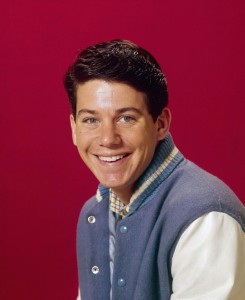
“Throwback Thursdays” with Herbie J Pilato is a hit!

“Herbie J Pilato’s Throwback Thursday program, of which I have been a proud participant, is a historically important weekly event. ‘Historically important’ is not hyperbole. Through the lens of television pop-culture, as moderated by Herbie J, the industry’s most noted television pop-culture expert, our modern world is reflected, and we are reminded that hope really does exist. Hope for happy endings, hope for inclusion. Herbie J is something of a superhero in this regard, keeping classic TV alive for future generations and celebrating its legacy. Thank you, Herbie J!”

– Writer/producer Joel Eisenberg, and author of Chronicles of Ara: Creation

“Herbie J Pilato’s Throwback Thursdays are great fun and highly informative. It is one thing to read about the creation and experiences of creators, actors, and others involved in classic television shows. It is quite another to hear it directly from the key players themselves. Herbie J’s Throwback Thursdays are a rare look into the creative process and the twists and turns that result in landmark television. It was an honor to participate.”

– Ed Spielman, creator of the legendary TV series Kung Fu

“Throwback Thursdays with Herbie J Pilato are innovative and rewarding.”

– Legendary actor Peter Mark Richman

“The highlight of this year was the Barnes & Noble Throwback Thursday event hosted by Herbie J Pilato, founder of the Classic TV Preservation Society. When you appear in a TV show that is seen by millions of people over a span of decades, you never reallyquite understand the impact that your performance on that show, or that show in general, has made on the viewers until you have the opportunity to meet and talk with the fans first hand. The Throwback Thursday events do just that…and the results are heart-warming and life-changing.”

– Lydia Cornell, star of Too Close For Comfort

“Herbie J Pilato’s Throwback Thursdays at Barnes & Noble in Burbank are wonderful. It was such a pleasure to participate with the great Cindy Williams. We truly had an enjoyable evening recounting our experiences and seeing how much those who attended enjoyed hearing them. By playing Ritchie Petrie on The Dick Van Dyke Show, I was fortunate to be able to give the young viewers someone they could identify with as children, and Throwback Thursdays gave those same viewers, now young adults, a chance to meet and ask questions about life experiences and what is was like being a child actor on a classic show. A fun night for all that seemed to end too soon. Kudos to Herbie J for his continuous work to preserve our TV heritage and to keep the classic shows going while giving new generations of fans the opportunity to enjoy the classic TV shows that are timeless. Definitely a worthy want to spend an evening!”

– Larry Mathews, The Dick Van Dyke Show

“Herbie J, what a fun ride I had with you and the audience up and down Memory Lane on Throwback Thursday. You are a wonderful moderator. Let’s pack up the Volkswagen Van and do it again sometime. Much Love, Cindy.”

– Cindy Williams, star of Laverne & Shirley, and author of the best-selling new book, Shirley, I Jest.

Future guests include actress Kathy Garver, author of Surviving Cissy: My Family Affair of Life in Hollywood, actor Anson Williams author of Singing to A Bulldog: From Happy Says to Hollywood Director, and the Unlikely Mentor Who Got Me There, and more.

For more information about the “Throwback Thursday” live events, or the Classic TV Preservation Society, email: ClassicTVPS@gmail.com.


Two Women Alone In a Room

TWO WOMEN ALONE IN A ROOM

The waiting room was small and painted “hospital green” like so many others during the hippy generation of peace, love and “colors affect your mood.” A small metal receptionist desk sat on the matted and stained shag carpet caddy corner to the doctor’s bright white office door, the only thing in the room that expressed any hope.
The receptionist looked like she had been sitting there since the building was constructed. The brown nameplate read “Ms. Osterich”– the letter “O” cracked and faded with age. “Ossie,” as the doc liked to call her, was slumped over the keyboard of an old selectric typewriter. She was staring at the keyboard, smoke slowly drifting about her head from the cigarette dangling between two nicotine stained fingers. She wore a sea blue polyester pantsuit, the buttons on the jacket straining to hold together the threadbare material. Her white nursing shoes were rundown on both sides, the soles almost gone, like the life inside of her.
On one corner of the scratched and dented black metal desk sat a cactus, the edges brown and dry, as prickly as its owner. On the other corner of the desk sat a box that looked like an old 40’s radio, actually an intercom system, and the lifeline to the office behind the white door where her boss of 40 years resided. There was a picture on the wall behind the desk, a scene that surprised most patients, it was of Paris, but it was as faded as the dreams she had of one day living there. Ossie turned her head to assess the patients who were waiting for the doctor.

Dr. Miller sat behind a large wooden desk, a cheap imitation of a Louie XVI he had seen in a magazine years ago. His old brown leather chair creaked under his obesity as he leaned over his patient’s folders, the arms of his dark gray suit shiny from years of wear.
On one wall was a collage of family pictures outdated by 20 years. His wife had been gone for seven years now, tired of the broken promises of wealth that never came from a practice that never flourished. Dean his son, ten years old in the pictures, and his daughter Rebecca was twelve. They had grown up without him and now they weren’t interested in what he had to say.
Dean had gone on to law school, a DA for the State of Wyoming, more interested in weekend ski trips then spending time with the father he hardly knew. Rebecca was another story. For her he was a failure of a father, who as a psychiatrist, was supposed to have all the answers. Staring at the pictures of a tow headed five year old, blue eyes shining with curiosity and pixie ness, she had turned out to be a coke snorter, prostituting for another fix.
Shaking himself out of his self-absorption he scanned the folder in front of him, how was he supposed to help Mavis and LaDonna and all his other patients when his own life was a series of one night stands from the local bar and loneliness which seemed to blanket his soul.
Mavis was 29 years old and looked 60 from all the beatings she took from her husband, she had been his patient for 2 years and he was no closer to convincing her to get out. She “loved her husband”, famous last words for a lot of abused women.
Then there was LaDonna; Dr. Miller had no idea why a classy woman with money would come to a psychiatrist on the worst side of town when she could afford the best. He thought it might be because her husband was Senator Brier and she did not want to chance anyone in the political realm knowing she was losing it.
He again lifted his head from the patient’s files and opened the bottom desk drawer, the cool, brown liquid in the Seagram’s bottle calling to him.
The two women were alone in the room. At first glance they were as different as night and day. Mavis Smith, sitting on a faded green plastic couch, a leftover from the 60’s, looked as if she was expecting another blow from her husband’s hand. Her hair was mousy brown, shoulder length, and greasy, as she had not washed it in a week or two, her mouth was sunken in where her teeth used to be. The dress she wore had seen better days, the small pink flowered material faded and stained. Her belly hung almost to her knees, her tennis shoes filthy and the shoestrings as broken as her spirit.

The other woman, LaDonna, sitting upright and stiff on the orange plastic chair across from Mavis, stared into space. She was dressed in a navy pin-striped pantsuit, a white ruffled blouse peeking out from the crisp jacket sleeves, a runner of six miles a day there was no excess weight on her. The glare from the lamp shone off her two-inch high blue and white patent leather spectator pumps. Her long blonde hair swept away from her face in a fashionable french twist, allowed anyone looking closely to see the totally vacant look in her cold, green eyes. Her lips turning down at both corners made you see that the outside trimmings were only a façade of what was inside.

Ossie, her voice hoarse from years of smoking spoke softly to Mavis, “Ms. Smith, how are you today?” Mavis, jumping slightly answered, “I, I’m fine Ms. Osterich will it be long before the doctor sees me? I have to get home to cook supper, Robert don’t like it if his supper’s late.” “When are you going to learn that you’re important too Mavis?” Ossie said, “Robert can wait.” “Oh Miss Ossie, you know he’s from the old school, wants his woman to tend to his every need,” Mavis said, her cheeks turning a bright red embarrassed by the knowledge that Miss Ossie knew she’d get a beating if supper wasn’t on the table when Robert got home.
Ossie turned to LaDonna, “And how about you Ms. Brier, are you doing OK today?” LaDonna slowly turned to look at Ossie “Things at my house are dead quiet”; she said nodding her head slowly. Lowering her voice, she muttered to herself “yep, dead quiet.” Mavis turned to LaDonna “I wish things were quiet at my house. Gets to be quite loud sometimes . . .Robert don’t like quiet, I don’t think. Always yelling about something.”
LaDonna turned toward Mavis looking at her as if she had just realized someone else was in the room. She answered, “When you get tired of all the noise let me know. I know just how you can get the peace you need. Yes, I can help you there.” As Mavis turned to inspect the other woman in the room with her, she noticed LaDonna’s small, expensive black alligator handbag beside the chair. Her eyes trying to make out what her brain did not want to register in the shadows, the handle of a small silver revolver.


DANICA PATRICK

Let’s get the leering out of the way
right away, but it doesn’t hurt that
she’s really good looking. Still,
if a woman is going to race in what
is still a man’s world, she’d better
be plenty tough about the comments.
We aren’t that far from sexy pin-ups
on every mechanic’s garage walls.

2. Ethnicity

In Serbian, it’s DAN-ee-tsa.
Americans could probably learn
that, although she, herself, says,
“Dan-i-ka.” Maybe because
in Serbia, they also still say,
“Jena i jena” — a woman is
a woman — as the caption for
a scantily-clad centerfold in
the daily news. That’s a good
reason for a name to get
Americanized.

3. Winning Some Points at Least

Used to be green was an unlucky
color for a race car not to mention

the number 13. Used to be a woman
would never race. She entered 13
in 2010 and scheduled 12 for 2011.

Break a few rules, break a few
expectations. GoDaddy! Even her
sponsor is techy and new. Her first
year in NASCAR she racked up
enough points to beat 100 men.
Now she’s signed on as a star.

(For more poetry by David Axelrod’s “The Speedway” go to www.totalrecallpress.com or www.amazon.com.)



The Sanitary Toilet

However, it was no joke in the 1930s in Mississippi. Most houses had a “path.” This often-traveled thoroughfare usually led out behind the garden or smokehouse around a screen of elderberry bushes to the outdoor toilet. Some of the more cultured referred to it as the “privy” or “outhouse,” but my family used the more earthy term “toilet.”

It was well that they were generally located away from the main house and hidden from view. In the first place, they were not imposing structures and I’ve never seen one that would win a prize for architectural design. Upon entering, one would find across the rear an enclosed shelf or bench about two feet off the floor. An oval hole was cut in the top of this, allowing the waste to be deposited on the ground below. Some large families even built “two-holers,” but one hole was sufficient for us.

In addition to being not pretty to look at, the toilet also had a terrible smell. It was especially oppressive in hot weather. It was an odor, that once stamped in your olfactory memory, was never forgotten. Late one afternoon fifty years later, I was playing golf and walked up to a green that had just been watered, when that telltale odor flooded my nostrils. Even though we were on a new course in the middle of an upscale residential development, the smell was unmistakable. I remarked that there had to be a toilet close by. My playing partner replied, “No, we use fertilizer on the greens that’s made from human waste. It’s real good fertilizer, but it smells like this when it’s watered.” I supposed that some smells were just not meant to die.

Having to walk by a toilet downwind was bad enough; having to be inside one for any length of time was almost unbearable. My grandfather had a book of photographs of World War I which contained several photos of soldiers under gas attack. Those without gas masks were clutching their throats and writhing about on the ground. From my limited experiences, that was the only thing I could imagine being worse than a visit to the toilet on a midsummer afternoon with the temperature hovering at 103 degrees.

One night after supper I heard my parents talking about our getting a “sanitary toilet.” This was one of the WPA projects aimed at improving the health of rural residents through improved sanitation. When I asked what a “sanitary toilet” was, Mama replied, “It’s one that doesn’t stink.” Immediately, I knew that was my kind of toilet.

A week or so later a large truck loaded with tools, lumber, and eight or ten men rolled to a stop in our yard. The toilet builders had arrived.

Instead of putting the new toilet somewhere out back and out of view, my father selected a site at the edge of the side yard by the potato patch in full view of anyone passing along the road. After all, a new toilet built by the United States Government was something to be proud of, and worthy to be seen.

The first thing the men did was to dig a pit about six feet square and probably eight feet deep. It’s a wonder they kept from covering up my brother Gene and me with the dirt from the pit, since we were so close underfoot watching every detail. I was glad school was out for the summer, so I could observe the whole operation from start to finish.

The pit fascinated me. That was the deepest hole I’d ever seen. I had spent my seven years of life in the Delta of Mississippi where all the land was practically flat. I spent a lot of my time trying to get above it by climbing trees, the ladder to the hayloft in the big barn, and up on numerous outbuildings. The minus elevation of the toilet pit also caught my attention. Little did I realize that it would soon produce a painful experience for me.

After the pit was completed, the workers built a form and poured a concrete slab over it. The slab had a rectangular opening at the rear center. They then proceeded to build the toilet over the slab. The final step was to place the “throne” over the hole in the slab. The “throne” had a hinged cover on top and a vent out the rear of the structure. Screen wire was placed over the vent opening so that no flies could get to the waste, lay eggs, and spread germs. Our “sanitary toilet” was now complete, and an imposing structure it was, made of bright new lumber which contrasted with the deep green of the potato plants.
A few weeks later we experienced a rarity in the Delta summer–a rainy day. Since we could not go outside and play, Gene and I had to find something to do in the house. I got several sheets of paper and began to draw pictures for him. I had completed first grade where we got to draw everyday, so I fancied myself as quite an accomplished artist. My brother was still a year away from starting school and had not been exposed to this advanced instruction. I’d sketch something, and he would try to guess what it was.

Our toilet was still new and much on my mind. I had drawn a front view and a side view of it when I began to think about the pit. Even at that young age, I sometimes tended to see things from a different perspective than other folks. I began to imagine just what one would see if he were down in the pit while the toilet was in use. I proceeded to sketch the scene, being careful to include everything I thought would be observed.

Several times during our drawing session, Gene had taken a picture or two to show to Mama, who was doing housework in another part of the house. So, I didn’t think too much about it when he went wandering off with the drawing from the bottom of the pit. I was busily working on another sketch when I heard her voice rise in annoyance and the distinct words, “Where’s my switch?” Gene had the ability to get into trouble very quickly, and I just assumed the words were directed at him. It did not register with me that I did not hear any punishment being administered, and so I was still engrossed in my newest drawing when Mama burst into the room waving her peach tree switch around like some demented philharmonic conductor. Before I knew what was happening, she grabbed me up and gave me a severe thrashing while yelling at me about drawing nasty, dirty pictures, and many other words which meant the same thing.

The storm passed as quickly as it had come, leaving me to rub the stinging out of my legs and dry my tears. I wanted to explain that I wasn’t trying to be nasty or dirty. I was simply trying to view something that happened every day from a different angle. I didn’t see either the act or my perspective of it as things to be ashamed of. But, I knew it would be of no use, so 1 just let bad enough alone.

In looking back on the event, I’ve often wondered if a budding artist was not sent in a different direction on that summer afternoon. But, more immediately, I received a bigger disappointment–after a couple of months the “sanitary toilet” smelled just as bad as the old one.

(For more stories by Luke Boyd and “Coon Dogs and Outhouses V1” go to www.totalrecallpress.com or www.amazon.com.)
 

Alive

sip its essence
a balm for the gut
slight shriveling of clarity
tingling tongue
loosed tongue.

From a mountain vista
nudged carefully into a crook
of sun-warmed rocks
I grasped my knees
looked down upon rippling blue waters,
sucked in an orgy of crisp, cool air.

A passionate life
sunk in drink
and a drunken view of nature
share common roots
like twin children
from one fertile womb.

(For more by Alice Shapiro and “Life: Descending/Ascending” go to www.totalrecallpress.com or www.amazon.com.)

 

First Shooting

Could I handle it? Would I be able to hold myself together while looking at the blood and gore and still be effective as a police officer?

One night I finally got my chance. I responded to a call of shots fired at a new apartment complex on Garth Road, in Baytown, Texas. One person had been wounded. I responded with other officers, and each of us rode in single cars. Back up was usually only two or three minutes away. We arrived, I can’t remember which of us got there first, and found a white male lying in the open doorway of downstairs apartment A. There was a small amount of blood coming from a tiny wound in the victim’s back, near his spine. He was yelling and crying like a baby. Then I saw that he was bleeding from his right hand as well. He told us he had been shot. I looked, but didn’t see anything real bad – just a small amount of blood on his back and the same on his hand. Then I saw he was bleeding on his other hand as well. When the ambulance arrived, the crew found no other wounds and then transported him to the hospital.

We soon learned what happened. Two guys were playing cards in apartment A. The girlfriend of one of the guys slipped out of a bedroom window and went to meet the shooting victim, who lived in apartment B. The two had sex while the woman’s boyfriend was playing cards in the apartment they shared together. It seems the boyfriend and the woman’s lover didn’t like each other. After having sex, the lover decided to take a shower.
The boyfriend and his card-playing friend decided to pick on the lover in apartment B, unaware the girl was in the lover’s apartment. They went to the lover’s apartment and saw that his motorcycle was parked on the patio. They knocked on the door. The girlfriend saw her boyfriend and his partner at the door and panicked. She told her lover that her boyfriend was at the door, and she quickly slipped out the window, never allowing her boyfriend to catch even a glimpse of her.

The woman’s lover grabbed a towel and wrapped it around his waist. He told the two guys at the door to go away. They yelled at him and refused to leave. Fearing for his life because of past encounters with the woman’s boyfriend, the lover grabbed a gun from a nearby table. The two guys outside knocked over the lover’s motorcycle, which caused Lover Boy to exit his apartment, wearing only a towel and nothing else. He pointed the gun at the two guys, who immediately took off running. Meanwhile, the girlfriend, ran to her own apartment and climbed back through her bedroom window.

When the two guys took off running, Lover Boy, towel around his hips, chased them and began shooting. He shot the boyfriend in the back first, and then in both hands. As you might guess, the shooter’s towel fell off as he was running and firing his weapon. The gun the shooter had, a .22 caliber, explains why the wounds were very small and caused little bleeding.

When the incident was all over, I reflected on my first shooting – a naked man with a gun chasing and shooting another man. Very little blood and no gore. Whew, I made it!

(For more by John Wills and “Women Warriors” go to www.totalrecallpress.com or www.amazon.com.)

 

Just a Minute

Just a Minute

conceive a child
hear a newborn cry.

While you read a page
the cookies burn.
In a galloping minute
the tide will turn.

How fast a minute races by—
time enough to fall in love
and all the time you need to die.

(For more by Carlene Tejada and “Blue Pearls,” got to www.totalrecallpress.com or www.amazon.com.)

 

The Undertaker Comes for David Smith

Having been mule deer hunting every year since I was twelve, I figured squirrel hunting might be some fun and an adventure, albeit with smaller game, squirrels instead of mule deer, Fiji woods instead of the awesome Espy Ranch, and .22s instead of 30-30s.
I was right, but for the wrong reasons. It was surely an adventure but ended up being a brush with death, not for the squirrel, but for me. Here’s the story.

At the Fiji Lake Club, Dave Gardner and I loaded our .22s and went into the woods, slowly walking in tandem, well apart, looking up in the trees for squirrels. We had not gone far when I felt something hit me above my left ankle, surely more than an insect bite.
I had stepped on a snake!

There he was, red and slithering, definitely a poisonous treacherous copperhead that unlike the rattlesnake, gives no warning before it strikes.

I shouted to Dave to come quickly, and then put a shell in the chamber and killed the snake.

Dave Gardner was probably more scared than I was. I had never been even a tenderfoot in Boy Scouts, but I knew how to make a tourniquet, which we did with a long sleeve and a stout stick. Then Dave took out his pocket knife, fortunately sharp, and with trembling hand cut an X where the copperhead had struck me, just above my right ankle bone. After that he sucked a lot of blood and spit it out, which was the accepted treatment for poisonous snake bites at the time.

I had no feeling in my lower right leg because of the tourniquet. Dave helped me hobble back to the car and we headed for Seton Hospital, Dave speeding while I held the stick to keep the tourniquet tight.

The doctor on duty at Seton Hospital was manifestly untrained. He wanted to be helpful, yet he came across not at all sure of himself, like trying to throw darts at a target in a dark room. He sent for a large dose of antivenin and mentioned after reading the directions that it might, just might cause an allergic reaction in some people, perhaps one in a hundred, if that person was allergic to horse serum. He gave me a shot of whatever the serum and kept me overnight, intending to send me “home” to Brackenridge Dormitory at the University. I was feeling fair.

But three nights later the horse serum that was the carrier for the antivenin hit me like a ton of bricks. I had drawn the black bean. I was that “one in a hundred” allergic to horse serum!

My lips, my eyelids, ear lobes, and other soft body parts were swollen. My back was covered with welts ─ hives, as some people call them. Joe ran downstairs to the pay phone to contact the doctor who told him to call an ambulance and get me to Seton Hospital.

What happened next one might call “gallows humor.” At the time it sure wasn’t funny to me. I felt as though I was about to die; and, I was.

In the late 1950s it was permissible for undertakers to operate both an ambulance business and a funeral parlor together, which today would be too big a conflict of interest. When Joe called Cook Funeral Home, he learned its ambulance was out on another call. The only person on duty at that hour was an embalmer with but one vehicle available, a long black funeral hearse used to transport corpses. Apparently the embalmer (we’ll call him Malcolm) decided it was expedient to come after me in the hearse, so as not to miss any business.

I responded to the rap on the door, “Who is it?”

“I’m Malcolm Passmore with the Cook Funeral Home, and I’ve come for David Smith,” he said in cascading funereal tones.

Adrenalin kicked in. I raised myself and said, “Look, mister, I’m pretty sick, but don’t you touch me. And if you think I’m gonna be one of your customers, you’re plumb crazy.”
Joe returned to our dorm room in time to help me down to the hearse. I insisted on sitting upright in the front seat and off we went to Seton Hospital, me angry, sullen and feeling horrible but intently watching the undertaker drive the hearse. We checked in at the hospital and were directed to an elevator, since it seemed that I could walk, but weakness overtook me and I ended up sitting on the floor. That’s when I asked myself and, most importantly, God, “Has my time come?”

By the grace of God, I gradually got better, and in two or three more days felt nearly well, for which I was profoundly grateful.

Around the Phi Gam house I got a new nickname, “Snake.” Fortunately it didn’t stick for long.

Then a few weeks later, during a fraternity retreat at Mo Ranch, some of the boys played a trick on me relative to my snakebite experience. They found a small harmless garter snake and put it on my chest one afternoon while I was napping. (I’m good at naps, a skill inherited from my grandfather, David Smith.)

The boys’ laughter woke me up. Startled, indeed terrified by the garter snake, I jumped up and drop kicked the steel cot next to mine, bruising my shin while the other boys roared with laughter. They sure got more than just a rise out of me. I had had one encounter with a snake and I didn’t want another one. As the old saying goes, “Bit once, cautious twice.” Who was it that said, “All’s well that ends well?” I guess it was Shakespeare, wasn’t it? Well, maybe a good joke once in a while, even at your own expense is okay.

But I’m sure glad that when I stepped on the copper-head that bit me, it was not the end that might have ended my earthly life those many years ago at The University of Texas, at Austin.

(For more by David Smith’s “Texas Spirit,” go to www.totalrecallpress.com or www.amazon.com.)

 

  • « Previous Page
  • 1
  • …
  • 24
  • 25
  • 26
  • 27
  • 28
  • …
  • 56
  • Next Page »

Copyright © 2025 · www.AuthorBookBeat.com | Privacy Policy | Terms of Service