• Authors Registration
  • Login
  • ABB Book Store

AuthorBookBeat

Promoting, Marketing and Advertising your title

authorbookbeat
Be Like these authors and promote your own book signing Events
  • Home
  • About ABB
  • How ABB Works
  • FAQ
  • Services
  • Publishing
  • Literary Agents
  • Sell Books
  • Authors Index
  • Post Breaking News
  • Book Trailer
  • Interviews
  • Events
  • Short Stories
  • Press Release
  • Articles
  • Email Distribution
  • Book Reviews
  • Promote
  • Poetry
You are here: Home / Blog

Un Cuento Sobre la Verdad – a children’s book in Spanish based on the teachings of A Course in Miracles is to be published shortly.

Raveena has worked with children quite a lot over the years and she felt it was time to share this important spiritual work with them. In A Tale of Truth, she simplifies the essence of A Course in Miracles and makes it accessible to children in a light-hearted manner. As the book deals with metaphysical topics, it is a book that a parent should read together with their child.

Published by Total Recall Publications, Inc., the book takes the form of a dialogue between Joshua, a wise elderly man, and Adam, a nine-year-old who has a lot of curiosity about life. Joshua teaches Adam about the Separation, according to A Course in Miracles, and about the oneness of all people with each other and with God. He also talks about the need to protect Mother Earth and about true prayer, and he discusses a few of the Workbook Lessons of A Course in Miracles with Adam. In addition, Joshua explains how forgiveness helps us awaken from the dream of separation and return to Heaven.

A Course in Miracles has a wide following in Spanish speaking countries. This is why Total Recall Publications decided to have the book translated into Spanish.
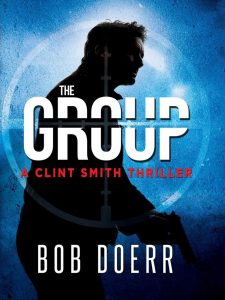

 

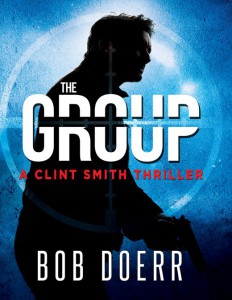
Bob Doerr announces the release of his new international thriller, The Group

Someone is killing off the world’s richest men and no one has the slightest idea who is behind the assassinations.


Diana Wallis Taylor

Diana Wallis Taylor

Diana Wallis Taylor, an award-winning author, has published five books of Biblical Fiction and has just completed her sixth. She has written three other books of fiction, a book of poetry and a book on Halloween. Along with her books, her writing has appeared in various compilation books and magazines. Diana recently completed an Easter cantata, “Glorious”, with her fellow collaborator, Carolyn Prentice, who wrote the music. Diana lives with her husband Frank in San Diego, California, where just retired from the Board of the San Diego Christian Writer’s Guild where she has served for many years. She enjoys speaking and sharing her heart with women of all ages.


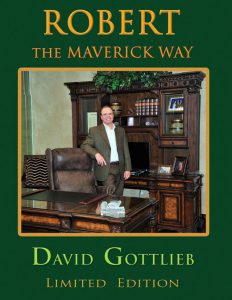
Whatever the game of life or sports, Robert competes with all his might and skill

Born “outside the box,” he does not hesitate to try new and unique approaches in serving banking customers and employees. Marling’s story is the inspiring account of a young man who set out to do things in the right way. And it worked; his motto has always been: “Work hard, work smart, and do things right.” Gottlieb makes no effort to hide his admiration for Marling. He sums up Robert’s way with these words: “He has used his gifts admirably, coloring his life and accomplishments with an attractive moral hue. We wish there were more like him, but we are grateful for the example of excellence he has given us.”
When I first approached Robert E. Marling, Jr., with the idea of writing his biography, his initial reaction was a question: “Who would want to read a book about me?” Leaving aside his unpretentious nature for later discussion, his question is valid and deserves to be answered as best we can. So we repeat his question ourselves, why indeed would anyone want to read a book about a man named Robert Marling?
Several responses come to mind. In the first place and on the most basic level, every human life, even the most humdrum, is a story, a novel if you will, with its own quotient of interest, drama, and suspense, regardless of how minimal these elements may appear to be in many cases. The old saying that intelligent persons talk about ideas while the mediocre prefer to gossip about people is misleading. The truth is we have yet to discover anything as fascinating and interesting as people, nor anything so infinitely variable. People are like snowflakes; no two are alike.
Let us say it forthrightly. In the biography of Robert Marling we find an inspiring example of human potential unleashed and elevated to a high plane of achievement. As we shall see, at an early age he abandoned what appeared to be his predictable, preset fate and set out to create a destiny that hardly anyone who knew him could have foreseen. The result is an admirable achievement but defiant of easy explanation. How was it possible for him to do what he did and come as far as he has?
We get mixed messages for an answer. On the one hand, we hear the classic American ideal that people can rise above restrictive or harmful societal and cultural influences and become all they can be. But on the other hand many of our public and governmental institutions, including our schools, are heavily invested in the general theory, remotely European in origin, that people are products, and often the victims, of their environment and will inevitably behave as society has programmed them to behave. Or to put it another way, if they act badly it is because their society is bad. Only by a massive cultural upgrade, therefore, can we hope to upgrade individual lives. It is too much to expect individuals to do so on their own. It must be done for them. Of course the theory has a certain validity, otherwise it would collapse of its own weight. Many people do indeed conform to it, but perhaps only as a path of least or little resistance.
Cases like Marling’s argue the contrary. Theirs is too personal an urge to conform to the abstract laws and principles that govern secondary things and unmotivated people. Some would dismiss the Marlings of the world as exceptions to the prevailing rule, but probably it would be more accurate to describe them as exceptional examples of a better rule.
But there can be a downside to such exceptional individual achievement. The struggle to rise above an adverse environment may leave festering psychic wounds and deeply scarred personalities. Resentments may sublimate into internalized animosities and unhealthful forms of revenge. Those who have managed to overcome hostile surroundings may do all they can to see that no one else does. Like an embittered Scrooge they take a perverse pleasure in spreading the poverty they once suffered themselves. Having once lived as misers out of necessity, they may become misers by choice.
Triumph can also be a trap. Success may morph into arrogance and a haughty indifference for the feelings and opinions of others. Money and position are powerful elixirs, and more than one psychologist has described their aphrodisiac effect, closely akin to an attractive secondary sexual characteristic. Consequently they multiply temptations and test character. And we have only to read headlines and hear news reports to realize that no profession is immune. Both the profane and the pious seem to fail and fall with equal regularity.
Happily, neither of these failings characterizes Robert Marling’s life. It is refreshingly free of such pitfalls, which is another incentive for reading his biography. To summarize his career, he has achieved high standing in his profession, built a business portfolio based on integrity and astute leadership, given employment to thousands of people, accumulated a personal fortune, and established an enviable reputation as a husband, father, friend, and pillar of his community. And he has accomplished all this without falling into the assorted traps mentioned above. Faith in himself has only deepened his faith in a Power greater than himself. A man with a huge capacity for thankfulness and gratitude, he is still who he was, which is a way of saying that he has kept his feet on the ground, remembering where he started and thus at ease with himself wherever he is. As he puts it, he “sleeps well at night,” and with his characteristic generosity of spirit he wishes the same for others.


The Empire

What if 15 soldiers with today’s technology and equipment traveled back in time to 1453 Constantinople in just prior to the siege. We know they can but will they agree to significantly influence the events and outcome?


The Idea Man – Part 1

Frankie Stone was a war veteran loaded with ideas. From the day he landed on Omaha Beach to the last bullet he fired just after the Nazi surrender, he mulled over peacetime ideas of what to do if he were to survive this nasty war. Remarkably, he had only suffered a sniper wound that crossed the bridge of his nose. A half and inch further would have spelled the end for the young man from Chicago. But he was holding the right cards and, upon return to his bustling home town, he married his high school sweetheart, Lefty Novak, and continued to work on his ideas.
It was an odd match. Frankie Stone, just under six foot with strong lean arms, was a quiet analytical soul. Whereas, his bride was a hard-drinking south-sider with bleached hair who would smoke her cigarettes down to the stub and then fling them as far as she could with her left hand. Once married, they honeymooned motorcycling up to the Wisconsin Dells. Then the couple spent the next three years in a small apartment on the Northwest side of the city while Frankie attended college on the G.I. Bill at the temporary Navy Pier branch of the University of Illinois. Lefty went to work as a waitress at a grill on north Clark Street.
It was on a summer day during his last year of school that Frankie’s ideas began to gel. Running his fingers through dark wavy hair from the customer side of the counter at the grill, he said to Lefty, “America’s changing, kiddo. People are finally getting jobs and they’ll be in a hurry now.” He was wearing a white shirt and a tie, required for job he had taken as an automobile salesman.
“So, what does that mean?” Lefty said blowing a solid stream of smoke downward from behind the counter. She had on a white blouse and a red apron over a knee length skirt. Her shapely legs had caught the eye of more than one customer. She didn’t mind the looks.
“It means there’s money in quick turnarounds. Fast in, fast out for lunch, for example.”
“So you want to open something like a hot dog stand?”
“No, no,” Frankie answered promptly. “That’s too much work with only a modest profit. The big money comes from having a large number of joints. A sort of license type set up.”
“I don’t understand. You mean like having a driver’s license?”
Frankie thought on that some while Lefty took a strong last drag on her cigarette and then stepped from behind the counter to open a door a few feet away and pitch her cigarette out onto Clark Street. Frankie had asked his wife some time back why she was bent on throwing her butts out-of-doors with such intensity rather than crush them out in any myriad of ash trays available most anywhere. She just grunted as if her husband had asked why the sun is hot, so he just let it go. Lefty returned and took a coffee pot from a warmer to top off the cups of any customers.
“You might call it that,” Frankie said having given his wife’s question about driver licenses some thought. “Let’s say that the owner of the licenses is the State of Illinois and every driving resident in the state has to take a test and then pay for a license that has to be renewed each year – also at a cost.”
“Yeah?” Lefty questioned waiting for more after placing the pot back on the warmer.
“People would have to qualify for a hot dog or hamburger stand by maybe having enough money and a required set of standards to get a license to open one of these places.”
“Why wouldn’t he just open a hot dog or hamburger stand on his own without going to the trouble of a license?”
“He wouldn’t have the name of the place that would eventually be known throughout the country for its specialties.”
“It sounds kind of screwy to me. How did you get this idea?”
“I first began thinking about it when we had some rest time in Saint Lo – that’s in France.” He leaned back, nodding to himself as a sort of confirmation, and continued, “Then there was this guy that bought a Ford from me the other day at the car lot. He sells mixers for bars and restaurants and talked about some hamburger joint out in California that needed a large number of mixers for their malted milks. He said this hamburger place would sell a couple hundred burgers at lunch because they made them all the same, no changes. Busy working people would be in and out in just a few minutes. And because they sold so many, he could make a profit at a dime less than other stands would charge.”
“So, what’s the bit about a license?”
“Well, that’s what I talked about with him. It’s the very thing I was contemplating over in Europe. These licenses. Another word you could call them are franchises.”
“Franchises! What the hell are they?”
“It’s something new,” Frankie replied getting excited. “Let’s say I start a business and give it a name – maybe ‘Stone’s Hamburgers’. Then it becomes well known. So well-known that Joe Blow wants a ‘Stone’s Hamburgers’ restaurant. I sell him a franchise down in Kentucky, for example. He pays the licensing fee and agrees to pay me a percentage of the profits. Then I do the same with another and then another until I have a large number of franchisees making money for me.”
“Sounds great,” Lefty said as a customer came through the door and she walked a menu with a glass of water to his table.
“So what about the guy that bought a Ford?” she asked upon returning.
“Well, I think he’s going to try my idea out with a couple of brothers with an Irish name at that place out in California.
Lefty nodded and reached for her package of cigarettes. “It’s just as well, Frankie. He’ll probably lose his shirt.”
“Yeah, maybe you’re right,” Frankie agreed, though he wished they were the ones driving out to California.
A few weeks later Frankie and Lefty took a trip down south to see some Civil War battlefields. It was July with the humidity nearly as high as the temperature. Gravel roads throughout Tennessee continuously rattled the car’s undercarriage. And Alabama offered little relieve with dusty clay roads.
Exhausted and filthy from driving with open windows to avoid suffocating, they checked into a motel in Huntsville only to find that the showers had been turned off due to a water shortage. After hand bathing as best they could with water from the sink, they crawled into sheets that hadn’t been washed for a week, due of course, to the water shortage.
The next morning over grits at a café across a dirt street from the motel, Lefty said to her husband, “This is unbearable. I need a lake or something to jump into.”
Frankie nodded in agreement, but said nothing as he began to think. And then he nodded more vigorously as if an electric current had suddenly been turned on.
“You’ve got an idea,” Lefty remarked seeing the familiar body language of her husband when an idea of some sort popped up. “I don’t want to hear it. I just want some hot water. Any water! Those sheets last night actually cracked when I turned over.”
“That’s it. My franchise idea! Last night was probably a family owned business that just provides the bare essentials.”
“There weren’t any essentials there, Frankie!” Lefty reminded him.
“I know, I know. But think of a motel that’s part of a good franchise chain. They know the name. They know what amenities will be provided. They know the cost. No surprises.”
“That’s fine for our next trip assuming we don’t come down with a fatal disease from being filthy. Right now I’ll give anything for soap and water.”
At that moment a heavy-set man about Frankie’s age at an adjacent table turned his chair to face them. He wore an open-collar white shirt that was already wet from perspiration. “Excuse me,” he said with a strong southern accent. “I couldn’t help overhearing you talk about franchises.”
Always excited to talk about his idea, Frankie scooted his chair a couple of feet in the man’s direction. “You familiar with franchises?”
“Not really. The name’s Wilson. I’m from Memphis.” They shook hands and the man tipped his straw fedora to Lefty. “Ma’am.”
She extended a forced smile, and Wilson turned his attention back to Frankie. “I’m thinking of opening a motel in Memphis, but I’m considering something more than just the motel.”
“Like what?” Frankie asked.
“Well, to be quite honest, I’m not sure. At first I was thinking of a high class hotel, but this is still the poor south and I don’t think that will fly down here like it would in one of the big northern cities. And then one day, not long ago, I happened to experience what you two fine people did yesterday across the street. I’m thinking of a reasonably priced motel that people will know what to expect just by the name. The trick is to get that sort of reputation.” Wilson took out a package of Chesterfields and offered both one. Frankie shook his head while Lefty took one and Wilson lit hers first and then his. “Now tell me about franchises if you would be so kind.”
Frankie gladly commenced to tell about his idea he had come up with while overseas to Wilson who was all ears. And then he added, “Just now I thought of how it might be successful with motels. During the war I remember how easy the Germen’s were able travel along the Audubon. It won’t be long before we have highways like that here. In fact, Eisenhower has mentioned in his campaign speeches the need for those.” He turned to his wife and said, “Did I ever tell you I met Ike the night before D-Day when he visited with the troops?”
Lefty exhaled smoke away from the men and shook her head.
“You were in D-Day?” Wilson asked with raised eyebrows.
“I was supposed to be with the first wave on Omaha Beach, but I came down with what was thought to be a contagious disease so they held me up for a day.”
“Omaha Beach! Good God!”
“I guess I was lucky. There were so many hit, they were still taking care of the unlucky ones when I got there. But getting back to my idea, if major highways are built, where would you think the best location for a motel might be?”
Wilson thought a moment and then brought a smile to Frankie when he replied, “By the exits!”
“Exactly,” Frankie agreed with elation. “Put a big franchise name up on a sign so it can be seen a half a mile away and you’re in business.”
“You are on to something,” Wilson praised. He looked at his watch and said, “I have to be going to an appointment. This has been a most agreeable visit, and I want to help you two out. I heard you talk about the showers at your motel. There’s a truck stop over in Decatur with a shower that works.” He scribbled on a note. “Give this to the manager. He’ll let you get cleaned up.” He stood, shook Frankie’s hand and tipped his hat to Lefty. “You both have an enjoyable day.”
The two Chicagoans watched Wilson leave through a screen door that needed paint, and Lefty said, “What are we waiting for?”
Frankie paid the bill and met his wife at the door. “You know, Lefty, I think Mr. Wilson is going after my idea.”
“Frankie, for soap and hot water, it’s his idea now. And more power to him! Let’s get over to Decatur.” She pushed open the screen door and threw her cigarette hard out onto the red clay road.


The Idea Man – Part 2

A few years later Eisenhower signed the Federal-Aid Highway Act and the Interstate highway system was underway. About that time Frankie Stone noticed an article about Mr. Wilson in the business section of the Chicago Tribune one morning. His motel chain, the most successful in the entire country, had just signed contracts to build motels at two hundred Interstate exits.
“Look at this, Lefty,” Frankie said from his counter stool at the café on Clark Street. His wife came over with a coffee pot in hand. She warmed up her husband’s cup and looked at the paper. “Wilson. The guy from Tennessee! It looks like he’s doing all right. How about that.” Lefty’s legs were good, still drawing covert glances.
“My idea,” Frankie said.
“Doesn’t make him a bad guy for wanting to get ahead in life,” Lefty said, setting the pot on the warmer. “How’s the hamburger guy doing?”
“Same thing kiddo; he’s going gang busters. I drove by one of his stands and saw a sign that the franchises just sold their millionth hamburger. And they just raised the cost of a burger from fifteen cents to nineteen cents. A million more burgers and that difference is forty grand right off the top.”
“You’re so good with numbers, Frankie. Have I ever told you that?”
“You have, Lefty. I know we could be making a ton if I went through with my ideas, but we’re doing all right, don’t you think?” Frankie’s arms were still strong, but his waist had expanded considerably since the days of trekking across Europe by foot.
“It wouldn’t hurt to be Rockefeller, Frankie. But we’re doing fine. You’re the top salesman at the Ford dealer. You can sell a car to anyone.”
“You think so?” Frankie said, savoring the compliment.
“Sure you can.”
Frankie looked around and then leaned forward and said in a low voice, “Something’s happened at the agency that might be good for us.”
“What’s that, Frankie?” Lefty said without much excitement, having been through years of grandiose ideas.
He moved closer and said in a low voice, “I’ve been waiting to surprise you. Buz has gotten himself into a jam with the Feds.”
“The owner of the agency with the Feds?” Lefty exclaimed with astonishment.
“Remember back in the forties after the war when we had the waiting list for cars?” Lefty nodded and her husband continued, “He was found to be taking a grand a car on the side to bump customers up to the top of the list.”
“Geez, that’s a lot of dough.”
“Right. But now he has to pay a big fine to the government. So he’s in a real bind.”
“What’s he going to do?” And then she added uneasily, “Are you going to lose your job?”
“That’s just it, Lefty. Buz needs cash and we’ve got a lot put away now. He’s selling the agency to me.” Frankie looked around again and leaned even further to Lefty to add, “For a song!”
“We’re going to own the agency?” She yelled, causing heads to turn in the café. “A Ford agency!”
“Yes, a Ford agency. And you know which Ford model I’ve cornered the market on? A new one named after old man Ford’s son – Edsel. To name it after his kid, it has to be a great car, right?”
Lefty shrugged and said, “I suppose so. It’s a Ford.”
“I’ve beat out all the other dealers in the country. Shipments are already on the way. By the end of the week, I’ll have two hundred Edsels on the lot. It’s such a good deal that I turned down the Fairlanes and the Thunderbirds. There won’t be room for them anyway.”
Lefty came around the corner and placed a juicy kiss on her husband’s lips. “Oh, Frankie. Look at us. We’re going to be on Easy Street!”

THE END


You don’t want to miss out on this treasure!

A young woman’s spirit walks in the moonlight, intent on preserving the lost treasures of a nation.


The Group is coming for you!

Someone is killing off the world’s rich and famous. The murders are sophisticated, requiring precision and skill. The international community is in an uproar but has no leads in its attempt to find the assassins. The victims were members of the Bilderberg Group, an international, loose knit group of the uber rich that meet annually. While the attacks have not had a direct impact on the U.S., Theresa Deer, Director of the Special Section, a small unit whose existence is known by only a handful in the U.S. government, sees this new age League of Assassins as a national threat. She sends her hunters out. Clint Smith finds their trail Switzerland where his discovery almost leads to his own death. The hunt leads him to Mallorca, Spain, where he witnesses a helicopter attack on a villa where a number of attendees from the Bilderberg conference were holding a follow-on meeting of their own. Smith picks up the trail a couple weeks later in Las Vegas, NV, and in his hunt finds out that he is no longer the hunter. He has become the prey.


When your best friend is a dog

We are surrounded by humans, everywhere we go; there they are, walking, talking, eating, laughing, crying and sometimes shouting. So why do some of us choose to be far away from the noise and energy of the human, as they scurry around, busying themselves with their important day to day routines.


  • « Previous Page
  • 1
  • …
  • 17
  • 18
  • 19
  • 20
  • 21
  • …
  • 56
  • Next Page »

Copyright © 2025 · www.AuthorBookBeat.com | Privacy Policy | Terms of Service