• Authors Registration
  • Login
  • ABB Book Store

AuthorBookBeat

Promoting, Marketing and Advertising your title

authorbookbeat
Be Like these authors and promote your own book signing Events
  • Home
  • About ABB
  • How ABB Works
  • FAQ
  • Services
  • Publishing
  • Literary Agents
  • Sell Books
  • Authors Index
  • Post Breaking News
  • Book Trailer
  • Interviews
  • Events
  • Short Stories
  • Press Release
  • Articles
  • Email Distribution
  • Book Reviews
  • Promote
  • Poetry
You are here: Home / Blog

Avalanche!

Forrest Jr. or “Buddy,” the oldest of us three Smith boys and musically the smartest, had made rapid progress in his years with Mrs. Ponsford of Morgan Studios. He showed ability early to play by ear, sailing through the pieces such as Falling Waters, Indian Song, and The Happy Farmer. Paul or “Bim,” next older, also did reasonably well with Mrs. Ponsford’s piano lessons.

Then my mother faced a problem. She found it hard to accept the fact that the musical genes that kicked out liberally in Buddy, and moderately in Bim, came out negligibly in Davo.

At the end of my first year with Mrs. Ponsford, I had barely made it through “Falling Waters” or whatever it was that I played at the Spring Recital. I wasn’t tone deaf like a couple of my buddies but then neither did I have perfect pitch. Mother just would not accept the fact that I was doing poorly. Apparently a heavy decision was made behind closed doors at Morgan Studios, though not in a smoke-filled room. Davo Smith, for reasons expedient, would have a different music teacher after summer vacation.
It occurred to me that what was going on was comparable to punting at football. When the prospect of losing the whole game is imminent, you punt! This makes for big changes, and though you likely lose control of the ball, you still might catch up and win. Another executive decision made for me was that instead of Mrs. Ponsford, I would have Mrs. Learmonth, a teacher who made “house calls”, as they used to say of doctors. (I got the message that my case must have been serious.)

It happens that Mrs. Learmonth was also paid organist for Peak Hagadon Funeral Home, which compounded the problems whenever she taught this dullard following a funeral. Mrs. Learmonth definitely lacked professional detachment. I can hear her now trying to teach me between sobs: “Boo-hoo-hoo. Now, Davo, curve those fingers, boo-hoo-hoo-hoo-hoo.” It even crossed my mind that my performance or lack thereof just might have been the proximate cause of Mrs. Learmonth’s profuse crying, compounded by funerals.

Whether there was learning progress or not that year is doubtful. But as winter receded, plans were made for the Spring Recital by students of Morgan Studios, to be held at the Women’s Club of El Paso, high on Mesa Hill.

Another Executive Session was likely held at Morgan Studios to which I was not privy, that must have gone something like this:

“Davo Smith has not progressed past “Falling Waters.”

“Not only does he not learn; he doesn’t even practice.”

“Perhaps if we were to put Davo Smith with Mrs. Learmonth’s super star student Don Henry, we might, by means of a two piano piece average up for Davo but also cover his ineptness,” (Mrs. Morgan, ostensibly the speaker).

There was another unspoken consideration that hopefully this youngest Smith boy would move on to other things not musical and all would be well.

The two piano piece chosen for me to play at the Spring Recital had an ominous even prophetic title:

AVALANCHE!

But the biggest problem for me was that the kid at the other piano for the pending AVALANCHE was to be Don Henry, my buddy Charles Henry’s little brother.
“So what?” you ask.

So plenty!

Though he may have been a musical genius, that twerp was Charles Henry’s little brother.
(You always translated the word “little” as in “little brother” as “inferior”.)

I wasn’t about to waste time helping Charles Henry’s little brother show off his musical smarts.

Weeks passed and we were making no progress. More correctly, I was making no progress. Don Henry didn’t have to make any progress since he was so far out in front of me in that he could “sight read.” Whether or not I curved my fingers, I doubt that Mrs. Learmonth could find many teachable moments in our humorless, dreadful, weekly hour together.

I liked doing more important things with Don’s big brother Charles, like using parents’ flashlights to explore the experimental caves in Mount Franklin dug by students from the College of Mines and Metallurgy nearby, or hiking over to the AS&R plant at Smelter Lake. Timing for such important events conflicted with music lessons, occasionally causing what our YMCA club, the Pioneers, used to call a calculated fumble.

March and half of April got away from us with no progress on my part of the impending AVALANCHE duo. Don Henry had aced his part of the duo, the hard part.

Mrs. Learmonth implored my mom to urge her darling Davo (she really didn’t call me that) to practice, so that the cleverly conceived AVALANCHE in two parts would come off or come down as planned.

I’m sure a fitting word of warning, translate threat, from Dad Smith would have had a tonic effect on my attitude but curiously it was not forthcoming until it was too late.

Mother implored me to practice, and I got down to business seriously the last week before the recital. Using what I call the hammer/anvil/ramrod method of education, (i.e. sheer repetition), I fragilely learned my part of AVALANCHE,” or so I thought.

Two days before recital, Don Henry and I managed to play through the complete AVALANCHE once, only once, without having it come down on us.

D DAY for the recital was a Saturday afternoon late in May. We performers peeking from behind the curtains could see mothers, brothers, and grandparents assembling in the auditorium. I clearly remember that we were third on the program. An announcement was made over the sound system. “Next on the program we have Don Henry and Davo Smith, playing a two piano number . . . . AVALANCHE.”

Looking back from today’s vantage point, I recall Custer’s words prior to the fateful battle of Little Big Horn: “Up men and to your posts!” The two of us walked onstage to polite applause, faced a sea of happy faces, bowed seriously and took our posts, each seated at a piano.

I led off hesitantly,
ta-ta-ta, ta-ta-ta, taaaaaa….

Don answered confidently,
ta-ta-ta, ta-ta-ta, ta-ta-ta, ta,ta-ta,
ta-ta-ta, ta-ta-ta, room ta-ta-ta, taaaaa.

(So far so good; my second part repeated the first)
ta-ta-ta, ta-ta-ta, taaaaaa….

Don responded elegantly,
room ta-ta-ta-ta- room ta-ta-ta-ta,
room ta-ta-ta-ta, taaaaaa…

Tenuously we completed the first half of AVALANCHE and then moved into the second half, where we were supposed to play both jointly… and harmoniously.
Instead, Divergence and Discord crept in. . . . !

Pretending confidence I grabbed an idea, a bad one, and kept right on playing, though noticeably off track. The AVALANCHE was beginning to come down on us!!

Accusingly, I glared at Don Henry, Charles Henry’s little brother, with a feigned arrogance that as much as said, “That little twerp caused all of this trouble!” I plowed on, but headlong as if it were very heavy snow of avalanche proportions.

Then Mrs. Morgan had to come on stage, gesturing “STOP!… STOP!”

Too bad she didn’t have an umpire’s whistle to blow, calling off the game. I must have just shrugged my shoulders, supposing by nonverbal communication to ask, “Is something wrong here?”

If there was any doubt as to my musical inability following my first year recital of “Falling Waters,” there surely was none following my disastrous performance of AVALANCHE.
Perhaps if they’d given grades on interpretation, the non-musical aspects of my unique rendition of AVALANCHE might have earned me an “A.” I may not have brought down the house with applause or laughs, but I did give the folks at Morgan Studio something more of an “avalanche” than anyone ever expected, or has likely brought on before or since.
In my head and in my heart I knew neither my older brothers nor my Mother had been fooled that May afternoon.

I hadn’t fooled Mrs. Learmonth, Mrs. Morgan, nor Mrs. Ponsford either.

Only one person was fooled that day, and it wasn’t Don Henry, Charles Henry’s little brother.

You guessed it.

It was Davo Smith.

Though I was too old to be tucked in by Mother, she came in that night to do prayers, and we had a little talk.

I asked, “Mom, do I really have to take piano lessons again next year?”

“No,” she answered kindly, “you really don’t have to.”

That I really appreciated my mother’s response is an understatement.

Had the case been turned over to a “higher court”, shall we say, the outcome would certainly have been far more like an actual…

AVALANCHE.

(For more by David Smith and “Texas Spirits” go to www.totalrecallpress.com or www.amazon.com.)

 

Looking for Love

His heart so pure
A lone person looking for love
His mind not so sure.

Words so innocent,
Words so sweet.
Words like songs
Words and songs must meet.

He reaches out his hand,
He gives his heart,
She takes his hand
To make a start.

A smile so beautiful
A smile so bright.
He is beaming now
Like a beam of light.

A lone person
Is not so alone.
For he has found love
To soften his heart of stone.


Window

window

Faraway it is like mist and smoke
and a boy’s choir. The lad who sinned
runs through a wheat field
trampling golden stalks, out of breath.
He falls naked and looks
into a sea of faces who peer back.
Forgiveness is the course.
If this had been the general sense
of childhood, would not our life be wise?
2.
To what purpose do I roam these walls
pacing and humming fancy melodies
while business bustles this holiday?
It is the end of hurricane season,
the end of detours, and the end of us.
Never a window opened, except now
late into the night when windows
are superfluous because it is dark.
From the grave an echo stabs,
years traveled have no meaning
and confessions occur in the void.
I was pleased and despondent,
woeful and full of glee
when we parted friends.
Today your truth is my oblivion.

(For more by Alice Shapiro’s “Life: Ascending/Descending” go to www.totalrecallpress.com or www.amazon.com.)

 

The Aviator Cap

The book is a collection of photographs taken by Miss Welty during the early 1930s when she traveled over the state of Mississippi for the WPA. I grew up in Mississippi. Kimberly had recently moved there and begun a new job in Jackson. She was in the process of discovering a Mississippi that she never knew existed.

Miss Welty’s photos are mostly of black folk in everyday poses and settings–scenes which I had grown up with, but ones that Kimberly was seeing for the first time. She seemed especially taken with the picture on page twenty-nine of a little Negro boy in an aviator cap. She laughed when I remarked that I had once worn caps just like his. What she didn’t, and couldn’t, understand was what I really meant when I said that my caps were “just like his.”
The little boy is holding a kite, homemade of newspaper. He is wearing a tattered sweater, knickers, and knee socks. The bottom half of the outfit is one that no boy has ever been able to keep together properly for any length of time, and it was obvious that he was having no more success than I had at the same age. One sock is bagging around the ankle, and the elastic on the opposite knicker leg has long since relinquished its grasp on the upper calf and hangs halfway to the ankle like a baggy, cloth stovepipe. But a person who had grown up in that place and time could tell a complete story by seeing only the head encased in the aviator cap.

Aviator caps were popular during the ’30s. Practically every boy I knew had one. Aviation itself had caught the popular fancy. Airplanes were not very common in rural Mississippi, and they represented mystery and adventure. When one flew over, everyone would go outside and watch until it disappeared. To a little boy standing there in the Delta mud, that shiny object in the sky represented the ultimate in freedom. When grownups asked, “What do you want to be when you grow up?” I never responded with fireman, policeman, or cowboy. “An airplane pilot” was my standard answer, and with an aviator cap I was one … at least in my imagination.

Some of the caps were, according to boys who had them, “just like the ones the pilots wear.” They were authentic– and expensive. They were made of fleece-lined leather with adjustable straps that buckled under the chin. They came equipped with real leather-framed glass goggles which were held to the cap by an elastic band that passed through a series of loops in the cap’s crown. These goggles were normally worn on the forehead and could be dropped in an instant to cover and protect the eyes when the head was thrust from a side window of a moving car or when the wearer was running at breakneck speed across the playground. But most of us had caps like the little Negro boy in the photo. They were either black or brown and were made of some type of imitation leather material on canvas backing. The lining on the other side of the canvas looked and felt like a finish on a cotton flannel shirt. With wear, it rolled up into little balls and rows. The earflaps snapped under the chin. Since I was never too careful with the snapping and unsnapping, one snap usually pulled off, leaving me with dangling flaps which had a bad tendency to curl up, giving the appearance of a fat string hanging beside each cheek.

Whatever process was used to attach the imitation leather to the canvas seldom effected a perfect union. The “leather” usually separated, cracked, and peeled off in odd patterns–a process hastened by cold weather. The goggles were of celluloid, framed by the same material as the cap, and usually came out after a week or two of hard use. They were attached upside-down to the forehead of the cap by three snaps. To position them over the eyes, one had to unsnap them, turn them over, and resnap them. Even the most ill-informed boy knew that any aviator would have been blinded by the rushing wind before this maneuver could have been executed.

At any time the line between rich and poor is a variegated one of many separate yet connected strands. Children see and feel different barriers than do adults. 1 don’t remember my parents ever telling me we were poor. They didn’t have to. The aviator cap was there for all to see.

But a second-rate aviator cap was better than none at all. And it was always a thrill to get a new cap and have it on when a plane flew over, and to watch the plane through the new, unscratched goggles until it disappeared; and to wonder where it had come from and where it was going, and to wonder what was over that horizon, and to wonder if I would ever get to see either end of the plane’s journey.

Some images remain sharp, but, by and large, the memories of those Depression days have been dimmed by the intervening years. Although I never had one then, I’ve been fortunate to acquire many genuine aviator caps since. They have come in many forms: people, things, events, opportunities, college degrees, accomplishments. Looking at the picture of the little Negro boy and knowing when it was taken, I would judge that we would be about the same age. I can’t help but wonder what course his life took and if he ever got an aviator cap in any form.

(For more short stories by Luke Boyd’s “Coon Dogs and Outhouses V1,” go to www.totalrecallpress.com or www.amazon.com.)
 

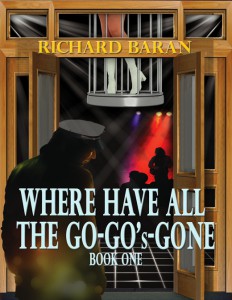
Richard Baran spins a tale of a dysfunctional man and his club filled with people who mirror his mind.

Berthold “Bo” Pepperwall childhood began with friends taunting and teasing him, nicknaming him, Bo the Schmoe. Adulthood still had him laughed at by many and shunned by most. His home is Dogwood, the Pepperwall family mansion where he lives in a Spartan single room above the garage in a coach house. His sister, Arvia is married to Quintin Bell the mayor of Glen Forest on the Watercourse, the prestigious suburban community along Chicago’s exclusive North Shore. Quintin Bell detests Bo’s existence and enjoys making his life miserable. Then Quintin Bell dies in a most unusual way. Someone killed the powerful, lecherous mayor, a croquet mallet smashing his skull and Bo witnessed the murder.

Now Bo Pepperwall faces a dilemma: He has to choose between money (which he never had) and morals (which he also lacked). Bo faced another quandary of deciding whether to weasel part of his recently widowed sister’s inheritance of fulfilling his latest dream, that of opening a 1960’s discotheque in an abandoned factory building in a Chicago slum area or turn in the murderer?

Bo resolved his dilemma with convoluted logic which said, a killer is a killer, money is money and dead is dead. A torturous scheme to get his mitts on part of his sister’s inheritance smoldered in Bo’s mind and made his decision easy: Get the money first, then identify the killer and become a wealthy respected hero. Ergo: Dilemma solved.

Arvia Pepperwall Bell, merry widow and reluctant socialite found herself warding off the advances of her lawyer and late husband’s best friend, John Brown. She had also succeeded her husband as the new village mayor, a political move elating the town’s power brokers and the well-connected because now they had a Pepperwall in office they could manipulate for their personal gains. They failed to take into account one fact; Arvia Pepperwall Bell descended from more than the loins of the self-proclaimed Revolutionary War hero, General Glen Forest Pepperwall who founded Glen Forest on the Watercourse. She feared no one, especially men.

Glen Forest had been neither a hero nor a General. A frightened, cowardly seventeen year old slick sleeve private soiling his trousers had promoted himself to general. He stole the epaulets from a dead enemy officer before fleeing the Battle of Savannah with his pregnant, half breed Mulatto lover, Arvia. Glen Forest was a consummate scoundrel, liar, swindler, cheat and Lothario, characteristics of a perfect politician. He thought he had swindled the local Indians out of an expanse of land that became Glen Forest on the Watercourse. The Indians had sold him a swamp.

Arvia surprised Bo and her lawyer, John Brown by investing in her brother’s idea of a discotheque. Bo wasted no time in converting her money into La Tinkerbelle’s a Go-Go, a 1960’s retro disco with a Peter Pan theme. His intricate plan knew no limits, lacked good taste and emphasized the garish and bizarre. Ideas, one crazier than the next, spewed from his creative mind. La Tinkerbelle’s would feature traditional go-go dancers performing in cages suspended from the factory’s ceiling. One of his star attractions would be billed as Captain Hookette. She would perform her belly dancing specialty in a show case window at the club’s front entrance. He signed on two kindergarten teachers to moonlight as a pair of aerialists, Peter and Pan. Tinker Bell would be his featured attraction and the trio would swing from the factory’s ceiling suspended by cables. He hired a bickering gay couple to operate the disco’s boutique and came up with the idea of installing coin operated movie projectors in the Men’s washroom stalls. He would charge a quarter to view a scene from a pornographic movie for twenty five seconds. His waiters and waitresses would be undercover Chicago Police Officers who invested in La Tinkerbelle’s. Each would wear a pirate eye patch, one earring, a bandanna and roller skates.
Bo’s greatest find was Sam and his two black cats, Heckle and Jeckle. He discovered Sam, a down on his luck former saloon owner put out on the street by Quintin Bell and John Brown. Sam lived in the deserted factory that would become La Tinkerbelle’s. Bo hired him to operate the club’s beverage service. He auditioned and signed on an octogenarian rock group he billed as, Cap’n’s Kids and Obadiah Ledbetter, a sixteen year old red neck, hog calling champion from Arkansas and his common law wife, Emerine as the band’s vocalists.

The plans of a genius fail and Bo faces bankruptcy. Then an intoxicated Chicago newspaper gossip columnist ran a story that had lines forming to get into the Windy City’s newest night club sensation. Bo couldn’t count his money fast enough as he savored his new found fame and fortune. Then part of his dilemma returned to haunt him. Life for the once loser and social outcast takes a surprise twist in this screwball murder mystery farce that is more farce than mystery.

Other titles by Richard Baran include “The Jacket” and “The Dutchman’s Gift” and can be found at www.totalrecallpress.com or www.amazon.com. “When Will They Ever Learn?”, book two of “Where Have all the Go-Go’s Gone?”, will be published August 4, 2015.


Dale Earnhardt

dale earnhardt

From winning the 500.
“That changed the sport,”
says everyone — better belts,
barriers, neck braces, safety
a major factor; an outpouring
of grief that made NASCAR
even more popular. But
what does it do to a son?

2.

At the time trials, he draws
applause for opening it up
to 186.364 — good enough to
win the inside pole. It’s not
just a record, it’s a way
to say, “I’m me, not just
a legacy.” He wants to be
as dependable as the color
guard that marches before
the national anthem.

3.

“I had to hit the brakes
and he hit me from behind.”
So much for the pole position.
He’ll race, but regulations say
he’ll start last in a car that
didn’t run the time trials.
Not to worry, it’s still plenty
fast. By mid-race, the crowd
rises to cheer as he takes
the lead, if only briefly.

4.

“This should be called
the Lotto 500,” says the race
announcer, “It’s so unpredictable.”
So Jr. dodged and trained,
duct-taped and pit-stopped,
survives to darned near
the last lap, only to get bumped
into the wall — not even able
to finish — but given the odd
calculations of the sport, he’s
listed 24th among 48 starters.
Yes, the crowd rose as one on
lap 3 to hold 3 fingers
up in honor of his dad, but
nothing is guaranteed. Jr.’s
already 36 and for now, he
has to wait ’til next year.

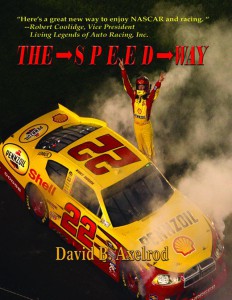
(For more poetry from David Axelrod and “The Speed Way,” go to www.totalrecallpress.com or www.amazon.com.)
 

Kidnapped

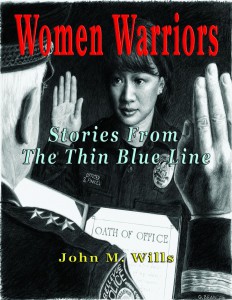
This tiny contingent protects all 2,800 residents of this small town, which is located in El Paso County.

As part of my duties on July 11, 2007, I was driving to deliver a felony case filing to the El Paso County District Attorney’s Office. The DA’s office is located 25 miles south of my jurisdiction in downtown Colorado Springs. As I was driving, I overheard a call for service involving local deputies who were looking for a four-year-old child who had just been kidnapped within the county.

I completed my delivery to the DA’s office and then started my drive back to Palmer Lake. While I was en route, dispatch aired a BOLO (be on the lookout) describing the kidnapped child by name, age, and physical descriptors. The suspect was also described and was said to have been seen driving a stolen, white, Volvo truck. The truck was further identified by its license plate number, Department of Transportation registration numbers, and specific business information, which was written on both doors. The alleged kidnapper was supposed to be heading to either Denver, Wyoming, or northeast El Paso County.

Since I was going to be driving north bound on Interstate 25 on my way back to town, I wrote as much of the information down as I could, knowing this was a very likely path the suspect would take. While I was writing, I drove past the turn I needed to make that would bring me back to I-25. It meant that I had to continue driving north on Nevada Avenue in Colorado Springs to get back to the interstate.

Dispatch continued supplying updated information on this developing incident, advising that our wanted man had numerous felony warrants and giving us the alias he may be using.

I came to stop at a red light on Nevada Avenue and East Jackson Street. Directly across the intersection from me, heading south bound, I observed a white semi-truck in the left turn lane stopped for the light as well. I looked at the license plate number—it matched the number I had written on my notes. As I looked up at the truck, I saw a little boy stand up in the passenger seat of the semi.

Could this be the vehicle in the BOLO? I sat there wondering if I had the license plate number wrong, questioning my notes, and wondering what are the odds this truck is indeed “the truck.” I called a deputy working on the case and asked him to provide me with more details. Deputy Scott Aldridge told me the license plate information was correct and said the writing on the doors were the distinct initials of the business.

The light turned green for the semi, and as he turned in front of me I confirmed the rest of the truck information located on its cab. Completely in shock, I told Deputy Aldridge that I had the suspect in view. I then hung up on him and called dispatch advising them of my location. Here is where the story gets confusing. The dispatcher assigned an officer from another town located next to Palmer Lake, which is the normal practice due to the proximity of both agencies. The assigned officer, however, had to confirm the location where I was. Once he did, he told dispatch that there had to be another agency closer to me than he was.

Since I was not in a lane in which I could easily turn from to get behind the suspect, I lost visual contact of the suspected vehicle for a moment. However, once I turned around and headed in the same direction as the truck, I found it one block over from our original location. The vehicle was now pulled over at North Weber Street, and the suspect began to step out of the truck. He looked at my marked patrol car, and as I got closer, he began walking rapidly toward an apartment building. As I drove past the apartments, he watched me very closely while opening an apartment door. I advised dispatch of his location and then drove out of his sight. I checked the numbers on the truck, making sure they were in fact the numbers given by dispatch, and then turned my patrol vehicle around so that I was facing the front of the semi. I stopped about a car length in front of it to make it appear as though I had left.

I saw the little boy in the front seat standing up, so I advised dispatch I had a visual on the boy. While providing this information, the suspect began walking back to the passenger side of the truck. At this point, I had to disconnect with dispatch; I had to ensure that no harm came to the child.

I stepped out of my vehicle and ordered the suspect to step toward me, while keeping both hands in plain view. I asked him his name; he gave me the alias aired by dispatch. I then asked if he had identification, he said he did not. I told him I needed to see documentation confirming he was the person he claimed to be, and he said he only had a card that with his driver’s license number handwritten on the back. He said it was in his pocket.
Since I could see there were no bulges in the pants pockets, I ordered him to slowly reach in his pocket, get the paper, and then hand it to me. The man looked to be in his early to mid-thirties, and the actual suspect’s year of birth would make him thirty-one years old. He handed me a small check cashing ID card which was written by hand too. The ID indicated his year of birth was 1966. That would mean he was forty-four years old—I could plainly see he was not that old.

After I ran the information through dispatch, they confirmed he was definitely our wanted suspect. By now there were at least a couple deputies and a lieutenant headed my way, as well as the Colorado Springs Police.

Questioning the suspect again about his identification, he started getting jittery and rambled on asking questions like, “Why is Palmer Lake here,” and, “Why are you here? Did someone say I couldn’t have my nephew?” I asked what his nephew’s name was, and the suspect gave me the same name as the kidnapped child. When the suspect began to reach for the passenger door, I ordered him to step away from the vehicle. Since I was not familiar with this part of town and didn’t know when my back-up might arrive, I attempted to keep the suspect calm for as long as possible.

At this point the child stepped out of the semi and I asked him his name. He gave me the same name as that of the kidnapped child. To keep him out of harm’s way I allowed him to get back inside the cab. He appeared very scared and attempted to hide under the semi before opening the door to get back inside.

I had the suspect step approximately twenty feet from the semi and made him sit on the curb. This made the suspect more nervous, and he started looking around, again asking me why I was there. He told me to call the child’s mother to verify he had permission to take him, and he got up off the curb and attempted to walk back toward the driver side. At that point, I told him I was there for the child. I placed him in handcuffs and walked him back to my vehicle.

El Paso County Deputy Aldridge and Colorado Springs Police arrived on the scene minutes later. Deputy Aldridge thanked me for my efforts and assistance and then took over custody of the suspect. Prior to leaving the scene, El Paso County Lieutenant Cliff Northam, arrived and spoke with me regarding my participation. He thanked me for capturing the suspect.

Although I was directly responsible for the arrest of the perpetrator, I had no further involvement with the case or any contact with the little boy or his family. However, I have learned that the suspect is currently an inmate at a prison in Colorado. He received four years for kidnapping and three years for motor vehicle theft. He was also wanted for other crimes, making his total sentence 27 ½ years.

(For more by John Wills “Women Warriors: Stories from the Thin Blue Line” go to www.totalrecallpress.com or www.amazon.com.)
 

Golden seconds

Golden seconds

Golden seconds

I wait with getting lost until the sun sinks into the sea
your mermaid face beckoning love
moon lips speak the salty tears away
that love in the tide of ebb and flow

and calling behind the scenes of long nights
to at the piece of solace in disunity
your name blazes in light letters over my garden
you soften the sharp lines around my mouth

the shadow park breathes again in color
and sounds taste the smile of understanding
you put new hours in my day
with golden seconds that take away sadness

© Bianca & Gerhard (Holland)


All She’s Ever Wanted

All She's Ever Wanted

She lies back
And stares whistfully
At the stars.
Her thoughts drift to Him.
A warm blanket of air
Envelops her.
It feels like his touch
She closes her eyes.
And basks
In the light of the moon.
The soulful sound
Of a howling wolf
Makes her smile.
Her eyes open
And catches a shooting star.
She starts to make a wish.
“Star light, star bright,
The first star
I see tonight.
I wish I may
I wish I might
Have the wish
I wish tonight…”
She pauses
As she lies there
She realizes,
She has
All she’s ever wanted.
For she has him.

(written by Jessica Meyer)

Eclipse

Eclipse

I clean up after supper
fold the laundry
read a bedtime story
make four lunches
feed the cats
write a page

and wonder if
the two Elizabeths
in Hollywood and London
have time to watch.


  • « Previous Page
  • 1
  • …
  • 26
  • 27
  • 28
  • 29
  • 30
  • …
  • 56
  • Next Page »

Copyright © 2025 · www.AuthorBookBeat.com | Privacy Policy | Terms of Service