• Login To Your Author Book Beat Account
  • ABB Book Store

AuthorBookBeat

Promoting, Marketing and Advertising your title

authorbookbeat
Be Like these authors and promote your own book signing Events
  • Home
  • About ABB
  • How ABB Works
  • FAQ
  • Services
  • Publishing
  • Authors Index
  • Post Breaking News
  • Book Trailer
  • Interviews
  • Events
  • Short Stories
  • Press Release
  • Articles
  • Email Distribution
  • Book Reviews
  • Promote
  • Poetry
You are here: Home / Blog

The Undertaker Comes for David Smith

Having been mule deer hunting every year since I was twelve, I figured squirrel hunting might be some fun and an adventure, albeit with smaller game, squirrels instead of mule deer, Fiji woods instead of the awesome Espy Ranch, and .22s instead of 30-30s.
I was right, but for the wrong reasons. It was surely an adventure but ended up being a brush with death, not for the squirrel, but for me. Here’s the story.

At the Fiji Lake Club, Dave Gardner and I loaded our .22s and went into the woods, slowly walking in tandem, well apart, looking up in the trees for squirrels. We had not gone far when I felt something hit me above my left ankle, surely more than an insect bite.
I had stepped on a snake!

There he was, red and slithering, definitely a poisonous treacherous copperhead that unlike the rattlesnake, gives no warning before it strikes.

I shouted to Dave to come quickly, and then put a shell in the chamber and killed the snake.

Dave Gardner was probably more scared than I was. I had never been even a tenderfoot in Boy Scouts, but I knew how to make a tourniquet, which we did with a long sleeve and a stout stick. Then Dave took out his pocket knife, fortunately sharp, and with trembling hand cut an X where the copperhead had struck me, just above my right ankle bone. After that he sucked a lot of blood and spit it out, which was the accepted treatment for poisonous snake bites at the time.

I had no feeling in my lower right leg because of the tourniquet. Dave helped me hobble back to the car and we headed for Seton Hospital, Dave speeding while I held the stick to keep the tourniquet tight.

The doctor on duty at Seton Hospital was manifestly untrained. He wanted to be helpful, yet he came across not at all sure of himself, like trying to throw darts at a target in a dark room. He sent for a large dose of antivenin and mentioned after reading the directions that it might, just might cause an allergic reaction in some people, perhaps one in a hundred, if that person was allergic to horse serum. He gave me a shot of whatever the serum and kept me overnight, intending to send me “home” to Brackenridge Dormitory at the University. I was feeling fair.

But three nights later the horse serum that was the carrier for the antivenin hit me like a ton of bricks. I had drawn the black bean. I was that “one in a hundred” allergic to horse serum!

My lips, my eyelids, ear lobes, and other soft body parts were swollen. My back was covered with welts ─ hives, as some people call them. Joe ran downstairs to the pay phone to contact the doctor who told him to call an ambulance and get me to Seton Hospital.

What happened next one might call “gallows humor.” At the time it sure wasn’t funny to me. I felt as though I was about to die; and, I was.

In the late 1950s it was permissible for undertakers to operate both an ambulance business and a funeral parlor together, which today would be too big a conflict of interest. When Joe called Cook Funeral Home, he learned its ambulance was out on another call. The only person on duty at that hour was an embalmer with but one vehicle available, a long black funeral hearse used to transport corpses. Apparently the embalmer (we’ll call him Malcolm) decided it was expedient to come after me in the hearse, so as not to miss any business.

I responded to the rap on the door, “Who is it?”

“I’m Malcolm Passmore with the Cook Funeral Home, and I’ve come for David Smith,” he said in cascading funereal tones.

Adrenalin kicked in. I raised myself and said, “Look, mister, I’m pretty sick, but don’t you touch me. And if you think I’m gonna be one of your customers, you’re plumb crazy.”
Joe returned to our dorm room in time to help me down to the hearse. I insisted on sitting upright in the front seat and off we went to Seton Hospital, me angry, sullen and feeling horrible but intently watching the undertaker drive the hearse. We checked in at the hospital and were directed to an elevator, since it seemed that I could walk, but weakness overtook me and I ended up sitting on the floor. That’s when I asked myself and, most importantly, God, “Has my time come?”

By the grace of God, I gradually got better, and in two or three more days felt nearly well, for which I was profoundly grateful.

Around the Phi Gam house I got a new nickname, “Snake.” Fortunately it didn’t stick for long.

Then a few weeks later, during a fraternity retreat at Mo Ranch, some of the boys played a trick on me relative to my snakebite experience. They found a small harmless garter snake and put it on my chest one afternoon while I was napping. (I’m good at naps, a skill inherited from my grandfather, David Smith.)

The boys’ laughter woke me up. Startled, indeed terrified by the garter snake, I jumped up and drop kicked the steel cot next to mine, bruising my shin while the other boys roared with laughter. They sure got more than just a rise out of me. I had had one encounter with a snake and I didn’t want another one. As the old saying goes, “Bit once, cautious twice.” Who was it that said, “All’s well that ends well?” I guess it was Shakespeare, wasn’t it? Well, maybe a good joke once in a while, even at your own expense is okay.

But I’m sure glad that when I stepped on the copper-head that bit me, it was not the end that might have ended my earthly life those many years ago at The University of Texas, at Austin.

(For more by David Smith’s “Texas Spirit,” go to www.totalrecallpress.com or www.amazon.com.)
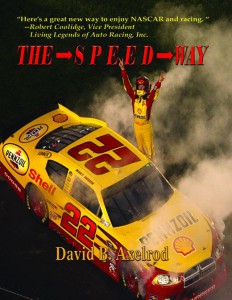
 

Shootout

Shootout

but these cars are weapons —
hundreds of horsepower
burning through a gallon
in 2 minutes. Slap a wall —
you’re lucky to shower
the track with sparks,
or spin and pray the cage
protects you. Straight
out, floored, pushing
cars nearly 200.

“Too dangerous,” NASCAR
says and restricts the air flow.
“Just too fast.” But fans
want a real race, flat out
toward the checkered flag.
All that skill, all that power —
no room for yellow here.
Only the flash of a green
flag, then hell-bent
toward victory, a show-
off lap, back slapping
and media hoopla.

(For more poetry from David Axelrod’s “The Speed Way” go to www.totalrecallpress.com or www.amazon.com.)
 

Drummed Out of the Club

His job took him to England every month or so and he loved these “business” trips. Through his business connections, Morton became acquainted with several people who ranked fairly high on Britain’s social ladder. One of these, Lord Smythe, began to invite him to his gentlemen’s club for evenings of dinner and spirited conversations with his circle of friends. Englishmen have long taken special pride in their club associations. Apparently Lord Smythe’s London club was one of the more socially prominent ones. It was during these rather frequent visits that Morton struck up a friendship with Lord Bottomley, one of the other club members.

One evening in late winter, Morton was enjoying Lord Smythe’s hospitality at his club when he realized that he’d not seen Lord Bottomley. He remarked to his host, “I haven’t seen Lord Bottomley this evening. I do hope he’s not ill.”

A somber look came over Lord Symthe’s face as he replied, “No, no, he’s not ill. You see, he’s no longer with us.”

Thinking the worst, Morton asked, “Did he die suddenly? I wish someone had notified me.”
“Oh no, nothing like that,” responded Lord Smythe as he looked down at the floor, “You see, he was drummed out of the club.”

“Drummed out of the club!”

“Yes. It was a terrible situation. The membership voted and Lord Bottomley had to come forward as the drum sounded its ominous cadence. He was stripped of his club tie, scarf, and watch fob and had to walk between a double row of the members out the rear door never to return. Bloody embarrassing, but ol’ Bottomley kept a stiff upper lip through it all. I’ll have to give him credit for that.”

“But why,” Morton blurted out, “what could he have done to deserve such treatment?”

As soon as the questions came out, Morton realized their impropriety. This was a private matter. But because of their relationship, Lord Smythe felt obligated to offer some explanation. “Well, you see, Lord Bottomley was having an affair.”

“An affair? Was that so bad for this day and time? Haven’t you had other members who’ve had affairs?”

“Well, yes, we have. But you see, old chap, there’s just a bit more to it than that. He was having an affair with Lady Ashley, the wife of one of our other club members.”

“And for having an affair with another club member’s wife, he was drummed out of the club?”

“Well…yes. That and some other things. Lord Bottomley got inebriated at our Christmas party.”

“So the drumming out was for having an affair with another club member’s wife and getting drunk at the Christmas party?”

“Yes. But there was just a little more to it than that. Not only did Lord Bottomley get inebriated he also went outside and urinated in the snow.”

“And that was it? The affair with Lady Ashley, getting drunk, and urinating in the snow?”
“Well, yes. But you see, old chap, there was just a bit more to it that. As he urinated, he wrote his name in the snow.”

“Now, am I to understand that Lord Bottomley was drummed out of the club for having an affair with another member’s wife, getting drunk at the Christmas party, and writing his name in the snow as he urinated.”

“Well, yes. But you see there was something else as well. Lord Bottomley’s name was written in Lady Ashley’s hand writing.”

(For more by Luke Boyd and “Coon Dogs and Outhouses v1,” go to www.totalrecallpress.com or www.amazon.com.)
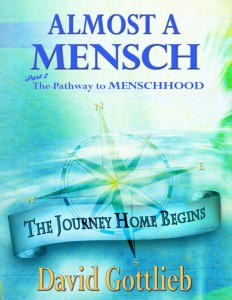
 

International Holocaust Remembrance Day brings to mind David Gottlieb’s experience on the SS Josiah Wedgwood running the 1949 Israel blockade to statehood

On July 6, 1946 the SS Josiah Wedgwood was thirty miles from the Port of Haifa. I was an eighteen-year-old crewman on that vessel, which was carrying 1,257 Holocaust survivors from camps in Italy to Palestine. Passengers and crew alike were on high alert, watching for two things: British vessels and Haifa. The British had set up a blockade of Haifa and ships caught running it were forced to return their Holocaust survivors to the same countries that had refused them entry.

Our Haifa gambit ended happily. We made it into port and our ecstatic passengers disembarked to singing and cheers of Eretz! Israel!

How I came to be caught up in one of the great events of the twentieth century is an improbable tale. I was not an experienced sailor, had no technical qualifications, and a lackluster past. Most of the blockade runners were Jewish veterans of World War II.

Life has a way of sending me down roads I never dreamed of taking, some the last ones I would have chosen. I’ll mention a couple.

After Haifa I worked my way back to the States on a ship bound for Beaumont, Texas. In the era of segregation Blacks were unacceptable and Jews were unwelcome. I was broke but desperate to get out of Texas. Forever. So later where should I settle? You guessed it, Houston.

I was a high school dropout. So who could imagine that I would end up with a doctorate in sociology and serve as Deputy Director of the Job Corps in the Kennedy administration? Or become Dean of the College of Social Sciences at the University of Houston? Or hold several other high level positions in the arts, research, and banking?

Maybe Bashert explains it. It means destiny or what must be. Maybe it helped that I was open to life, for life has been open to me. It has sent me mostly the good, sometimes the bad, and occasionally the ugly.


Book Signing – The Awesome Adult Coloring Book

Probably the First Coloring Book Signing Event Ever.


TotalRecall Press announces the release of the latest book by Donald Brewer, “Thunder Canyon.”

Thunder Canyon is a fantasy/historical fiction book of a U.S. Secret Service case in 1900. A trio of cousins enters the Mouse Gate at Walt Disney World and travel back in time to assist two Secret Service Operatives investigating a counterfeit gold bar and coin case. The case takes place in the gold mining boom town of Cripple Creek, Colorado. The story is unique since it details the use of gold coins at the turn of the century. They live the history.

This book is unusual, since it deals with the counterfeiting of gold coins and gold bars around the 1900s. Most Americans, outside of coin collectors, don’t realize that gold coins were once a common form of currency in our country. In the book are photos of a counterfeit gold coin detector, patented in 1857, that depicts spaces for 1 dollar, 2.5 dollar, 3 dollar, 5 dollar, 10 and 20 dollar gold coins. The book is set in 1900, Cripple Creek, Colorado, a gold “boom town.” It details a Secret Service Investigation of a counterfeit gold coin and bar operation.

“Worthy of Trust and Confidence” is Donald Brewer’s first book, published in 2014 by TotalRecall Press. The same trio of cousins, researching a family history project, encounter a leprechaun who gives them a coin to a Magical Mousegate. The Mousegate is in Walt Disney World and will transport them to an old West Secret Service counterfeiting case. The trio is embedded with the consciousness of the three main characters in the book and follow the case from beginning to end while experiencing life through their characters’ eyes, heart and minds.

Both books are available at www.totalrecallpress.com, www.amazon.com, or www.booksamillion.com.


Shame

shame

sleek, white-blonde,
severed, polished, sold
to lie prone atop an aged, scored and flecked
mahogany escritoire.
It is a quiet desk
stately, like the once-grand appendage
resting near pens and paper clips
that boasts of ownership—
not as from true origins
once piercing air with pride,
magnificence —
but conceit
a capturing of false bravado
as if one trudged the wild jungles
slayed, and claimed the beast oneself.
Instead it is a furtive money-changing roguery.

A grey, mammoth, hard-rind, wrinkled beast
swaggers as far as possible
confined by iron-barred fetters at the Bronx Zoo
as goggle-eyed babes drool ice cream cones
on bib-less t-shirts
oblivious to a pachyderm’s silent cry
out of habitat
out of sensible mind
and, of course, minus weaponry.

(For more by Alice Shapiro’s “Life: Descending/Ascending” go to www.totalrecallpress.com or www.amazon.com.)
 

Pleasing Mr. Dunbar

Because of the large concentration of citizens in a city’s central business district, bicycle patrol squads have the opportunity to interact with a wide range of people, personalities, and problems. Their visibility and lack of a barrier, the squad car, makes them approachable and uniquely noticeable. Outside of police duties, the job is largely public relations oriented. As a recovering tree-hugger and social butterfly, an assignment riding a bicycle in downtown Dallas was my dream job, allowing me to spend duty hours outside while connecting with people from varying walks of life: business owners and the homeless share the streets of Dallas during the day. Experiencing the myriad sights and sounds, problems and concerns of the central business district (CBD) made that assignment my most rewarding to date.

I worked that duty for approximately seven years. During that time, I provided services that citizens typically expect of their police force: responding to 911 calls, providing directions, and answering crime related questions. Burglaries, robberies, and assaults were not uncommon in the CBD, and there were some fun times riding code three through urban areas. Dallas’ downtown population grew by twenty-two thousand or more on weekdays, and the availability of other peoples’ property was too good for some people to pass up. Although many of the calls I responded to were property-crime related, the most common call in downtown Dallas was a Signal 8, intoxicated person.

The homeless population in Dallas, with little else to focus on, tends to drink to fill their time. Dallas is split into wet and dry areas. Downtown Dallas is wet. As such, the homeless, with nowhere else to go, congregate around liquor stores. They panhandle for money, and when the cost of a forty ounce beer is reached, they immediately spend it on the elixir they hope will cure their ills. Whether the drinking itself is the problem or people drinking is an answer to their own problem is not always clear. However, what is clear is that when these individuals pass out among the business class in downtown, police officers are called to resolve the problem.

One of the intoxicated individuals I consistently dealt with downtown was a man named Donald Dunbar. Sober or drunk, he was a pleasant person who was always willing to share a smile and a story. Mr. Dunbar had been struck by a bus several years prior, leaving him partially paralyzed. His inability to walk limited his chances at stable and rewarding work. Without the ability to support himself, Mr. Dunbar began using alcohol to alleviate the woes he suffered daily. Jobless, he eked out a living on Social Security funds. Of course, his idea of living was to drink, and the best place to do that, apparently, was downtown Dallas.

Each month, when Mr. Dunbar’s Social Security stipend arrived, I knew I would find him drinking, drunk, or passed out in the area around the municipal court at Harwood and Main Streets. There is an approximately three-foot high marble ledge around the building on that corner. Directly cattycorner to that ledge is a small store whose profits are made primarily from the sale of alcohol. It is a convenient corner for Donald, who struggles on crutches to the liquor store to get his bottle and then returns to the marble, tree-sheltered ledge to tie one on. Save for the accumulated empty bottles, the ledge is a pleasant place to pass the day people-watching. On one Signal 8 call, I met Mr. Dunbar on this corner and left him with no doubt about the lengths to which Dallas police officers were willing to go in support of the city’s inhabitants.

On this particular day, I discovered Mr. Dunbar unconscious on his favorite corner. While awaiting the paddy wagon for transport to a detoxification facility, I began frisking him to ensure he was not carrying any contraband or weapons. For much of the search, he remained unconscious, lying on his back on the sidewalk. He was dead weight as I rolled him left and right in an effort to empty his pants and jacket pockets. During a search of his right front pants pocket, I found a pill bottle containing his anti-seizure medication. It was a typical prescription bottle—amber in color, about three inches in length and one inch in diameter.

Having become familiar with Donald, and thus his medical history, I was not distressed to find medication on his person, and I continued my search. After extracting that bottle, I moved on to his left pocket. Because David’s jeans were so dirty and tight, I was able to ascertain he had property in this pocket as well. In typical anti-Terry Frisk fashion I manipulated the property in an effort to establish its identity and to maneuver it to the top of his pocket for easier removal. Donald was under arrest for public intoxication and, according to policy, I was searching and removing his belongings so that the book-in process at our detox facility could be streamlined.

In his left pocket, I felt what I believed to be another pill bottle. The size and shape of the object was similar to the first bottle, and I figured Donald had traveled downtown with his full medicine cabinet in tow. I started working on moving the bottle toward the top of his jeans. The task proved more difficult than I anticipated, and I became frustrated at my inability to remove a simple piece of property. Manipulating the bottle through his clothing, I was able to get my hand below the bottle and push it toward the top of his pocket. My goal was to force the property to expose itself at the lip of his pocket so I could remove it without placing my entire hand inside.

As I said, his jeans were old, dirty and tight, causing me to work on that damn pill bottle for a good four minutes. Up and down, up and down, trying to get the cursed thing out of his pocket and into my property envelope before the paddy wagon arrived to carry him away. Drunk, homeless people do not smell particularly pleasant in the heat of a Texas summer, particularly after they have urinated on themselves. Becoming increasingly frustrated at my lack of success in removing the bottle, I cursed at Donald under my breath. “Damn it, Donald! Come on! We have to stop meeting like this. I am hot and need you to come on!”
The entire time I was muttering at Donald to come on, I was working on that damn pocket with the pill bottle . . . up and down, up and down. I tried to remove the bottle without success. Again cursing under my breath, I looked at Donald’s face. To my surprise, he had awakened from his unconscious state and was staring at me with a huge, lopsided smile. His eyes occasionally rolled in his head, but he refocused on me and smiled even wider. I smiled back, oblivious to what had caused his sudden bout of consciousness and pleasure.

I fleetingly wondered what it felt like to be homeless, with few options, and having constant contact with the police. I did not know if I could keep a positive attitude under the same circumstances, but I was glad that Donald had found a spot that allowed him to be happy in such troublesome conditions. Continuing to work on that pocket, I looked at his face again and found him still smiling. Being a good officer, and using deductive reasoning, I soon discovered the reason for this radical change in his demeanor. I was shocked!

Having had no luck moving the pill bottle from his pants I eventually forced my hand into his jeans to remove it. To my surprise there was nothing in the pocket. What quickly became evident was that Mr. Dunbar was in a turgid state! To my dismay, the pill bottle was actually a piece of David’s anatomy, and my repeated attempts to remove it from his pants caused it to grow.

I yelped, I think, and immediately yanked my hand from his pocket as I recalled using the word come several times in my mini-tirade. Glancing around, I searched the area for witnesses and cameras. With hands balled in fists at my side and my face flushing, I fully realized what I had just done. In full police uniform, in the middle of a busy downtown street, I had just given a hand job to a passed out homeless person—I freaked! Donald continued to smile.

I still wait for the images of that day, captured on a hidden camera of some nearby business, to show up somewhere, perhaps at my retirement party or during a news story exposing the exploits of the force. Maybe even in an envelope sent to my grandmother. I lived in fear for a year after that arrest. My anxiety over being discovered has waned over time, even though the images of Donald’s blissful face have not. I doubt Mr. Dunbar remembers that day, but I have no doubt he speaks highly of female bicycle patrol officers and the extreme lengths they are willing to fulfill the city’s mission statement. That statement asserts that the police department will “Increase citizen satisfaction” and “Provide assistance at every opportunity.” In his mind, I am sure Donald believes there is no limit to what the city of Dallas will do to foster community-police relations.

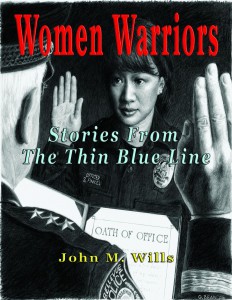
(For more stories by John Wills and “Women Warriors: Stories From the Thin Blue Line,” go to www.totalrecallpress.com or www.amazon.com.)

 

ATTITUDE:

If an employee was having a bad day, John was there telling the employee how to look on the positive side of the situation.

Seeing this style really made me curious, so one day I went up and asked him, ‘I don’t get it!’

‘You can’t be a positive person all of the time. How do you do it?’

He replied, ‘Each morning I wake up and say to myself, you have two choices today. You can choose to be in a good mood or…you can choose to be in a bad mood

I choose to be in a good mood.’

Each time something bad happens, I can choose to be a victim or…I can choose to learn from it. I choose to learn from it.

Every time someone comes to me complaining, I can choose to accept their complaining or…I can point out the positive side of life. I choose the positive side of life.

‘Yeah, right, it’s not that easy,’ I protested.

‘Yes, it is,’ he said. ‘Life is all about choices. When you cut away all the junk, every situation is a choice. You choose how you react to situations. You choose how people affect your mood.

You choose to be in a good mood or bad mood. The bottom line: It’s your choice how you live your life.’

I reflected on what he said. Soon hereafter, I left the Tower Industry to start my own business. We lost touch, but I often thought about him when I made a choice about life instead of reacting to it.

Several years later, I heard that he was involved in a serious accident, falling some 60 feet from a communications tower.

After 18 hours of surgery and weeks of intensive care, he was released from the hospital with rods placed in his back.

I saw him about six months after the accident.

When I asked him how he was, he replied, ‘If I were any better, I’d be twins…Wanna see my scars?’

I declined to see his wounds, but I did ask him what had gone through his mind as the accident took place.

‘The first thing that went through my mind was the well-being of my soon-to-be born daughter,’ he replied. ‘Then, as I lay on the ground, I remembered that I had two choices: I could choose to live or…I could choose to die. I chose to live.’

‘Weren’t you scared? Did you lose consciousness?’ I asked.

He continued, ‘…the paramedics were great.

They kept telling me I was going to be fine. But when they wheeled me into the ER and I saw the expressions on the faces of the doctors and nurses, I got really scared. In their eyes, I read ‘he’s a dead man’. I knew I needed to take action.’

‘What did you do?’ I asked.

‘Well, there was a big burly nurse shouting questions at me,’ said John. ‘She asked if I was allergic to anything ‘Yes, I replied.’ The doctors and nurses stopped working as they waited for my reply. I took a deep breath and yelled, ‘Gravity”

Over their laughter, I told them, ‘I am choosing to live. Operate on me as if I am alive, not dead.’

He lived, thanks to the skill of his doctors, but also because of his amazing attitude….I learned from him that every day we have the choice to live fully.

Attitude, after all, is everything .

Therefore do not worry about tomorrow, for tomorrow will worry about itself. Each day has enough trouble of its own.’ Matthew 6:34.

After all today is the tomorrow you worried about yesterday.


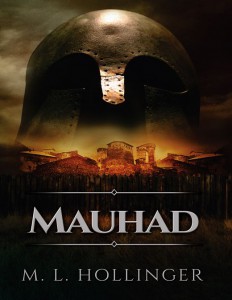
M. L. Hollinger, Author of “Mauhad,” “Love and War,” and “Queen of Gorgos,” Tells a Compelling Story of a Young Man and His Passage into Manhood

Mauhad by M L Hollinger

M. L. Hollinger tries to give boys a role model in his hero, Javik, in his book “Mauhad.” Javik lives in a country surrounded by mountains and covered in old growth forest. His ambition is to become a warrior like his father, Tolda, but he must pass Mauhad before he can realize that ambition. When his father is killed saving the others in his raiding party, Javik despairs of ever reaching that goal without his father’s training. Goldar, who led the raid when Tolda was killed, convinces the King to allow Javik to train with Tao Shan, the finest mentor in the kingdom. Javik finds himself among the sons of the wealthy and must adjust to the situation quickly. While in training he encounters a girl in the forest. She is Allana an escaped slave, but Javik falls in love with her. He convinces her to come out of hiding, and she teaches the sling to Tao Shan’s students.

The time for Mauhad arrives, and Javik uses Allana’s cave hideout to help elude the warriors sent to find him, but must leave it when those warriors close in on him. He wanders into enemy territory and is captured by Grucheaux, Allana’s old master who also happens to be the man who killed his father. Javik lures Grucheaux into Javik’s country where his Mauhad pursuers rescue him. During the fight, Javik manages to kill Grucheaux which makes Allana his property. He offers her freedom, and they agree to marry in spite of his adopted father’s objections to Javik marrying a slave girl. Before the situation can be resolved, Javik must go off to war. Allana vows to wait for him, but when he returns she is gone.

In the continuation of Javik’s story, “Love and War,” Javik goes off to war. While he’s away the old witch, Grazhda, tells Allana she will be Queen of Gorgos and that her Tao Shan has the key to her true identity. She consults Tao Shan who confirms she is of the royal house of Gorgos.

Allana encounters Grazhda again, and the witch shows her visions which almost convince her to seek the throne of Gorgos. She tells Tao Shan of this encounter, and he offers to help her learn about Gorgos.

Grazhda finally convinces Allana to take on the quest of regaining the throne of Gorgos, but she demands current payment of Grucheaux’s sword and a later payment unspecified but ominous. She explains to Allana what she must do to complete the quest, and Allana recoils from the task. She confers with Tao Shan again and his advice convinces her to take on the quest. She leaves the village with gold from Grazhda and Tao Shan to help her on the way.

Javik gains glory and gold in the war but returns home to find Allana gone. He’s dismayed when Dana tells him she doesn’t want him to follow her. He’s also promised Tao Shan another year of training. He begins the training and Tao Shan gives him a bonus by letting him in on the secret of a magic powder (gunpowder) and the weapon called a hand cannon.

A raid on his village produces a bonus for Javik in the form of a large war dog, Mordah. Mordah’s master is killed in the raid, and Javik claims the huge animal. With the help of a villager who knows about training dogs and a potion from Grazhda, Javik turns the dog to his service.

Margan returns to the village and tells Javik of Allana. Javik is shocked that she owns a bordello, but it does not diminish his love for her. He vows to go to her as soon as he’s finished with Tao Shan.

While he trains with Tao Shan, a promiscuous village girl, Polla, seduces him. Javik continues the relationship because he wants to learn how to please women, anticipating his marriage to Allana. Polla becomes pregnant, and Javik ‘does the honorable thing’ and marries her.

In the final book, “Queen of Gorgos,” Javik returns from the mountain fortress when the passes clear of snow and finds a plague has struck his village. Polla is a victim of that plague, but his son, Garen, survives. Goldar’s wife also falls to the disease, and he and Dana decide to marry after a suitable period of mourning.

Javik has no idea what’s happened to Allana. He’s brooding over his loss when Margan tells him of Allana being forced to marry a bandit king in a country far away. Javik gathers his friends in a quest to free her, and they set off for the bandit king’s territory. They gather other allies along the way. The group manages to free Allana, and they set off for Gorgos. The island is only a shell of its former self, but Allana is determined to bring back its glory.

Allana uses her wiles to gain the position of governor of Gorgos under the Count ruling the province the island is now a part of. She begins to rebuild the royal palace and restore the economy with the help of money from the Argani, a race of money lenders. Her fortunes change when the cache of an old smuggler is discovered containing gold and jewels. Barinosh rebuilds Gorgos’ navy, and Javik’s friends develop a cannon suitable for mounting on a ship. Gorgos becomes a sea power second to none.

War brings further riches to Gorgos, allowing it to gain independence. Allana is crowned queen and marries Javik.


  • « Previous Page
  • 1
  • …
  • 30
  • 31
  • 32
  • 33
  • 34
  • …
  • 59
  • Next Page »

Copyright © 2026 · www.AuthorBookBeat.com | Privacy Policy | Terms of Service