Life in the sixties was way cool:
The teen magazines
Top of the pops
Rock and pop Music
Screen Idols
The wonderful events
The terrible events
Girlfriends
Bullies
Don’t forget the dancing!
Promoting, Marketing and Advertising your title

Life in the sixties was way cool:
The teen magazines
Top of the pops
Rock and pop Music
Screen Idols
The wonderful events
The terrible events
Girlfriends
Bullies
Don’t forget the dancing!
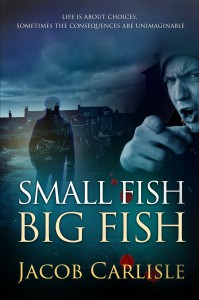
Tough teen issues in 1965 still alive in 2015. Lessons are there for any who will listen, says Small Fish Big Fish author.
Dress up!
Wear a jaunty corsage.
Flaunt your glittermost earrings.
Forget you’ve learned
the Octogenarian Shuffle.
You’re 90 now.
Lean on my arm—elegantly—
as if you didn’t need the help,
only as if you deserve the escort,
and you do
for the times you didn’t have one,
for the war years alone with
food rationing,
starred banners hanging
stiff in parlor windows,
and only letters for company.
You sat dry-eyed
through funerals of everyone
you loved
except your children.
First decades married to a hard man
absent too often and too long,
then these final years with a
mild-mannered gentleman lacking
tenderness and greatness of heart,
you learned the skill of freezing
tears under your skin
until they encircled your body
like rings of an ancient tree.
You build brittle bark to enclose
these ancient bonds
even as we march
through the restaurant
to your place of honor
at the flower-decked table.
Who for 50 years was Secretary of Texas Bankers Association. Mr. Philpott had been a lifetime friend of my banker dad before the days of television. He collected nearly 2,000 items of early Texas memorabilia, especially letters and documents from the years of the Republic, throughout his travels over Texas. Such items are properly designated Texiana.
Mr. Philpott had talked to several institutions, especially the University of Texas, about selling his collection, but nothing came of it. Because of his friendship with my dad, I was able to visit him in the Mercantile Bank Building in Dallas where he housed his marvelous collection. What an experience it was to hear Mr. Philpott tell stories as he thoughtfully examined his items, each of them a pearl of Texas history.
When he died, the executor of his estate contacted all institutions and persons who had manifested any interest in the Philpott collection. I was flattered when the trustee contacted me, because I sure didn’t have the money it would take to buy Mr. Philpott’s Texiana Collection.
The collection was not your proverbial “pearl of great price” but rather like many boxes of them, each document a “pearl” with a story to go with it.
Mr. Philpott had expressed two preferences in selling his awesome collection: (1) that it be sold intact, not piecemeal; and (2) that preference be given to a “younger collector” having an interest in Texas history and Texiana. On age I was then in my 30s, and on interest I presumably qualified, having once been awarded the history medal at El Paso High School.
In the 1940s the Texas Legislature required that all students study Texas history in Texas schools and colleges. As mentioned earlier, I had taken something of a triple dose, at Dudley Grade School, at El Paso High School and at The University of Texas. However, I truly enjoyed Texas history. I didn’t think of my studies in this subject as doses of medicine to be tolerated but rather as big helpings of Blue Bell Ice Cream to be enjoyed. I love our state as much as any Texan [but today I am as opposed to mandatory Texas history as I would be to a Texas Commissioner of Propaganda or Thought Police, something akin to a Texas NKVD. Horrors! Yes, NKVD (thought police any one?)].
Surely I was no historical heavyweight, but what I lacked in knowledge I made up for in enthusiasm. While I didn’t have the funds, neither did the Texas schools or museums at that time. I stayed in touch with the Philpott estate executor for months, and finally I agreed to his price and he agreed to my terms: no down payment, reasonable interest, and monthly installments over ten years while the collection was held in trust.
We had a deal! Meeting my payment obligations was not easy, but at the end of 120 months I took possession of The Philpott Collection of Texiana pearls, as planned and agreed.
The collection included 62 letters or business documents with the signature of Sam Houston, his rubric, and in some cases with his own wax seal affixed. This was the centerpiece. There was an impressive sub-collection of Austin family materials including Stephen Austin’s letter to the Gonzales volunteers. Also there were seven items written and signed by semiliterate Davy Crockett and four by William B. Travis.
Altogether there were more than 900 items of historical interest from the early days of the Republic. What a unique pleasure it was to peruse them! This was the high point of my ownership of Texas historical pearls, the few years before Texas’ Depression of the ‘80s when I owned the Philpott Collection free and clear and had full possession.
In the ‘80s, I found myself in deep trouble financially. Not only was it a bad time for Texas; it was the worst time known by my line of work making and selling specialty petrochemicals. This was further compounded by an explosion at my Baytown plant that was a tragedy literally, legally, and financially.
When I looked at the large debts on my books, I had to face the fact that I had exhausted all sources of money except the Philpott Collection which had appreciated over the years. So to hopefully optimize a sale, I engaged a New York appraiser who ostensibly knew values of rare documents and books. Pursuant to his machinations, the appraiser responded with an esoteric written report and two scenarios. If the collection were sold piecemeal over two or three years, it could be expected to bring $4.3 million.
Wow! That would pay off my entire personal “national debt!” But my big payment obligations to some 200 creditors, many of whom, though I technically wasn’t legally responsible for, wouldn’t allow me to wait the two or three years it would take to sell all the individual pieces in the collection.
The appraiser opined that with a well promoted and organized sale, engaging the services of some high profile Texan, the collection could bring on the order of $2.7 million. The name of retired Governor John Connally was mentioned, and I was able to meet him. As he chewed on his cigar and blew smoke, he expressed a willingness to handle the promotion and sale of the collection through his art and antiques firm.
So I “went into my closet,” so to speak, to think, to pray, and to consider my options, which were few. To sell the marvelous Philpott Collection at auction would be about as much fun as putting your kids up for adoption. Though not formally pledged, I wasn’t being pressured by anyone to sell it at least at that time. I had made slow progress paying my debts from three pages of creditors to less than two pages, having completely paid off many of the smaller ones. I had also undertaken other measures like moving out of our homestead on Rice Boulevard to put it at full risk beyond the Texas homestead exemption. What was the right thing for me to do? I was the one who was responsible for this morass of debt. I was the one who had guaranteed such large notes.
The best course of action seemed to be to have Governor Connally’s firm sell my Texiana pearls of great price at auction. I resolved to move forward with the one-time auction, sad though that would be, and signed a formal contract.
The sale was held at the Dallas Hilton in October 1986. Specially qualified persons and institutions had been invited to the see-and-touch sessions the day previous, and a moderate number had responded. Supposedly hundreds of potential buyers from Texas and throughout the country had been invited to the events by ex-Governor Connally and his partners. Pursuant to making a formal commitment to Gov. Connally, I learned that his debt was a multiple of mine. Sale day arrived. There were specific times scheduled for selling the subsets of the collection: Travis, Crockett and ultimately the large Houston collection.
But where was Governor Connally?
As the morning of the second day progressed, I asked, “When is he coming?”
The short answer was slow in coming, “He wasn’t.” I learned that the governor’s commitment was no more substantive than his cigar smoke, at least to me.
The day wore on; the numbers were moderate at best, with the auctioneer trying to build interest and enthusiasm. Prices were disappointing. About 5:30 p.m. we broke for dinner, resuming for a final two-hour evening session that was somewhat better attended.
Then it was over.
The final results were dismal. The auction brought nothing remotely approaching either of the appraisal figures prepared by the Connally men. The higher dollar number would have cleared all my personal debt, the lower figure that would have knocked it down substantially. The gross proceeds were a disappointing $367,000, less than a fifth of Gov. Connally’s pessimistic appraisal figure. Adding insult to injury was the 15 percent commission off the top paid to Governor Connally’s outfit.
In fairness I might say that the poor state of Texas’ economy MIGHT have been a bigger factor in the punk results than the poor performance of Governor Connally. But he definitely should have been physically present for at least a portion of the auction, if no more than to give a 10-minute pep talk to the attendees.
The good news was that I could go around to my creditors and make appreciable payments, expressing once again my commitment to repay the outstanding principal, albeit with little or no interest. But, with appreciable “cash in my blue jeans,” so to speak, I was always welcomed by a creditor. Some parties who had been skeptical expressed renewed confidence in me, especially five Houston banks I owed money to, or had secondary stand-by guarantees to.
A word of encouragement fitly spoken can have remarkable impact to persons in distress. I could name several persons, some but acquaintances, whose good words helped see me through this dark period in my life, especially members of South Main Baptist Church.
Robert Louis Stevenson had an aphorism concerning hope, so dripping with wisdom that it sounds almost scriptural. “It is better to travel hopefully than to arrive.”
Though I had yet miles to go to keep my promises, it was a bright experience of hope each time I made even a token payment to one of my creditors. Indeed, I was “traveling hopefully,” however long or far it might be to the final outcome.
Addendum: It took me 15 years.
(For more stories by David Smith and “Texas Spirit” go to www.totalrecallpress.com or amazon.com.)
I don’t know how many tales I slept through before I awakened with a start to hear one of my uncles say, “Do you really think he was one of ’em?”
“Well, I’ve heard tell that he was.”
“I’ve more than heard. I know he was.”
“Aw come on. You don’t know Papa was a nightrider.”
“I do, too, know he was. If you’d seen what I saw one night, you’d know it too.”
“Well, how come me or Vasco didn’t see it?”
“‘Cause you two had already left home and I wasn’t about to tell anybody about it. Nobody was supposed to know who they were and I wasn’t about to talk about it and have them pay me a visit even if Papa was one of ’em.”
“Well, what did you see?”
“It was late one night. I don’t know how late but the horses woke me up. I went to the window to see what was going on. What I saw when I looked out almost made me pee in the floor. There were about eight nightriders on horses. All of ’em had on robes and hoods so you couldn’t tell who they were. Two of ’em had pine torches. I thought they were paying us a visit, but I couldn’t imagine why. Just then I noticed Papa’s horse tied to the post out front and someone came from around the house, untied him, and mounted him. He had on a robe and hood like the rest, but he had on Papa’s boots and he got on Papa’s horse. It had to be Papa. The whole bunch rode off down the road.”
“Well, I guess Papa was one.”
“They did some good, you know.”
“Sure they did. If you wasn’t doing right, you didn’t need but about one visit from the nightriders to get you to make some changes.”
“I heard tell that they got aholt of ole Charlie Beard one night.”
“What did he do?”
“Well, you know he was bad to drink and beat his wife and kids when he got home. One night he was in the middle of beatin’ on ’em when the nightriders showed up. Cured him right straight. He stopped hurtin’ his family and quit drinkin’, too. Started going to church. In fact, he got to goin’ to church so strong some of the folks wanted to make him a deacon.”
“Did you ever see ’em again?”
“No, and I never wanted to. From then on, if I heard horses in the night, I just pulled the covers up over my head and stuck my fingers in my ears till they went away.”
“Well, ain’t that somethin’. Papa was a nightrider.”
After hearing that story, I had a different perspective of my grandfather. I only thought of him as a fat old man sitting in his favorite chair dozing most of the time. But in his younger days he had been a vigilante riding through the night making sure that the people along the Bogue Chitto behaved themselves.
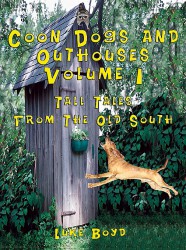
(For more stories by Luke Boyd check out “Coon Dogs and Outhouses” on www.totalrecallpress.com or amazon.com.)
Sacrifice
We live to sacrifice
Empty out our own lives
See our loved ones smile
Even if we pine all the while
We want to give in
Give the love you all are missin’
And take in all your sorrow
To grant you a better tomorrow
No need to ask how we feel
All that matters is if you’re real
See our delicate smiles and tears
We’ll make you laugh away your pain and fears
We live to sacrifice
Never to entice
You to our own whims
We would be mistaken
We’d do anything for a single laugh
We’d say anything for your joy to last
We’d do anything for many years
We’d say anything for your ‘I love you’ dears
(For more by Sahira Javaid’s “Bitter Sweet” to go www.totalrecallpress.com or amazon.com)
A misty fog descends,
clothes their limbs
with a wet, filmy haze.
One swipes his finger on a water glass
in the shape of a heart.
Laughing, dancing on the spongy earth
they don’t bother with the interruption
but I, having turned toward their play
grow fonder of the spectacle
than to writing.
The half-blank page
suffers from imbalance
like standing only on one leg.
With a fleeting, bitter breath
I reclaim my place and place the pen
at the fragmented thought
and set to fancily embroider, embellish it.
A cat’s meow and pounce
at a great invisible phantom
takes me, smiling, off the path again.
Incomplete and disillusioned
the lesson has no end.
(For more by Alice Shapiro and her book “Life Ascending/Descending” go to www.totalrecallpress.com or amazon.com)
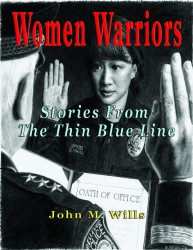
As I moved up through the ranks, I had to grow up and wise up. Still, those early times continue to leave me with fond memories that I share when reflecting on my career.
I was fortunate to have worked with trainers and partners whom I greatly admired and trusted, sometimes to my embarrassment. They convinced me to do some of the dumbest things, that, although somewhat perturbing at the time, still make me chuckle today. I invite you to laugh with and at me as I paint myself as the quintessential Keystone Cop.
During my first phase of field training, I had a fabulous field training officer named Steve. I think it was his goal in life to see what he could get me to do, regardless of how off the wall it seemed. Sometimes, against my better judgment, I did the things he told me to do because I rationalized that it must be my job, right?
We all know it’s the rookie’s job to be alert and listen to the radio at all times. Getting used to that job can be horrible, particularly with Metallica blaring on the good time radio while trying not to spill Steve’s dip cup as he tells me to drive faster. We made our nightly trip to the 7 Eleven for drinks and extra napkins, for the free dip cup, and of course, I had to pee. For those who don’t know, peeing in uniform is a feat in itself for a woman. There is no zip and go, but rather one must undress and hope nothing touches the nasty bathroom floor where half the drunks in town have spit, peed, vomited, and done God knows what else. And don’t forget, you have to hover over the seat while trying to accomplish all this.
As I hovered and held things, the dispatcher called “371,” our unit number, over the radio and gave us a call. I waited for Steve to answer; surely he knew I was performing a circus act in here. Crickets. The dispatcher calls again. Cursing, I fumble for the radio, cut off my stream (ouch), and answer. She gave us the call. I hurriedly dressed, and stomped out to the car, only to see Steve sitting there laughing so hard he almost had tears in his eyes. I got in the car, flung a few nasty words his way and backed out. While still laughing, the jerk had the nerve to say, “I couldn’t even hear you pee.”
Knowing Steve had an evil sense of humor, and remember, I’m gullible, I continued to trust him and do what he told me. Spring was in full swing, bugs were out and about by the thousands, including crickets. I hated having any kind of bug jump on me. Girly? Yes, but still a fact. Steve and I responded to an alarm call at an area church. He drove and I got out and checked the doors as he circled the building. We came around to the well-lit parking lot, which had attracted hundreds of bugs. The concrete was literally black from all of the bugs, almost like a blanket had covered the parking lot.
Steve drove up to the main doors and told me to put a false alarm notification on the door. I asked if he was serious—he was. I told him I was not getting out of the car. He told me that I was because policy required we leave the notification. I asked him to do it, but he quickly reminded me that I was the one in training not him. As I looked out the window I told him the bugs would jump on me so I couldn’t do it. He assured me they wouldn’t, that they would all run away when I stepped out. I asked if he was sure because it would freak me out if those crickets jumped on me. He replied that it would be all right and not to worry.
Stupid me, I trusted him and stepped out of the car. Yep, what felt like millions of crickets swarmed, attacked, and violently assaulted me. At least that’s how I felt. I screamed and jumped around like a nut in the parking lot and tried to get back in the car. The jerk locked the door and wouldn’t let me in until I put the notification on the church door. I ran through the mine field mauled by bugs to put the damn sticker on the door. I stuck it as firmly as I could, knowing it would take razors and massive elbow grease to remove. Yes it was a church, but those were their bugs, right?
I streaked back to the car and found Steve laughing like a hyena as he finally allowed me back inside. I was furious and dove into the car, cussing him and calling him every name in the book. He told me I did a good job, and I asked him why he wouldn’t help me. I reminded him that he told me it wouldn’t happen. He laughed and said he knew it would, but he didn’t help because he wouldn’t step out and let them jump on him. I asked what would have happened had I not been there to do it. The jerk told me, “Hell, I would have just driven off and not left anything.” Ass!
Finally, after several months, I completed training in one piece. I was then assigned to work with a fabulous partner named Jim. He was fun, got along with everyone, and had a great sense of humor, one that was often directed at me. Jim taught me the art of talking people into jail rather than fighting with them, and how to chase stolen cars. He was one of the few people who didn’t scare the living crap out of me when he drove fast and chased cars.
When we first started riding together, Jim and I were assigned to an alarm call at a junkyard. We already knew how well those calls go for me. It was pouring rain when we pulled up and saw the place was surrounded by a six foot fence. The building whose alarm was ringing was located in the middle of the yard. I asked Jim how we checked on a place with a fence we couldn’t get through. He said we had to climb the fence and inspect the building to see if it was secure.
I sat there because I wasn’t fool enough to get out in the monsoon. I had to figure out how this was going to happen. I’m smaller so Jim said I had to be the one to climb the fence. I let him know that climbing fences wasn’t exactly my forte, but he said he would help. I asked if we could just leave and write a report stating that we couldn’t access the location. “No,” he said. Jim insisted we had to make sure it hadn’t been burglarized.
“Fine,” I replied. He told me he would help me. I asked how I would get back over when I finished checking the building, and he said he would help pull me back.
The plan was that he would pull the car against the fence; I would stand on the hood and be able to reach the fence. He pulled up and parked the front bumper against the fence. I got out in the freaking rain and climbed on the car. As I reached up to grab the fence, I slid off the hood and fell against the fence with my foot wedged in the buddy bumper. Jim jumped out, burst out laughing and said he would help get my foot loose. His brilliant idea was to get in the car and back up so my foot would come out. Rather than listen to my pleas to him not to try that, the car was thrown in reverse and my foot did come loose. Of course, as he dragged my butt with the car I couldn’t hold on to the fence any longer and fell right on my rear in the mud. I got in the car and said it was his turn, I was done. With the car still rolling, Jim told me that he wasn’t climbing the fence. “We can just do a report that we couldn’t get inside to check,” he said and drove off!
Jim and I were partners for a while. Time with him was a riot. He continued to play jokes on me, embarrass me, and make me laugh at myself and everyone else. In hindsight, my favorite Jim moment happened one night when we made a traffic stop. I drove that night and Jim did the paperwork. The driver of the car we pulled over had warrants and we arrested him without incident. Jim sat in the car with the driver and completed the book-in paperwork while I searched the vehicle. There were no problems until I searched the trunk.
The car had a sloped trunk, similar to a hatchback, except it didn’t open into the backseat like a hatchback. The trunk wouldn’t stay up, but there was a wooden pole the driver used to hold it open. I tried to prop the trunk open with the pole but dropped it into the trunk, which was very deep. I leaned into the trunk to retrieve the pole while I held the lid up. As I leaned further into the trunk, I lost my balance and fell inside, losing my grip on the lid. The lid came down on me, pushed me further into the trunk, closed on my ankles, and left only my feet sticking out. The trunk was so deep, I couldn’t get enough leverage to push myself up or push the trunk lid up. I yelled and kicked my feet, hoping Jim would come and, yes, I will say it, rescue me.
Nothing. And after several minutes I tried figuring a way out of my seemingly hopeless situation. I decided if I could get completely inside the trunk I could stand up and push the lid open. Apparently my socks, boots, or perhaps my shoelaces were caught on the trunk latch, and I couldn’t move forward. I was basically hanging upside down inside the trunk at this point. Finally, I struggled, kicked enough to move the lid, and was able to kick, push the lid, and inch backwards a little at a time. I worked my way back until I could get leverage to open the lid and get out of the guy’s stinky car.
I stomped back to our car and asked Jim why he didn’t see me. I found him sitting in the car, laughing, tears streaming down his face. I yelled and demanded an explanation. He quit laughing, turned to me with a straight face said, “I had a prisoner in the car and couldn’t leave him,” and burst out laughing again.
I yelled, “&*!@ you,” and got back in the car to wait on the wrecker.
Needless to say, I’ve grown older, moved up in rank, and hopefully become a little wiser. Looking back though, those times were the most fun I’ve ever had. My war stories always seem to involve the group of guys I worked with for years on nights, which included Steve and Jim. We were a close-knit, specialized unit that focused on narcotics, high crime areas, and illegal nightclub operations. We worked hard and we had fun. I was treated like the little sister, and no matter what they did to me (these stories were just the tip of the iceberg) nobody was even allowed to look crossed-eyed at me without having to answer to one of them. Those guys taught me how to laugh at myself and have fun doing it. How much fun would life be if we couldn’t do that?
(1) It’s easier to borrow than to pay back, and (2) Don’t own anything that eats.
He bought a medium-size ranch north of San Antonio, financed by a loan from an insurance company. Then he put a herd of white-faced Hereford cattle on it and later Texas Longhorns.
Dad named it Live Oak Ranch because he so appreciated the trees on his place. As a boy, Dad had moved from the piney woods of deep East Texas to the stark desert of far West Texas which has no trees, period. He must have felt like he was coming home when he bought the ranch in Comal County with plenty of trees, most of them large handsome Live Oaks. We still have his framed copy of the poem by Joyce Kilmer that starts off, “I think that I shall never see a poem lovely as a tree.” Dad wasn’t into poetry, but he was sure into trees now with hundreds of Live Oaks he could call his own. He named the place well, even though you can be sure that there are lots of Live Oak Ranches in Texas and elsewhere in the Southwest. The Handbook of Texas shows 20 Live Oak Creeks alone. Ranches are sure to be more numerous than creeks.
Dad didn’t buy the place solely for its trees, but rather as a working ranch. He had made lots of cattle loans in his banking career, especially in El Paso at State National Bank. Now he would experience how tough it is to make a profit running cattle under any scenario. To say that one’s perspective from the borrower’s side of a loan desk is different from the banker’s side is an understatement, but Dad had to make that shift when he borrowed to buy our family ranch.
What a happy surprise it was for all of us Smiths, and what a challenge for him. The maintenance under previous ownerships extending back to the days of the Republic had been negligible to minimal. One of the previous owners was a bootlegger whose “process hardware” as we call it in the chemical business, was located in the draw north of the house to keep it out of sight during Prohibition. Some of that junk plus beer bottles and pop cans lying around ankle deep were still around in the late 1950s. Dad didn’t hesitate to call on his three boys, now grown and one married, to help clean and shape up our new place, Live Oak Ranch.
An afterthought at closing was something of a joke. Dad bought a little red truck for one dollar that came to be called just that, the Little Red Truck. It was a 1942 Ford pickup with a clutch and a straight stick shift on the floor. It was a sinkhole of maintenance costs but a source of great fun. With Dad driving slowly and us boys in back, we had fun picking up the cans and assorted junk, laughing and acting like little boys again. Each haul was consolidated in a defilade area still referred to as “The Dump.”
In the early years, on Dad’s orders, it became my fun job to rebuild and repaint the small stake body of the Little Red Truck. More than once we would see how many Smiths we could get on it and or in it, great for photographs. In Kendall County, Live Oak Ranch was probably the best customer for repairs that Anderson Ford ever had. In terms of repair bills we probably paid for a new pickup three times over, till finally one day the Little Red Truck (like all of us ultimately) was past going. We put it away under the side shed of the hay barn.
As a viable working ranch, Live Oak was managed by our neighbor to the north, Mr. Dierks, who checked the livestock daily. Dad always ran Herefords, a conservative breed and conservative in number; never overgrazing Live Oak as so many ranchers tend to do. These days we grass lease to a man who runs Texas Longhorns. Some would say that longhorns give a more “marbled” kind of beef and that they’re smarter than other cattle. It is likely true that longhorns can survive on less water and feed. But those very long corkscrew horns are mighty funny-looking.
Four horses came with the property: Paint, Bateen, Prince, and Blue, but in time the horses became entirely recreational. All ten of Dad’s grandkids learned to ride horseback at Live Oak and also got to drive over the place as much as they cared to.
Smith grandkids were usually three years ahead of their peers learning to drive with the Little Red Truck, legally but without a license, only on Life Oak Ranch. Learning to clutch and use the stick shift on the floor was as much fun as horseback riding. With parents’ permission, grandkids and many other visitors could drive alone around the two-mile loop east of the house. I remember when my pre-teen son David Jr. qualified to drive alone. He must have made the loop within the ranch fifty times or more in one weekend.
In the spring when bluebonnets are at their height, I head over to San Antonio to attend the annual convention of National Petrochemical and Refiners Association (NPRA). This convention is important to my chemical business, and a Live Oak Ranch barbecue is sometimes part of the fun.
It was just after one of the NPRA parties had ended that it became my sad duty to have to “put down” old Blue, the last of our original four horses that came with the ranch when Dad bought it from Mr. Steeves. Blue was old, very old, and unable to run with the other horses. It was pitiful to see him that day half standing but dragging his hind legs. There was but one thing to do. I went inside and got Mr. Flory’s 30-30, came back out and looked at old Blue for the last time. I put a cartridge into the chamber. Then you know what followed.
I phoned Harold Dierks, who came over, and with the help of the Little Red Truck we tied a rope to Blue’s hind legs and dragged him to an oak on the hill where Harold noted Blue liked to hang out in previous years. I thought that was a nice touch, kind of like throwing the ashes in the backyard or pasture of someone who’s been cremated.
I like to say that Live Oak Ranch is a “nothin’ place,” i.e., no one has to do nothin’ they don’t want to do, nothin’! Please understand, however, that this nothin’ place don’t have nothin’ to do with the negative ten letter “r-word” (retirement).
Now I’m not looking for a fight or even an argument with anyone, but for some fundamentalists, this point: Find me one place is all scripture, a reference even, touching on “retirement.” How are we going to make our living when pettifogging politicians’ Ponzi Scheme centerpiece called Social Security goes broke sooner rather than later?
I think I speak for many Smiths who are opposed to retirement. I’ll have more to say about that in “Working Texans of Galena Park.” But when we make our bumper stickers at Galena Park, one will say ABOLISH RETIREMENT. I plan to put the first one on the Little Red Truck at Live Oak Ranch, both back and front bumpers.
By the way, there’s a new brand of wine out now called, “Red Truck” but our truck at Live Oak Ranch has no connection with it.
Let’s get back to the story of how we acquired the Little Red Truck. In the 1970s when the original pickup was finally “put down” or at least retired to the side shed of the hay barn, Dad bought and paid cash for a bright red new pickup from Jennings Ford in Boerne. It then became Little Red Truck II. It, too, had a stick shift with clutch, with the gearshift on the steering wheel. When it was ready to be retired (or put down), I made a career shift at the chemical plant for a tuned up Ford and painted it bright red. It became Little Red Truck III for Live Oak Ranch.
When we’re at the ranch we invariably go to the Bergheim Store, formerly Engel’s Store in downtown Bergheim, Texas (population 85). The store is three miles west from our front cattle guard and pretty much like Mr. Engel built it over a hundred years ago, when he emigrated from Germany. Stanley Jones, who owns Bergheim Store today, is postmaster and great grandson of the late Andreas Engel.
The write-up in The Handbook of Texas on Bergheim mentions that it once had the largest cedar yard in the State of Texas. There’s another interesting bit of history mentioned in the Texas Almanac. During the Great Dep-ression, Andreas Engel, a compassionate, frugal German grocer, fought both poverty and unemployment by extending credit to anyone who would go out and chop cedar, then rack it up. Mr. Engel nearly went broke himself, but over a period in the late 1930s he was able to sell his acres of stacked cedar a little at a time in San Antonio, 30 miles to the south.
How I wish there had been more people like Andreas Engel and fewer like FDR and his ilk in the 1930s who saddled us with runaway government that we endure today. Runaway government most definitely must STOP.
It was my pleasure to give a pole-mounted locomotive bell to Mr. Engel’s great grandson, Stanley Jones, when he celebrated the hundredth anniversary of Bergheim Store in 2003. The bell stands in tribute to all forebears who came here to live in freedom before or since 1903; i.e., German, Hispanic, whoever and from wherever, if they believe in God and freedom.
Meanwhile back at Live Oak Ranch, there have been good times too numerous to count. Buddy’s daughter Alexine and her husband Peter had their wedding reception there, built a house on some carved out acreage, and raised their kids up there. Friends of my brothers at First Presbyterian Church of San Antonio use it and enjoy it, as do our Baptist friends, and others. It’s great for barbecues and entertainment generally.
Fourth of July is sometimes something of a home-coming, with our son, Davo, as Resident Director of Fireworks, at least when he’s in Texas. After a hard Fourth at the pool and a day of watermelon, barbecue, Aunt Charis’ pies, Aunt Betty’s cookies for “snacks” plus unlimited cokes, not all of the now older generation, that’s us, are willing to stay awake till 9 p.m. for the fireworks. Oh, we manage provided we can get a nap.
Today those of us over 70 years old are a fraternity I call “Los Viejos.”
Like compound interest, the arithmetic of family increase is astounding. Keeping the best of the past yet responding to economic change is challenging. Problems notwithstanding, we work toward optimal employment and stewardship with fellowship in this splendid legacy Dad Smith gave us, which is now emerging into the fifth generation. Soon there will be Little Red Truck IIII; that’s right. Maybe I’ll live to see Forrest Moseley Smith the Fifth.
My hope and prayer is that not only all living descendants of Dad Smith, but their spouses, in-laws, outlaws, shirt tail relatives, cousins, first, second or removed, plus friends of the above can all enjoy Live Oak Ranch in this 21st century even a fraction of as much as I have. My hope and prayer is that we within the David Smith branch of our extended family will never cut it up just to make chili out of it (Translate: sub-divide it just for short-term quick cash).
Personally, I am committed to this end.
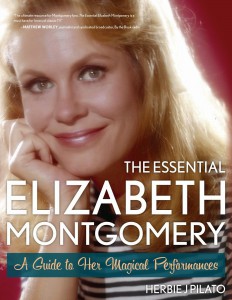
“Bewitched” star Elizabeth Montgomery was one of the most prolific and popular actresses of the twentieth century. In her more than five hundred appearances on television, film and the stage, Montgomery’s talent, charisma, and personality have charmed millions for decades.
This delightful new book delineates, dissects, and celebrates the diversity and minutia of Montgomery’s remarkable career, while chronicling just how much her real life spilled into her historic roles on stage and screen.
THE ESSENTIAL ELIZABETH MONTGOMERY is based on author Herbie J Pilato’s exclusive interviews with the actress and supplemented with commentary provided by myriad entertainment professionals, journalists, and media and classic TV historians, including the Oscar-nominated actress Juanita Moore (Montgomery’s co-star from the historic ‘White Lie’ episode of TV’s “77 Sunset Strip”), and producer/writer/actor Jimmy Lydon (Elizabeth’s co-star from the “Wagon Train” episode ‘The Victorio Bottecelli Story.)
Including plot summaries, air-dates, release dates, and behind-the-scenes notes and anecdotes of select performances, THE ESSENTIAL ELIZABETH MONTGOMERY is a must-read for fans of the actress, “Bewitched,” and all classic television programs.
The book also profiles Montgomery’s feature films like “The Court-Martial of Billy Mitchell” (1955, in which she co-starred with Gary Cooper), “Who’s Been Sleeping In My Bed?” (1963, and co-starring Dean Martin and Carol Burnett), and “Johnny Cool” (1963, directed by future husband and “Bewitched” producer William Asher).
Also chronicled are Montgomery’s ground-breaking, Emmy-nominated TV-movies, such as: “A Case of Rape” (1974), “The Legend of Lizzie Borden” (1975), “The Awakening Land (1977),” and A Killing Affair (about an inter-racial love affair in which she co-starred with OJ Simpson!).
In short, THE ESSENTIAL ELIZABETH MONTGOMERY: A GUIDE TO HER MAGICAL PERFORMANCES is the ideal companion to TWITCH UPON A STAR: THE BEWITCHED LIFE AND CAREER OF ELIZABETH MONTGOMERY, Herbie J Pilato’s narrative biography of the beloved actress…just in time to commemorate the 20th Anniversary of Montgomery’s passing – and Bewitched’s 50th Anniversary of its television debut.