Released less than two years ago, the award-winning “FBI Diary: Profiles of Evil” has risen to #4 in its Kindle category.
Promoting, Marketing and Advertising your title

Released less than two years ago, the award-winning “FBI Diary: Profiles of Evil” has risen to #4 in its Kindle category.
The author, a Retired FBI Special Agent, shows that the New Agent’s training at the FBI Academy changed very little in the 60 years between 1935 and 1995. Perhaps even beyond that.
That night, Ram decided to return to his father’s home. Though Mr. Punjab had offered to visit Ram’s father with him, Ram felt it was his duty, alone. Early the next morning he snuck out of his room at school. The monsoon season was approaching and a gray sky and a constant drizzle accompanied him. The drizzle turned into a steady shower as Ram trekked the ancient footpaths. Thousands of years old, they passed rice terraces and grain fields dotted with thatched houses, and crossed even more ancient rivers with magnificent views of the mist-shrouded Himalayas. On the way, Ram stopped to see his friend Shambu, who had begged in the streets with him and Raj, but had returned home. It was a happy occasion. Shambu’s mother gave Ram dry clothes, made him a tasty meal, and gave him a soft mat to sleep on.
The rain let up the next day, and by dusk Ram reached his father’s house. Made of brick rather than the mud and stone like the house in which Ram had grown, it was the home of his stepmother. The fields behind the house were empty, and the smell of curry drifted. He heard the cries of a baby.
How Ram dreaded telling his father about Raj. In this land, the first-born son was a man’s most important child. Now Ram had to tell his father that his first-born son had gone to the next life. Ram rang the little bell that hung down at the entrance. The door opened and Ram saw his stepmother
“Who are you?” she asked, at first not recognizing him.
“I am Ram,” he said.
“Raj,” the woman called. “Come, quickly.”
His father, whose name was also Raj, came to the door. His eyes widened and his mouth hung open.
“Ram?” he mumbled and looked behind. “Where’s your brother?”
The eyes of Ram’s father continued to search behind him. He stepped outside to look around.
“Where’s your brother?” he asked.
The baby resumed crying and Ram put up his hands in fear.
“It wasn’t my fault. He didn’t want to stay in the school.”
“School?” his father shouted.
“A lady put us into a boarding school.”
“And where is your brother now?”
The baby cried louder as Ram choked on his words and felt tears fill his eyes.
“He, he has passed into the next life.”
His father’s eyes froze. He said nothing and stood motionless, then grabbed Ram under his armpits and heaved him onto the grass. He started after Ram, but the stepmother interceded.
“That is enough, Raj. Let the beggar go away.”
“No,” Ram’s father said, then looked at Ram and shouted.
“First he must tell me how his brother died!”
Ram got up and brushed off the dirt.
“He left the school. And was with a gang. Then a rabid dog bit him. I did not know until after he was dead.”
Ram’s father pulled away from his wife. His eyes afire, his face reddening, he clenched his fist.
“Please, father, don’t hit me,” Ram said. “I did my duty. I performed sraddha, and he has gone to his rightful place.”
“I don’t care what you did,” his father said, grabbing Ram by the arm and kicking him in the behind. “Go away and never come back! You are not my son anymore! Go! Now!”
Ram backpedaled, staring at his father who was crying. Tears filled Ram’s eyes as he turned and ran away as fast as he could.
Ram rushed through the night countryside, ignoring the cries of wild animals. He entered the outskirts of Kathmandu just after sunset. He had not eaten all day but was too tired and upset to feel hunger. Not knowing where to turn, he decided to visit Krishna.
Ram shook the small bell at the entrance to Krishna’s small dwelling place in the temple. The curtains opened, revealing Krishna.
“Ram,” he said, somehow knowing it was Ram though he couldn’t see him.
Ram collapsed as he entered. Krishna helped him onto a mat in front of the low table that faced his thatched chair. He brought Ram some tea and rice, and put it on the table.
“It has been a long time, Ram,” Krishna said. “And I have not seen your brother. Has something happened to him?”
“Yes. He has passed into the next life,” Ram said, and then explained what had happened.
“May the Lord send him to a better station,” Krishna said.
“And why aren’t you at school?”
“I ran away to tell my father. But, he threw me out, forever.”
Ram started to cry.
“Eat some rice, boy,” Krishna said. “It is better to eat than cry.”
Ram sniffled then picked up the bowl and scooped up the rice with his hand and stuffed his mouth.
“And will you go back to school now?” Krishna asked.
“I don’t know, I don’t know what to do.”
“It is much better than living on the streets, Ram. You could die like your brother, and even if you don’t, what good can the future hold for you?”
Ram slept the night at Krishna’s. After the holy man tended to his morning duties, he and Sidd brought Ram back to the school.
“I am glad you are returning to the school, Ram,” Krishna said.
“Yes, Krishna,” Ram said, “You think Angela will return soon?”
“I believe she shall,” Krishna said. “She struck me as a kind woman. Let us hope the Lord Ganesh will make it so.”
While Krishna spoke to the principal in her office, Ram waited in the hall. Moments later, the principal hurried out with Krishna behind her. Without a word, she went up to Ram and hugged him.
“Ram, we were worried about you,” she said. “We thought we might never see you again.”
“I’m sorry, Miss Sharma, but it was my duty to tell my father about my brother.”
“But it was not good to leave as you did,” she said. “We could’ve have sent you in a car.”
“I’m sorry, Miss Sharma.”
“Well, you will not be sorry for long,” she said.
Ram looked at her with puzzlement.
“Your lady friend, Angela, will be here tomorrow. We phoned her about your leaving, and she insisted on coming at once.”
Ram looked at Krishna and they both smiled.
“You see, Ram,” Krishna said, “the Lord Ganesh is watching over you.”
The next day Ram and Miss Sharma met Angela at the airport. They spotted her as she walked down the stairs that rolled over to the plane. Her face was expressionless as she entered the terminal. Then her eyes fell upon Ram and a big smile formed.
“Ram,” she said, “I thought you had run away.”
“He just came back yesterday,” said Miss Sharma.
“I’m so sorry, about Raj,” Angela said, and hugged Ram. “But I’m sure, God has his reasons.”
Angela released him.
“So, what do you say” she said, “dinner at Mr. Punjab’s tonight?”
“Yes, okay,” Ram said, then felt a poke in the side from Miss Sharma. “And,” he said in his very imperfect English, “I very happy see you.
Angela looked at Miss Sharma and smiled.
Mr. Punjab visited with Angela and Ram at the restaurant. They talked of school and Ram’s visit to his father. But the talk never interfered with the meal, for it was the most delicious meal Ram ever remembered. He had the house specialty, Chicken Himalaya, everything specially prepared by Mr. Punjab himself, including an ice cream cake that he set on fire as he brought it to their table. It was after dessert that Mr. Punjab came to the table. Though Ram’s English had improved since entering the school, Angela wanted to be sure that he clearly understood what she was about to say.
“Ram, how would you like to come with me, to America?”
Ram thought he understood but wasn’t sure.
“America?” he pointed to himself, “Me?”
She nodded.
“Me come America? With you?”
“Yes, Ram, yes. You come to America and live with me. Yes?”
“Yes?” he said, still unsure. “After the school?”
“No, Ram. As soon as we can get a flight. I will bring you on the plane, to America, to be my adopted son, and you will go to school there.”
She pointed to him and then to herself. “The school has contacted your father and he has given his permission for me to adopt you.”
“I see,” Ram said.
“I’m sorry, Ram, about your brother and your father, but you will have a good and happy life in America.”
Ram did not know what to say.
“I know it’s a big decision,” Angela said.
“Decision?”
Mr. Punjab translated.
“Oh, yes,” Ram said.
“You think about it, Ram, and tell me tomorrow.”
Ram couldn’t believe what he had heard. He couldn’t imagine leaving the land of his birth. That night he talked with his schoolmates about going to America. They all were excited. It sounded wonderful, but really leaving was another matter. Perhaps life had not always been so easy nor pleasant, but leaving the gods, the temples, the holy days, the holy men, the Kumari, the ancient fields and footpaths, the home where he had been planted? Yes, he hated his father, but that did not mean he never wanted to see him again. But if he went to America, that could very well happen.
The next day Angela came to the school. She had promised to take Ram out shopping and to dinner. As they left in the taxi for Durbar Square, Ram smiled at Angela.
“I will go to America,” he said suddenly.
Angela smiled and hugged Ram.
“Wonderful, Ram,” she said. “Wonderful.”
Ram could feel the quivering of her body as she hugged him, and when she released him, he noticed her red eyes and felt his own tears.
Some days later, Ram said good-bye to his schoolmates and Katmandu, and took off in a big jet. He went with Angela to live in a quiet little town in America. There, the markets are larger than the temples, and life is so rich that the bellies of the people are often too full.
THE END
That evening, as they ate their nightly bowl of rice at the temple, they talked about their day to Krishna. They spoke of finding the broken Buddha and losing it to the gang. They also spoke of the Lady.
“Shiva punished you for planning to sell the Buddha,” Krishna said. “But Brahma consoled your injuries by bringing you the Lady.”
The Lady, that’s all Ram could think about as he lay down to sleep. The brothers decided that instead of going to the dump the next day, they would look for the Lady.
In the morning, they waited outside the hotel. A few tourists dropped coins into their basket, but by noon they still hadn’t seen the Lady. Thinking she may have left before they got there, they went to the tourist district. Through the cobblestone streets of old Kathmandu, they dodged the rickshaws, taxis, and holy cows, passing the shops and food vendors. The streets exuded spices and cooking meat. This mingled with the voices and chirps of the flute sellers, whose instruments clustered in bags slung over their shoulders. Then they heard the bells of the goddess Kumari.
It signaled the daily appearance of the living child goddess from her window at the Kumari Palace. The child, believed to be the reincarnation of the goddess Kumari, is chosen at an early age. She remains a goddess until she sheds the first blood of womanhood, when a new goddess is chosen to replace her.
Normally Ram and Raj would be scavenging at this time, but they enjoyed seeing the young goddess whenever they could. They hurried to get a space inside the large crowd that gathered outside on the cobblestone square facing her window. Finally, the bells stopped and a little head popped out from a window overlooking the crowd. There were gasps and murmurs, and Ram and Raj bowed their heads and kneeled. As the crowd chanted, the boys stole glances at the smiling goddess.
“I think she sees us, Ram,” said Raj.
From the distance, they could not be certain, but it gave them hope to believe so.
“I’m sure we will find the Lady now, Ram,” Raj said. “The Kumari has given us a sign.”
The boys left feeling confident. But it would not be easy. Throughout Durbar Square into the farther reaches of Old Kathmandu, they searched. So many ladies they saw, but none with hair so white yet skin so young. After a couple of hours, they were hungry.
“I don’t think we will ever see her, Ram,” Raj said.
“Don’t say that, Raj. Tonight, we will make an offering to Ganesh. And tomorrow, I know He will bring us the Lady.”
They headed to Bala’s food stand. As they went, they passed an outdoor cafe surrounded by a wrought-iron fence. They looked over the gate and noticed a woman with white hair. It was the Lady. Angela. They ran to the gate and hollered; she saw them and waved. Out came a young man with clenched teeth.
“What do you ragpickers want?” he shouted.
“To see that lady,” they pointed.
“Go away. You cannot come in here.”
“But she is our friend.”
An older man came out. He smiled and spoke softly.
“The lady has asked to see them,” he told the young man.
“Angela!” they shouted as they rushed to her table.
“Raj, Ram,” she said. “Some rice? Coca Cola?”
They nodded happily. Ignoring the stares of others, she bid them sit at her table. The nice man who was the restaurant’s owner and whose name was Mr. Punjab joined them and translated.
In the next days, the brothers met Angela at the restaurant. With the help of Mr. Punjab, they told Angela how they had left home and come to live in Kathmandu. Her eyes seemed to sadden as Mr. Punjab relayed their story.
After several days of nice dinners, she surprised them. She said she would pay to enroll them in a boarding school. The boys were hesitant. It had been a long time since they were in school, and because of their obligations on their father’s farm, they missed many classes. Nevertheless, Angela convinced them to visit a school with her. There they met a nice teacher, whose name was Rupa, who said she would be happy to look after them.
“It is the goodness of Lord Vishnu who has brought you boys,” Rupa said. “Last year, the Lord took my son, but now he has brought me two more.”
The brothers were not about to argue with Vishnu. And with Angela leaving soon, they decided it would be better than staying on the streets, so they agreed to enroll in the school. They went to the airport with her and Rupa. Angela hugged them and tears filled her eyes. She promised to return the following year.
School was not fun. Though they ate well and slept in beds, learning to read and write was worse than begging. Ram was good at Math and a passable reader, but Raj was terrible in everything. He would not follow the school’s rules either. The brothers got into a fight, and Raj ran away.
Before long, Ram learned Raj was working at Mr. Punjab’s restaurant and had moved in with the cook and his family. He grew lonely and began to worry that Angela might not return. One day, during class, Mr. Punjab came to school. After Rupa conferred with him outside the room, she called Ram to come into the hall. Mr. Punjab smiled at Ram.
“Let us take a walk,” he said.
Mr. Punjab looked straight ahead as they walked down the hall.
“Miss Rupa says you are doing very well. That is good to know.”
They walked a little farther and Mr. Punjab gently squeezed Ram’s shoulder.
“I’m sorry to tell you this, Ram,” Mr. Punjab said and his voice trailed off.
Ram’s heart stopped. Could it be that Angela was not coming back?
“Ram, it is about your brother,” Mr. Punjab said. “I am sorry. Raj has passed into the next life.”
Ram’s body stiffened; he could not believe it, though he was not surprised.
“He left the restaurant,” Mr. Punjab said, “and returned to the streets. A farmer brought me his body. Some beggar boys were with Raj. They were walking down an alley when a mad dog jumped out.”
Ram ran outside into the schoolyard. He looked up past the distant icy mounds of the Himalayas that filled the horizon. All he could see was a blank and heavy space. He felt that it had been his fault, that by fighting with Raj, he had caused him to leave the school. Now he would have to conduct Sraddha.
The reddish-gold glow of sunrise colored the sky as Mr. Punjab drove Ram to the holy site along the Bagmati River at Pashupatinath, where the bodies of the dead are returned to God. Here, beneath ornately carved pagodas that point to heaven, pilgrims purify themselves in the river as incense masks the funeral pyres burning human flesh. Dressed in a ritual white gown given to him by Mr. Punjab, Ram saw the cook and the others from the restaurant, including the angry man who had yelled at him and Raj, standing around Raj’s body. It was wrapped in a sheet on a ghat, a small wooden platform that extended out onto the water.
Ram unwrapped the sheet and stared at his brother, who looked more like a picture of himself. He almost expected Raj to open his eyes and start talking. The men helped him pick up the body, holding out the edges of the sheet to lift him. Walking into the shallow water, they let the sheet down, immersing the body. Ram waded in the cool water. He felt as if he had been here before. His mind emptied, and it was as if all the memories he had of his brother flushed from his brain. He watched Raj’s floating body and held back the tears.
Now, it was time, and the men, who had prepared the ghat with logs for the fire, carried Raj’s body out of the water and wrapped it in a yellow sheet. They placed it atop the logs on the ghat. Ram had helped his father perform Sraddha when his mother died, but this time he did not feel as sad. He smeared the sheet covering Raj with a stick of butter-like oil. Then they gave him a bowl of rice with fragrant, white lotus blossoms and evergreen sap. He rubbed the rice and flowers into his brother’s forehead, and chanted the ritual prayer.
“Now, brother Raj, go to God, go and may you never need to return to this life again.”
Ram pushed a piece of dried camphor into his brother’s mouth and lit it. He moved back and the flames erupted.
In the distance an eerie flute slithered. Drums followed, then tolling bells. The flames shot up. The others had stepped away; only Ram stayed close and watched the fire consume the body and listened to the crackle of its fluids giving off the stench of burning flesh.
This is the way of all things. Life is like a mountain river, flowing far and swift, taking everything with it, never stopping, always changing. The self is but a phantom, an illusion. There is no everlasting thing. This was the teaching of the Buddha, the beliefs Ram had been raised with. As Ram watched the plumes of smoke rush into the air, he realized that people were no more than gases and ashes, and gentle eddies of air.
The Ragpickers and the Lady
By Tom Calarco
The night comes all too soon, shutting down the light that gives life to all, the lesson we experience throughout our lives, the lesson we sometimes forget because the light is such a wondrous, precious thing. In the holy city of Kathmandu, the light had once again been shrouded by the night.
“Sing!” Ram cried into the darkness.
The boy opened his eyes. He froze. He had just seen his friend, Sing, who had recently died after eating chicken from a garbage bin. Or so it had seemed. Now all he saw was the shadowy figure of the elephant god Ganesh above.
Below the statue, his brother Raj slept in a potato sack with Sidd, the old shepherd dog of Krishna, the blind old man who was the caretaker of the temple.
“Raj!” Ram cried and shook his brother.
Raj moaned.
“I saw Sing!” Ram said. “He was here, right next to me.”
“Go back to sleep, Ram . . . it was a dream.”
Ram quivered, closed his eyes, and drifted off . . .
“The sun is rising, boys,” said Krishna said.
Ram felt his brother shaking him. Slowly, he slipped out of his sack as the gaunt, gray bearded Krishna, wearing only a turban and a dhoti, rang the temple bells. Soon the people would come. The boys put away their sacks and took their work buckets. They would load them with metal and plastic from the city dump with other ragpickers and take it to the Sahu in exchange for money.
Outside the temple, the jagged, snowy peaks of the Himalayas stabbed the sky. Everything else seemed small and common. Ram never tired of looking at them. He vowed to someday climb one, and maybe join the Sherpas. Yes, someday, he would look down from the world’s icy roof like one of the Gods.
Before heading to the dump, the boys stopped in Durbar Square to see Punya, the food vendor.
“Good morning, young sirs,” she said, as she unloaded baskets of food onto mats in the open area surrounded by temples and stone godheads. “Vishnu is with us today. I have some nice bananas for you.”
Punya, a woman whose wide face was smooth and rosy cheeked as a young girl, reached into a basket and fished out two brown bananas. The boys devoured them. Punya laughed.
“You must be growing very fast,” she said, and gave each a slice of fresh coconut.
“That is all for today,” she said.
It was not enough, but they were ready for the dump. Not going meant begging for coins, a very uncertain prospect that could mean waiting to eat until Krishna’s evening bowl of rice. At the dump, they usually could rely on getting something to trade. As they walked barefoot along the dirty street, they took little notice of the holy men, the sacred cows, the squealing monkeys, and the anxious rickshaw cyclers. It was all so common to them, as were the packs of mean and homeless dogs.
Turning into a cobblestone byway, they entered a network of narrow streets. Lined with two and three-story brick tenements occupied by small retail shops, the streets progressed like a maze. Following the many turns, the boys were led to a dirt road that ended at the dump. Men, boys, even little girls were scavenging. The brothers picked a section and crouched down. They rummaged through shreds of clothing, strips of paper, shards of glass, broken trinkets, and parts of machinery—the remains of so many forgotten people all squashed together and piled in heaps.
Copper and brass were the most highly sought after, aside from gold, of course. But no one they knew had ever found gold in the dump, though there was a story of a little girl who found a gold ring with a chipped ruby. Her mother supposedly used it to buy a farm in the fertile plain not far from their father’s farm.
Two years had passed since they ran away from their father. Their mother had died suddenly. A vein broke in her brain, a doctor said. Their father remarried a rich widow who hated them, but certainly not as much as they hated her.
After several hours of scavenging, the boys became restless. Though their buckets were not yet half full, they had gathered enough metal to pay for a meal and decided to go to the Sahu. As they shuffled through the debris, Raj cried out, and stumbled to the ground, holding his foot.
“Look!” Ram shouted, his eyes drawn to the area where Raj had stumbled.
A chunk of golden metal had been revealed. He reached under it into the debris and pulled out more chunks of golden metal. They were pieces of a broken Buddha. The brothers squealed with joy. They had learned to identify brass and copper, but this metal had a smoother, softer surface. Perhaps gold.
“Vishnu is with us today, Ram,” said Raj, who took one of the pieces and rubbed it on his toe, making it feel somehow better.
Their commotion alerted a group of other boys in the junkyard. They rushed towards them. Raj gathered the pieces and wrapped a rag around them as the older boys surrounded them.
“What did you find you, little dog?” shouted a boy about 13 who appeared to be their leader, or guru, as boys commonly called those most respected among them. “What’s under that rag?”
“It is not your concern,” Raj said.
“Are you too greedy to share it with your friends?”
Raj did not answer. The guru stepped closer.
“Let me see it.”
Raj handed Ram the rag.
“Run, Ram, run,” he shouted.
Ram didn’t know which way to go. Like a scared rabbit, he scooted around the older boys. He was quicker but not faster. They caught Ram, punched his face, kicked him in the belly, and gave the prize to their guru.
A little later, sore and hungry, Ram trudged behind Raj to the Hotel Annapurna. A two-story building with a gateway leading to a circular loading area, the hotel was always busy. Rickshaw tricycles and taxis lined the circle, a cigarette lady stood behind a cart, and a vendor displayed trinkets. Nearby was Nirula’s ice cream shop where beggars always assembled. They saw a friend, eating an ice cream cone.
“Kesab,” Raj called.
Kesab stared at them from behind the luscious scoop of chocolate ice cream.
“Ram, what happened to your eye?”
“A gang beat him,” Raj said.
“We found a gold Buddha and I tried to run away so they wouldn’t get it,” Ram said.
Kesab shook his head.
“Perhaps your luck will be better here,” Kesab said. “A new group of Americans has arrived. A nice tourist lady bought me this ice cream. Would you like a lick?”
The brothers each took one. Ram had not tasted anything so wonderful since a tourist lady bought him an ice cream so many months ago.
“Look, a bus,” Raj said.
A bus turned into the gateway and the caravan of beggar boys ran to meet it. The boys gawked at the sleepy tourists as they got off with their baggage. But there were many beggars and the tourists passed quickly for fear of becoming surrounded. Ram and Raj moved away from the crowd and walked along the sidewalk outside the gate. They saw a nicely dressed woman with white hair and a friendly smile.
“No fahter, no muhter, no money,” they chanted in English.
The lady stopped and examined Ram’s eye. She said something they could not understand.
“No fahter, no muhter, no money,” they repeated.
The lady, who looked too young to have white hair, peered down where a vendor was selling hot food. She led them to the stand and bought them some Chicken Curry. With the vendor translating, she told them her name was Angela and that she would be in Kathmandu for two weeks.
“Maybe we will meet again,” she said.
Perhaps their karma was changing; perhaps, someone would buy them an ice cream too.
The darling Donna Douglas who with both gusto and grace played the hot and hollering Elly May Clampett, the diamond in the rough on The Beverly Hillbillies…The barrier-and race-breaking performance of the distinguished Diahann Carroll as Julia in the same-named, first-African-American-led sitcom in TV history…The smart and sassy magic of Barbara Eden on I Dream of Jeannie…Mary Tyler Moore…Lynda Carter…Dawn Wells…Farrah Fawcett…Suzanne Somers…Sally Field…each of them and more are probed, prodded and paid tribute to GLAMOUR, GIDGETS AND THE GIRL NEXT DOOR: TELEVISION’S ICONIC WOMEN OF THE 50s, 60s, and 70s, which is filled with insightful, entertaining and revealing biographies by renowned classic television historian, producer and consultant Herbie J Pilato (Retro Active Television, Twitch Upon A Star, The Kung Fu Book of Wisdom, among others).
According to Herbie J Pilato, “There are so many charismatic women who have made their ‘beauty-mark’ in television. I wanted to celebrate their contributions, not only with regard to aesthetic appeal but to honor the intelligence, individual wit, and unique talent and style that each of them have contributed to television—and how that great medium in particular was utilized to introduce and showcase so many amazing and wonderful women to the world.”
May 18th will mark the 20th Anniversary of Bewitched star Elizabeth Montgomery’s passing, on the heels of the 50th Anniversary of Bewitched. Montgomery is profiled in all three of Pilato’s new books.
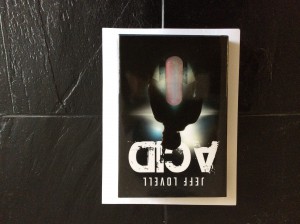
Students become guinea pigs for a mind-altering drug discovered accidentally in a lab at the University of Illinois. Struggling to deal with its’ unimaginable effects changes their lives forever.
I enjoyed it a lot. Good, engaging plot with surprising twists and characters I care about. Takes place in places I know, so it felt like I could have been part of the book. Can’t wait for the next one.
Sunday was a perfect day for Jack Onofrio to play his last high school game, and it would be against the best, a powerful Mt. Carmel team. The air was mild from a front that had moved up from St. Louis during the night and the smell of burning leaves drifted over Gately Stadium, located on Chicago’s south side, as the players stretched and ran pre-game warm up drills. The Mt. Carmel stands were full while it seemed that only family and friends came down from the north side for Quinlan’s final game.
Mt. Carmel proudly wore discarded uniforms from Notre Dame, Kelly green jerseys with gold pants and tan leather helmets. Unable to afford traveling white jerseys, Quinlan wore their home blue and red uniforms. During the warmups, more than one Carmel player glanced over to the Quinlan side with looks of wonder that they were about to play a team with barely enough players to start the game.
The game began with Quinlan kicking off to Mt. Carmel. The ball went to Monte Cooper the great back who was a danger to score every time he touched the ball. Tall and wiry with well-defined muscles and a slim waist, he took the ball moving forward agilely and picked up speed as he cut and sliced through would be tacklers. But just as he turned to a higher gear, as he did so well, Jack Onofrio exploded into the Carmel star from the side so savagely that the sound of breaking ribs brought a gasp from the crowd. Time was called immediately, and the medical personnel helped their crumpled star to the sideline.
This set the tone for the game as the clear underdog Quinlan found life for their last game. The smaller Quinlan players hit with ferocity, giving the powerful Carmel team all it could handle. By half-time four more Carmel players were on the sidelines out for the day. But Quinlan lost players of their own, two knocked unconscious, and another suffering a broken arm. That left thirteen to gather their wits in the locker room during the break. Tommy Gleason was like his old self, moving from player to player to shake their hand and pat them on the back with encouragement. He was proud of these boys, and he shed tears as they readied to return to the field for another half.
Quinlan finished the game with just enough to field an official team, eleven players. They didn’t beat Mt. Carmel, though they had a chance near the end when Onofrio hit the opposing fullback head on, causing him to cough up the ball. But Carmel recovered and was grateful to just run the clock out. After the game an unusual happening took place. The entire Mt. Carmel team went to midfield, surrounded the 16 opposing players, and sung the Bishop Quinlan alma mater along with the beaten team. Afterward, the players from both teams shook hands and talked with arms draped around shoulders while Tommy Gleason sat alone on the bench by his sideline and cried openly.