• Authors Registration
  • Login
  • ABB Book Store

AuthorBookBeat

Promoting, Marketing and Advertising your title

authorbookbeat
Be Like these authors and promote your own book signing Events
  • Home
  • About ABB
  • How ABB Works
  • FAQ
  • Services
  • Publishing
  • Literary Agents
  • Sell Books
  • Authors Index
  • Post Breaking News
  • Book Trailer
  • Interviews
  • Events
  • Short Stories
  • Press Release
  • Articles
  • Email Distribution
  • Book Reviews
  • Promote
  • Poetry
You are here: Home / Blog

The Last Game – Part 1

Jack Onofrio was the captain of a struggling Bishop Quinlan Catholic High School football team in Chicago. A school with a proud and rich tradition that had produced a number of highly successful and well-known graduates was in severe financial difficulty due primarily to the middle-class exodus to the suburbs that started in the fifties. The school’s enrollment had dropped precipitously which directly affected the number of football team members. By the end of the 1961 season the Quinlan team was down to sixteen players, an immensurable drawback in the powerful Chicago Catholic League. But Jack didn’t care. He didn’t care that he played against far superior teams each week. Teams that listed eighty to ninety players, of which several would go on to play college ball. He was hungry to play the game. Jack loved football. He wasn’t big himself, a tough linebacker at 180 pounds. But he used every pound economically to leverage himself against players that outweighed him by a considerable amount. It was rare for an offensive lineman to get the best of Onofrio for most went away with bloodied faces and broken noses.
The Quinlan team practiced in Lincoln Park, the only substantial stretch of grass near the old school building, and the team walked to and from the field to the school through the city’s busy streets each day with helmet and shoulder pads in hand. They practiced hard and were indeed quite parched at the end of the day. It was by pure chance that a former Quinlan ballplayer, who was also a Chicago cop, had opened a tavern on Clark and Webster that was conveniently located along the path the players took from the park. Equipment and all, they often stopped by for a cold one before continuing the several more blocks to the school and a hot shower. Though they were all of course underage, an eyebrow was never as much as raised for that was the way of the city at this time. Half of the team was already at the bar when Onofrio showed up and set his gear next to the others under the black tavern window. It was a blue-collar Irish establishment that sold as much whiskey as it did beer and there was always a good supply of hard-boiled eggs on the bar. Sean O’Rourke, the owner, maintained an Irish façade with green charm everywhere one looked. It was as if every day was St. Patrick’s Day.
Jack took a stool next to his quarterback, Jimmy O’Shea, and signaled O’Rourke for a beer, which was already on its way.
“You hit me hard today, Jack” O’Shea said rubbing a bruise on his jaw.
Jack smiled. His neck was thick and his shoulders broad. The brown- haired crew cut, matted down by his helmet, was starting to perk back. He picked up the beer and closed his eyes to savor the frosty taste of it going down his throat. But before he could respond to O’Shea, their coach stormed through the front door.
“What in the hell are you guys doing in here?” Tommy Gleason yelled in a raspy voice that had a hint of Irish in it. To the bartender he cried, “A fine example you set, serving minors that have a game coming up Sunday. “
O’Rourke chuckled saying nothing as he drew a beer for his old coach. He had heard this many times before.
“Now get out of here, the lot of you before I call a police officer and report you. You won’t be playing against Mt. Carmel on Sunday, that’s for sure.”
The boys took a last swig of their beers and started scrambling to fetch their equipment. Then the coach said to Jack, “Onofrio, you stay here. I want to talk with you.”
Jack sat back on his stool and shrugged his shoulders at O’Rourke.
“Give us a couple of beers, Sean,” the coach said. “I want to have a few words with my captain.” Tommy Gleason had a thick shock of white hair, parted on the side, and a beet red face with blue eyes. He has been the coach at the north side school longer than most could remember.
The beers appeared on the bar and Gleason took an enjoyable taste. “Ah, so good.” He turned to his captain and said, “So, Jack, what are your plans after you graduate?”
Without hesitation Onofrio replied, “I want to play college ball, Coach. Not small college. I want to play with the best.”
Gleason smiled. “You might be a little small for that bunch, Jack.”
“I’m big enough, Coach. I beat the hell out of O’Malley at Saint Rita, and I hear he’s going to Michigan.”
The coach thought about that a second, then nodded. “Maybe you are big enough. Maybe you are.” He took another drink from his beer, and then continued, “You know what you got going that’s going to take you someplace?”
“What’s that, coach?”
“You read everything. You’ve always got a book in your hands. That’s good.” The coach glanced at his former player behind the bar. “More of my players should be reading books.” O’Rourke opened up the palms of his hands as if to say, ‘give me a break!’
At that moment two cops in uniform came through the front door off of Clark Street. One twirled a night stick and came over to the pair at the bar. Tommy Gleason reached out and shook his hand.
“How you doing, Coach,” the cop said.
“We’ve got Carmel Sunday and we’re ready,” Gleason said and pointed to Onofrio. “Meet my captain, Jack Onofrio.” To Jack he said, ”Shake hands with John Logan, the best end I ever had.”
They shook hands while the other cop, likely not a former Bishop Quinlan player, was quiet looking over the bar.
“You’ve got a good coach, kid,” Logan said.
“I know.”
“You going to play college ball?”
“We were just talking about that,” Jack replied. “I am.”
The cop nodded. “Good. I played a year with Purdue but tore my knee up. Wish I was able to play more, but that’s the way it goes. Just give it all you’ve got and you’ll do fine.” The former player looked at the other cop who nodded in agreement that it was time to go.
Gleason shook hands with Logan and said, “Good to see you, John. Come out Sunday and watch us kick Carmel’s ass.”
The cop smiled and nodded then waved to Sean O’Rourke as the pair left.
The old coach turned his attention to his captain and said, “You better drink up and get a shower before Father comes looking for all of us. Jack finished his beer and shook his coach’s hand. Then he shook Sean’s hand and picked up his equipment. Jack thought his coach looked sad sitting at the bar. His days of coaching at Quinlan were numbered for there might not even be enough players to field a team the following year. It was strongly rumored that football would be discontinued at Quinlan after Sunday’s game.

 

Jon Shirota

Born, Maui, Hawaii. Educated, Brigham Young University, Utah

Rising Higher Than Ever

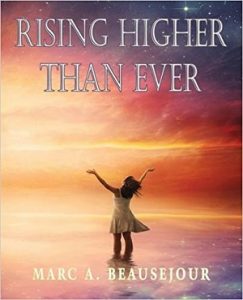
Rising Higher Than Ever by Marc A Beausejour

RISING HIGHER THAN EVER by Marc A Beausejour takes poetry-inspired events to the next level. Exploring situations, from being raised in broken homes and families to people being involved in abusive relationships, Taking a leaf from its predecessor; WORDS ON HIGH: POETRY AND INSPIRED EVENTS FROM MAB, which was released through self-publishing in 2011;

RISING HIGHER THAN EVER by Marc A Beausejour takes a look into the lives of twenty individuals that deal with the everyday struggles of life in situations that are very realistic in today’s world. Utilizing Scriptures from the New Living Translation Bible (NLT), each poem and story is followed by a message from the author. The subjects that are also explored in this book include: dealing with childhood death, making critical career choices, relationships that are both legit and illegitimate, and overcoming all doubt and fear despite how bleak the future looks. RISING HIGHER THAN EVER strives to not only engage the reader’s attention with its story plot but to entertain with poetry, creative lyrics and ballads while also instructing, teaching and empowering with the Author’s Corner and the Bible.

Readers will be introduced to a more unique book that is not just a poetry book, but so much more.


Jon Shirota

Jon Shirota was born and raised on Maui, Hawaii. Graduated from Brigham Young University, Utah. Resided at Handy Writers Colony; finished his first book, Lucky Come Hawaii. Thereafter wrote and had produced several plays.


Jon Shirota

Served two years in U.S. Army. Graduate of Brigham Young University, Utah.

McDermott

PJ McDermott lived in Scotland until he was twenty-five, working in factories, and on building sites, and earning pocket money as a performer on the Scottish folk club circuit and pub scene. Later, as a mature-age student, he graduated with a Bachelor of Science degree from Glasgow University, met his future wife, and immigrated to Australia. He has two daughters and two seriously cheeky grandchildren.
His debut novel, a coming-of age literary fiction called Small Fish Big Fish, was published under the pseudonym Jacob Carlisle and is available from Amazon, Smashwords, Barnes and Noble and other on-line retailers.
Avanaux: A Hickory Lace Adventure is the first book in The Prosperine Trilogy. The second in the series, Rise of the Erlachi, will be released in November 2015.
The Second Coming: Prelude to Avanaux covers the events leading up to the formation of the Alien Corps and is available as an e-book at no charge from Amazon and Smashwords.
PJ also writes short stories in all genres, with a passion for the weird and wonderful. His short story collection, Dark Fantasy, (by Jacob Carlisle) is available at on-line bookstores.


Sting Like A Butterfly (Pt 2)

All that week, I was a legend in the senior school. ‘He was threatening Davie with a broken bottle to his face, but Davie ignored it.’ Billy again. I admit I might have contributed a little to the hero worship by suggesting that I could have bested him if the fight had been fair and square.
Then came last Saturday morning. I play football for Eaglehawk in the junior league – I’m not bad on the right wing – and I was looking forward to the game as our team clattered out of the dressing rooms and onto the park. It was a shock to find that Rob was playing goalkeeper for the opposition. He seemed to have grown six inches and put on twenty pounds in a fortnight. He came trotting up and chested me. In the cold air, his breath surged from his nostrils like a rampant bull.
‘I hear you don’t think the fight was fair and you want a rematch,’ he said.
‘No, no, Rob. It was fair, alright. You won it fair and square.’
‘You’d better not come near me today, or I’ll break your leg.’ He sauntered back to his goal, calling over his shoulder, ‘you’re a coward, Johnson. You’d be better off taking up knitting than playing football.’
‘Don’t pay him any attention,’ said The Kid, winking. ‘I’ll sort him out.’ Billy’s our striker and our best player by a mile. He’s tried out for the State team and would have played except he’s a little on the short side. I doubted even he could get us over the line on this one – Golden City were league-leaders and odds on favorites to take out the match and the championship. I could see Fat Harry looking on from the sidelines and gave him a wave. He doesn’t play soccer, but he likes to come to the matches to support us.
The game went pretty much to script, and at half time, City went in one – nil in front. Rob sneered at me, mouthing ’pathetic,’ as our team made its way into the dressing rooms for our oranges and rev-up from the manager.
In the second half, Billy turned on some pure magic. Thirty minutes had gone by when he picked up the ball on our half back line, burned off his opponent, played a one-two at the edge of the box and smashed the ball past Rob Jenkins’ outstretched hand and into the back of the net. One-all! Unnnnnbelievable! The Kid fanned his six-gun, blasted the corner flag and then blew the smoke from the barrel before being swamped by our team.
Five minutes to go until full-time and we were defending grimly, desperate to hold on to the draw. Everyone was in our half when I trapped a long kick out from our ‘keeper and passed it to Billy. He dribbled the ball around the last two defenders and pushed it ahead of him into the box. It was a race between Billy and Rob. The Kid was faster and pushed the ball to the right of the keeper, but Rob crashed into Billy’s legs and he went down as if he had been shot. Penalty! Our team was jubilant. We were high-fiving and low-fiving and patting each other on the back. We were certainties to pull off a miraculous win. Billy had never missed a penalty in his life. We all crowded around our fallen star and then realized he hadn’t moved. The trainer ran onto the ground, knelt by Billy’s prone body and signaled frantically for the stretcher. Amidst the alarm for Billy, a heated discussion broke out over who was going to take the penalty, or more accurately, who wasn’t. Nobody wanted the responsibility. Billy was the penalty taker. No-one else had practiced shooting from the spot. Rob Jenkins was scowling at everybody.
The trainer called us over to the stretcher. Billy was barely conscious, his eyes rolling in his head and his mouth opening and shutting like a fish. He raised a trembling finger and pointed to me. ‘Let Davie take it.’ It was like a death-bed request. Everyone looked at me and the ball was thrust into my stomach. Rob Jenkins let out a fiendish laugh and bared his teeth at me.
As I lined up behind the ball, the whole team and our supporters were roaring, but I could hardly hear it because my heart was thumping so loudly in my ears. Rob Jenkins seemed to fill the goal mouth. He was growling and waving his arms like a gorilla, threatening to tear me limb from limb. My legs trembled and I was afraid my strike wouldn’t even reach the goal line. Perhaps Rob was right, I was a coward. I would be better at knitting. And then, out of the corner of my eye I saw Fat Harry on the side lines. He had his hands cupped around his mouth and was shouting, ‘Float like a bee, sting like a butterfly.’ I nodded and started a long zigzagging run up to the spot. Rob didn’t know which way I was going to shoot – neither did I. I flipped the ball into the air and it fluttered towards goal. Rob came bounding out to grab it, arms reaching forward. He didn’t notice his bootlace flapping in front of him like the cast of a fly fisherman. The lace landed neatly under his descending foot and Rob tripped and fell, face first, onto the pitch. The ball bounced three feet in front of Rob, skidded off his head and trickled into the corner of the net.
Pandemonium! Jubilation! I ran and collected the ball and flashed it at Rob. ‘Maybe I’ll knit you a pair of gloves. You might keep goal better wearing them.’
Billy must have made a fast recovery because he and Harry were dancing with each other on the sidelines. The ref blew the whistle. The day was ours!
Another thing Atticus Finch said about having the courage to see things through. ‘You rarely win, but sometimes you do.’


Sing Like A Butterfly (Pt 1)

Some might call me coward, but I’ve never felt the need to prove myself by swapping blows with somebody bigger than I am—or someone smaller, for that matter. I was fourteen when I first read Harper Lee’s To Kill a Mocking Bird and was captivated by Atticus Finch’s definition of courage: ‘It’s when you know you’re licked before you begin, but you begin anyway and see it through no matter what.’ It dawned on me then that to be brave you first have to be afraid.
A year went by before I had the opportunity to test out Atticus’s wisdom. The weekend had been spent jamming with my best mates, Billy, aka ‘The Kid’ and ‘Fat’ Harry. We’d started a band called ‘The Grasshoppers’—Billy belted out a rhythm on the drums, Harry was on bass, and I could strum a few chords on the guitar. We desperately needed the practice, although you wouldn’t think so to hear Billy tell it. The boys and I had been pounding out AC/DC in my dad’s garage when we should have been doing homework, and when I surfaced from bed that Monday morning I was looking forward to school even less than usual.
Saint Pat’s started the day half an hour earlier than the other schools in the district. They told us it was to avoid the morning rush, but we all knew it was really to keep our lot away from the Convent girls. The bus was crammed with hyper-active schoolboys, talking at the top of their voices about their weekend exploits, or playing rock-paper-scissors or noughts and crosses. Billy and Fat Harry squeezed onto the back bench, and I claimed the last empty seat in front of them. I pulled a notebook and biro from my case and struggled to lock out the clamor. I was in trouble. There was a double period of math’s in the afternoon, and if I didn’t complete my homework by the lunch break I’d have to face up to old ‘Marble-head’—the terror of third grade.
I could see him hovering over my shoulder, a chill hiss escaping from clenched teeth as he surveyed my workbook. With his black gown and hunched back he was like a giant bat, his top lip curled in scorn and his beady eyes boring into the back of my head. ‘Pathetic effort, Johnson! Out the front!’ Reaching for his King James Bible, he would balance it across my wrists before unleashing six whacks from the leather strap he affectionately called ‘Big Bertha’. The headmaster had decreed this practice following a confrontation with an angry mother whose son returned home one day with a mass of welts on his wrists caused by the poor aim of one teacher. The good book only seemed to encourage Marble-head to hit harder. Perhaps he was inspired by Solomon’s proverb on educating children, ‘Thou shalt beat him with the rod, and deliver his soul from hell!’
‘Hey pal, that’s my place you’re sitting in.’ I was jolted back to the present by a not-so-biblical voice. I blinked several times, but the ugly face of Rob Jenkins persisted.
Let me tell you about Rob Jenkins. At fifteen, he was the youngest in a family of six boys, squashed into a three bedroom house at the end of our street. His parents were Irish and on the dole more often than not. He usually came to school without any lunch and his shoes had holes in them. In his family, fighting was a daily pastime and being the youngest Rob was usually on the receiving end of a belting. He made up for this at school. Apparently, the fact that some of us studied math’s and languages rather than mechanics and woodwork classified us as easy marks.
‘Get stuffed, Jenkins.’ I turned back to my algebraic equations.
‘Well, well! We’ve got a tough one here, boys!’ He turned in delight towards his cohorts, then thrust his broken nose close to mine. ‘I told you. Get off my seat or I’ll batter your head in!’ When he became over-excited, Jenkins had a tendency to drool, and he was close enough for me to feel the spittle on my face. I’d seen him employ this tactic before with other kids, most of whom have done the sensible thing and backed off. But I needed the seat to finish my homework and I was more scared of Marble Head than I was of Rob.
‘It’s not your seat. This is a public bus.’
Rob’s eyes gleamed and he grinned at me. ‘Right, then. You and me, after school behind the gasworks.’
Perhaps it was bluster, perhaps I could feel Billy and Harry’s gaze, or perhaps it was Atticus Finch. Whatever the reason, I didn’t feel I had a choice. ‘Alright, you’re on,’ I said.
Rob didn’t bother me for the rest of the trip—he stood at the front of the bus and joked with his pals. He had what he wanted, after all—a fight with one of the senior school softies that would add to his reputation as a hard man.
The day passed slowly. I couldn’t concentrate on finishing my math’s during the lunch break because every time I looked up from my textbook, Jenkins or one of his pals was watching me.
The bell rang and I headed to my math’s class, resigned to my fate. As providence would have it, Marble-head was sick and the relief teacher didn’t bother to collect our homework. I began to feel that my luck was changing – maybe Jenkins wouldn’t show up. I should have known better. Rob was waiting for me outside the gates when school finished. He and his pals led the way to the waste ground lying in the shadow of the smelly gasometer. I followed, flanked by Billy and Harry.
By now I was regretting my bravado on the bus but what could I do? I couldn’t pull out without being branded as chicken. I glanced at Billy and Harry. Easy to see they had little confidence that I could win. Not that this stopped them offering their expert advice.
‘Keep your fists up. Feint with the left and hit him with the right. Keep moving—tire him out,’ said The Kid, shadow boxing enthusiastically.
‘Float like a bee, sting like a butterfly,’ added Fat Harry mysteriously, adopting a Kung Fu stance.
I reflected on how they might have acquired such wisdom, considering neither had ever been in a fight.
Harry agreed to act as my second, which amounted to holding my jacket whilst Rob and I went on with the business. Most likely the fight was a flop for the dozen or so looking on, but afterwards I received plaudits from some who hadn’t been there at all. ‘Billy told me Jenkins had a brick in his hand and you said, “Come on then—I’ll fight you anyway!”’
That isn’t exactly how I remember it. The two of us had walked around each other warily with our fists held high until finally Rob had rushed me and wrestled me to the ground. We rolled around in the dirt for a few minutes with both of us getting in a couple of half-hearted punches. I tell you honestly, I was too scared to hit him. If I made him angry, he might have gotten serious. Rob held me down and scratched at my cheek with a small piece of glass.
‘Do you give in yet?’ he asked, panting.’
‘Okay, you win then,’ I said, relieved that it was over.
I walked home, plastered in mud with my shirt-tail hanging out, yet feeling strangely at peace. I had lost my first fight, but I had survived. Atticus would be proud. Billy and Harry were still full of spirit.
‘One good punch and you would have had him,’ said Billy, feigning an uppercut. Harry refused to let me carry my jacket, saying he was honored to have been my second and his job wasn’t done with until we reached home.
Read Sting Like a Butterfly (Pt 2) to see what happens next to Davie, Billy the Kid and Fat Harry.


A Girl’s Life Hinges on Ancient Secrets

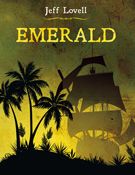
Recovering the buried treasure of Blackbeard is the price Anna and Casey must pay to ransom her kidnapped daughter, McKenna. Ancient secrets and ghosts guide them through the maze of this adventure.


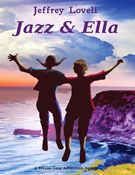
Two teen-agers are transported through a magic medallion into amazing adventures.

Entering into both their past and future while on vacation in Disney World, Jazz and Ella experience unforgettable adventures that change the present forever.


  • « Previous Page
  • 1
  • …
  • 38
  • 39
  • 40
  • 41
  • 42
  • …
  • 55
  • Next Page »

Copyright © 2025 · www.AuthorBookBeat.com | Privacy Policy | Terms of Service