Sahira lives in Ottawa. She’s been writing poetry since she was fifteen years old. She has to two poetry books published: Bitter sweet and Hot Ice. She is working on writing a fantasy novel.
Promoting, Marketing and Advertising your title

Sahira lives in Ottawa. She’s been writing poetry since she was fifteen years old. She has to two poetry books published: Bitter sweet and Hot Ice. She is working on writing a fantasy novel.
ABB has added a new short story feature to website for storytellers. This feature allows authors to give a sample of their writings to promote their book/s or just to have a short story published.
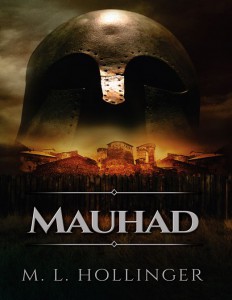
M. L. Hollinger’s latest series of books, Javik, tells the story of one boy’s journey into manhood.
In 1995, I completed my fantasy novel, Hi-doh Hi-dee Ha-Ha. It originated from a short story I had written before I entered graduate school at Iowa State University to study Creative Writing. I had wanted to expand the story into a novel for my Master’s thesis but my advisor, Jane Smiley, overruled it, saying I’d have plenty of time after graduation to write the novel. Nevertheless, I did a semester-long independent study of classic fantasy literature to prepare myself.
The book evolved over a number of years. One section, which I never seemed to get right, I repeatedly revised it. When I finally finished it to my satisfaction, I sent it out to a few, established New York publishers, and one, Putnam (Philomel Books), showed interest but eventually passed on it.
I don’t recall when I first thought of self-publishing, but I decided to have the manuscript bound with a simple black cover, to show around. One of the persons I gave a copy to, was Dudley Moore, when I had the privilege of interviewing him backstage before his concert at the Saratoga Performing Arts Center. At the time I was regularly reviewing concerts for local newspapers, and this so happened to be one of Dudley’s last concerts before he was diagnosed with his terminal illness.
Around this time I also gave a copy to Kayo Wayner, whom I had met at the YMCA and who had been the closest personal friend of my high school basketball coach, Walt Przybylo. It just so happened that Przybylo had been the subject of my first published article, twenty years earlier. It appeared by chance in the sports pages of the local daily. I wrote it as soon as I heard of his sudden death from a heart attack, and sent it to the paper, not expecting that it would become the headline story on the next day’s sports pages. I told how he had affected me, teaching me and everyone he influenced that you should never give up in life, that you should never quit no matter what the odds. Kayo remembered the article and though he never said so, I believe this is why he was interested.
Not only did Kayo like the book, but he encouraged me to self-publish and said that he would help me do this. An accountant, he gave me a plan to raise the funds and I was able to get investors that included my father, one of his business associates, and my godfather. At the same time, Norbert Fleisig, a local publisher, who I was working for as a freelance writer, doing features for his police department annual magazines, offered to publish the book and match the funds that I had raised.
In the meantime, I read a couple books on self-publishing and figured I could do the marketing and get it out to the distributors and bookstores. I had started out with high hopes. With the funding in place, I employed an illustrator, a layout person, and a printing company. My girlfriend at the time, Peggy Steinbach, a self-taught artist, did the cover, and I advertised for an illustrator, who turned out to be Erik McKinney, whom I chose among several who answered my ad. After some trial and error, he hit upon the style I was looking for.
Among the most important steps to follow I learned was to contact book reviewers and try to get reviews. Another was to attend a major book fair. It just so happened that the printing was set to be completed a couple of weeks before the American Booksellers Association Fair, now called BookExpo America, in Chicago. I made arrangements to attend along with my illustrator and have the book exhibited there. On the day before the Fair, we stopped at the printer’s office in Ashland, Ohio – Bookmasters — to pick up the 2000 plus copies of the book.
The Book Fair was a whirlwind affair with celebrities like Dr. Ruth and Kareem Abdul-Jabbar in attendance, both of whom I met and both of whom I had at one time written about in articles for local newspapers. I also made some contacts, enlisting a distributor, New Leaf, out of Lithia, Georgia, who ordered two cases (176 copies) of the book, and leaving the book with a number of book reviewers who were there.
Unfortunately, I never realized how difficult it would be, how people will judge a book not on its merits but on its publisher. Who had ever heard of Nordel Publishing – he published local magazines and promotional tabloids; he had never published a book? So how could my book be worth reviewing, selling, or even reading.
I started by going to my hometown library and was referred to the children’s librarian. She smiled and said she would take a look. When I returned a week later, she wasn’t smiling. No, she pontificated, the library couldn’t accept it. I asked why and she alluded to the first page. It was obvious she hadn’t read very far. Apparently, she was upset because the main character had used the word fart, or at least in part, when he referred angrily to Mozart as Mustfart.
I also had left a copy at the local bookstore, The Open Door, in my hometown. A little lady peered up from her glasses at me. I asked her if she would consider my book. In the intervening weeks, I stopped a couple of times to learn the verdict but she was out. Finally, I caught her. She looked at me gravely. No, they couldn’t take my book. When I asked why, she wouldn’t give a reason. I protested; I wanted a reason. I was a local author and I had written a good book, a book whose setting started out in my very hometown. Why wouldn’t they take it? I went to the front of the store and raised my voice in protest. They won’t take my book, I roared. Of course, they asked me to leave. I couldn’t believe it. I knew it was a good book. I had been writing for 20 years. I had a graduate degree in Creative Writing. I had studied the classics of fantasy literature, and I had put a lot into this book.
In the meantime, I had gone to see the head of the local library. He told me he couldn’t overrule the children’s librarian, but he made a concession and said if I could get some reviews of the book and bring them in, he would reconsider.
Being a local journalist, I was able to get reviewed by local reviewers and all were positive, some even admirable. One actually appeared as the headline review on the Sunday book review page of my local newspaper, and it was compared favorably with a book published by Putnam. Another was a review from a reporter in Vermont, who predicted that the book would “attract a wide spectrum of admirers.” I marched triumphantly into the office of the head librarian for my scheduled appointment with the clips of a half-dozen reviews. Little did I realize that the children’s librarian had spotted me going up the stairs. I sat down confidently and as I was handing over my reviews, she tore in, shouting. She was angry that I had gone “over her head.” I fired back something, and the head librarian who was a very mild-mannered man, calmed down both of us.
She left and he seemed a bit flustered. He was a kind person, and he thanked me for coming in. But then he added, we can put the book in our special collections, but it won’t be circulated. I can’t overrule her decision, he said. It was understandable. Though I had submitted the book to all the major literary review publications as well as many independent literary reviewers, none of them had reviewed the book, and it’s such reviews upon which most libraries base their ordering. And that was that.
What many people don’t realize, including librarians, I have since learned, is that large mainstream publishers actually pay reviewers to write reviews in these literary journals.
I also participated in a reading at Barnes and Noble, and went to a couple schools. The kids at one school in particular loved it. I was invited there twice, once to the class that read it – who puffed me up with personal letters of appreciation and a banner created by the teacher with comments written by the students. The second time I presented to an assembly for the entire school during which I and a colleague from Toastmasters did a performance of a story that I wrote especially for it that used a setting and characters in the book. Afterwards, the principal told me that her office was next door to the class that read it and said she knew when their teacher was reading from it, because they were usually in an uproar.
Yes, they liked Hi-doh Hi-dee Ha-Ha, for the same reason that I think it’s my best book, though I have had seven books published since then. It’s whimsical, poetic, silly, and profound only in a way that the child in all of us can understand, as one of the reviewers described it – “a book for the child in the adult.”
I also had some book signings at various other bookstores and sold a few books here and there, though I probably gave away more than I sold. The distributor sold about a dozen books, but after several months said they seemed to have misplaced the rest. I never did find out what happened to them. Years later, however, I found and still find those books selling on the Internet in places as far away as the UK.
Nearly 20 years later, my hometown library now has several of my books published by established publishers. This summer I was back in New York to do a mini book tour for a book I did with History Press. I went in to see if I could do something about getting Hi-doh Hi-dee Ha-Ha circulated. They had a new children’s librarian there and I left a copy for her review. Her verdict, to my surprise, was the same. It’s too old, she said. We only want new books to be circulated.
Nevertheless, I am still hoping that people will give this book the chance it never had, for as Yolanda, the yoyo bird, says in the book, “in the yanguage of yappiness, there is yoh such yord as yoh, there is only yes.” Like Prz, my high school basketball coach, said, Quitters on the court will be quitters in life, and good kids do not quit. I think I’m a good kid, even at my age, and I’m not going to quit trying to get people to read Hi-doh Hi-dee Ha-Ha.
Tom Calarco is the author of seven other published books in addition to Hi-doh Hi-dee Ha-Ha. His latest is Secret Lives of the Underground Railroad in New York City, published by McFarland and Company.
You can find more information about Hi-doh Hi-dee Ha-Ha, at http://www.hidoh-hidee-haha.com , and view the video trailer at https://www.youtube.com/watch?v=xWiwgeYPQfo
Information about Secret Lives can be found at http://www.secretlivesoftheundergroundrailroadinnyc.com
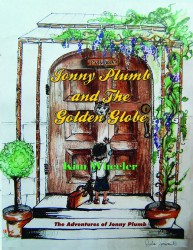
Jonny Plumb and the Golden Globe is the incredibly exciting story of a young orphan boy and his remarkable special powers, who has been fostered by the very wealthy and extremely beautiful Lady Kathleen Hunter.
Jonny’s adventures begin when he discovers the mysterious Golden Globe at the bottom of his bath. The Golden Globe with its many secrets takes Jonny on all types of amazing-jaw dropping adventures, above ground and high into the furthest regions of space and deep under water, where he befriends his sea- life friends, including three baby octopuses Stench, Harpoon and Carcuss and five young dolphins, Oink, Jube, Faraway, Blue Sky One Eye and not forgetting, Sloppy Botty and many more.
Join Jonny Plumb and his new friends as they travel across the universe in the Silver Flying Arrow Space Ship, which can travel at twice, yes, twice the speed of light. Read in amazement as Jonny Plumb’s adventures take him across the world in order to save Lady Kathleen’s husband Sir Ranulf Hunter and his best friend Sir Harry Pinner, who have been taken hostage by the Mad Mullah Mud Monkeys of Drak Gob. Now if that is not exciting enough, be even more flabbergasted at Jonny’s ongoing battle to save the Golden Globe, from the ever present, wickedly savage and cunningly cruel Rabbcat, who can shape shift into the world’s most evil and terrifying creature known as The Gnud Repeek, a monster who has been trying to steal what he wrongly believes is rightfully his, for centuries, yes, the Golden Globe and all its hidden secrets.
So Join Jonny Plumb and all his friends in their adventures, swimming, singing, parping and splashing below the water in Jonny Plumbs bath and then travel faster than light across the universe and deep into space in the Silver Flying Arrow Space Ship where Jonny answers an SOS from Pashoo, twenty eight million light years from Earth to the Sombrero Galaxy. Join in the journey with Jonnys two faithful companions, the fearsome Legend and Legion, the two largest Rottweiler dogs in the world…
There were several camps around. I liked to go to one down in Sharkey County.
The folks who ran them would usually set up about the same place every year. They had to be close to a spring or a good source for water. Some of them would drive down a pipe and make an artesian well. The underbrush would be cleared and tents set up. Each tent might have five or six hunters dependin’ on how many canvas army cots would fit in. There would be one large tent with rough tables for cookin’ and eatin’.
Hunters would pay so much per day or week with most staying a week at a time. The camp provided a cook, food, dogs, and dog handlers. Hunters just had to have their huntin’ clothes, guns, and shells.
One year me and a friend of mine, Ozzie Williams, went together to this one I was tellin’ you about. It was way back in the woods. They picked you up at the end of the road and took you the last two or three miles by wagon.
There wasn’t much to do after supper except to play poker or drink or both. One night toward the middle of the week, Ozzie and I were sittin’ around havin’ a drink or two. We were sorta feelin’ sorry for ourselves because neither one of us had killed a deer yet. I suppose that caused us to have one or two too many and led us to doin’ what we did. I don’t think we’d ‘a done it otherwise.
The cook was a little ole gnarled up man we all just called “Cookie.” His real name was James or somethin’ like that, but nobody ever used it. A lot of the hunters gave him a rough time about the food and teased him about most anything. With the kind of food he had to start out with and the cookin’ facilities he had, there was no way he was goin’ to cook up anything real good. But I thought he did a pretty good job.
Well, Cookie’s big aim was to kill him a deer and he worked at it real hard. Everyday after he’d cleaned up after breakfast and before he had to start supper, he’d walk out to a stand he had pretty close to camp and wait for a deer to come by. He’d been at this for four or five years and hadn’t even seen a deer. But his lack of success had not reduced his enthusiasm. If anything, he’d gotten more determined with the passage of time.
Cookie’s gun was an old, and I do mean old, muzzle loadin’ musket with a bell-shaped barrel. It was the only one I ever recall seein’ outside a museum. Of course, he got teased about it a lot, but he was not fazed by all the jokes at his expense. Much of his conversation around the cook tent was about what he was goin’ to do when that big buck came into range.
Well, on the night I was tellin’ you about, Ozzie and I got to talkin’ about Cookie’s musket. We decided that if he were going to kill a buck with it, he’d need a big charge of powder. So, we went over to the cook tent where he kept it and fixed it up. We pulled the ball and charge he had in it and put in a whole bunch of powder and tamped it in with some waddin’. Next, we figured that much powder needed more than one ball, so we just put in a double handful. By the time we got the last waddin’ tamped in, the barrel was about full. I guess we thought he’d just find that barrel full of powder and shot and take it out. Even if he didn’t find it for a day or two, we didn’t think he’d have any reason to fire it, since he never saw a deer anyway.
The next morning after breakfast, the dog handlers loaded the dogs up in a wagon and headed out. Some other camp folk took us to our stands. Ozzie and I were pretty close together that day. We all had to be in place before daylight ’cause that’s when the handlers would turn the dogs loose. They would get the deer stirred up and movin’ around, and if they stayed on any of the trails they’d been usin’, they had to go by somebody’s stand.
About an hour after daylight, I heard the dogs. From the sound, they must have been pretty close on some deer’s trail. The sound changed directions two or three times and then swung over in the direction of the camp. Before long, there came the most gosh-awful explosion I’d ever heard. It sounded like somebody had fired a cannon. Cookie had shot off that musket with that charge of powder and ball!
I set off to runnin’ through the woods toward camp. Pretty soon I spied Ozzie doin’ the same. We knew Cookie had to be dead. That old musket surely exploded and probably blew Cookie into several pieces. I could see me and Ozzie in jail for the rest of our lives. From the look on Ozzie’s face, I could tell he was thinkin’ the same thing.
When we got close to camp, a lot of shoutin’ and other commotion led us to Cookie’s stand. We both pulled up in amazement. First of all, Cookie wasn’t dead. Those dogs must have run a whole herd of deer past Cookie’s stand and he had fired into them. That old musket had to have been made out of some heavy, strong metal. It hadn’t exploded, but it did have a split barrel. Those musket balls must have gone through those deer like a load of grape-shot out of a cannon. Two deer were dead on the ground and two more had been broken down in their hindquarters so they couldn’t run. Blood on the trail indicated that several more had been wounded.
Although Cookie was alive, he was not without injury. The musket had kicked back so hard that it dislocated his shoulder and knocked his arm out of its socket, so that it was hangin’ almost down to the ground. He had the musket in his left hand and was goin’ along beside one of the wounded deer which was trying to crawl away, and he was hittin’ the deer over the head with it. When Cookie saw us, he yelled, “Y’all come help me! If I’d ‘a had another half a charge, I’d ‘a got ’em all!”
This story is can be found in the book.
Coon Dogs and Outhouses, Volume 1
Tall Tales From The Old South Great Southern Short Stories
http://totalrecallpress.org/products-page/humor/
http://www.barnesandnoble.com/w/coon-dogs-and-outhouses-volume-1-dr-luke-boyd/1103134537?ean=9781590958377
http://booksamillion.com/search?id=6256855030665&query=Tall+Tales+From+The+Old+South&where=All
Can you say that you looked into the eye of the storm and strive to survive?/Even when the odds are against you and there’s no will to stay alive?/To withstand all the winds that threaten to blow you off your course/Can you develop the strength from a never ending source that gives you force?- From the poem Eye of the Storm.
When you receive 1.3 million hits in less than two days. Some one is interested in what you have to say.
President and CEO of Ultimate Hero contest.
Charlie Connors loved to sing. He had aspirations of being able to sing on stage with his favorite artist, Samantha Kent. But his girlfriend, Amanda doesn’t share his passion or goals and thinks that Charlie should focus on a goal more realistic. Pretty reasonable advice, but will Amanda’s discouragement end up driving Charlie into the arms of another woman who shares his passion for singing?